 Indietro
Biological Psychology and Sensation & Perception: Mini-Study Guide
Guida di studio - Note intelligenti
 Appunti personalizzati basati sui tuoi materiali, ampliati con definizioni chiave, esempi e contesto.
Biological Psychology
The Human Brain
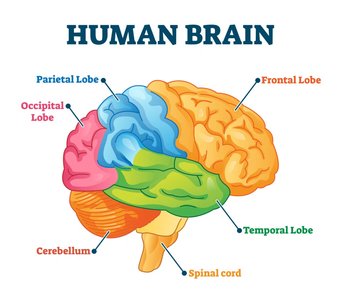
The human brain is the central organ of the nervous system and is responsible for processing sensory information, controlling motor functions, and enabling cognition, emotion, and behavior. It is divided into several distinct regions, each with specialized functions.
Frontal Lobe: Responsible for reasoning, planning, problem-solving, and voluntary movement.
Parietal Lobe: Processes sensory information related to touch, spatial orientation, and navigation.
Occipital Lobe: Primary center for visual processing.
Temporal Lobe: Involved in auditory processing, memory, and language.
Cerebellum: Coordinates movement and balance.
Spinal Cord: Transmits neural signals between the brain and the rest of the body.
Structure of a Neuron
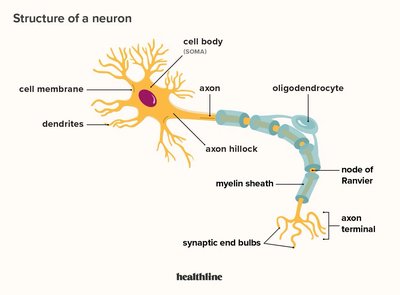
Neurons are the fundamental units of the brain and nervous system, responsible for receiving, processing, and transmitting information through electrical and chemical signals.
Cell Body (Soma): Contains the nucleus and is the metabolic center of the neuron.
Dendrites: Branch-like structures that receive signals from other neurons.
Axon: Long, slender projection that transmits electrical impulses away from the cell body.
Myelin Sheath: Insulating layer that speeds up signal transmission.
Node of Ranvier: Gaps in the myelin sheath that facilitate rapid conduction of nerve impulses.
Axon Terminal: End of the axon where neurotransmitters are released to communicate with other neurons.
Synaptic End Bulbs: Structures at the axon terminal that contain neurotransmitters.
Oligodendrocyte: Glial cell that produces myelin in the central nervous system.
Sensation and Perception
Stimulus-Physiology-Behavior Cycle
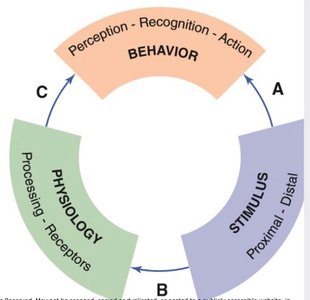
Sensation and perception involve a cycle where external stimuli are detected by sensory receptors, processed physiologically, and result in behavioral responses. This cycle is fundamental to understanding how humans interact with their environment.
Stimulus: Any external event or object that activates sensory receptors (e.g., light, sound, touch).
Physiology: The biological processes and structures (such as receptors and neural pathways) that process the stimulus.
Behavior: The observable actions or responses resulting from perception, recognition, and action.
Cycle: The process is continuous, with behavior influencing future stimuli and physiological responses.
Visual Perception: Spatial Frequency
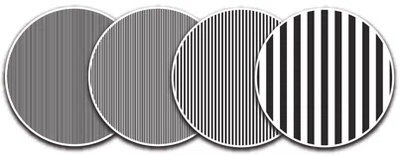
Visual perception is the process by which the brain interprets and organizes visual information from the environment. One important concept is spatial frequency, which refers to the level of detail present in a visual stimulus.
Low Spatial Frequency: Images with broad, less detailed patterns (e.g., blurry or smooth textures).
High Spatial Frequency: Images with fine, detailed patterns (e.g., sharp edges, fine lines).
Application: The human visual system processes different spatial frequencies to recognize objects, detect edges, and interpret scenes.
Key Terms and Concepts
Sensation: The process of detecting physical energy from the environment and encoding it as neural signals.
Perception: The process of organizing and interpreting sensory information to recognize meaningful objects and events.
Receptors: Specialized cells that respond to specific types of stimuli (e.g., photoreceptors for light, mechanoreceptors for touch).
Neural Pathways: Networks of neurons that transmit sensory information to the brain for processing.
Additional info:
These notes cover foundational concepts in biological psychology and sensation & perception, which are essential for understanding how the brain and nervous system enable behavior and experience.
