 Indietro
Chp. 3 (first half) Biological Psychology: Genes, Evolution, and Neural Communication
Guida di studio - Note intelligenti
 Appunti personalizzati basati sui tuoi materiali, ampliati con definizioni chiave, esempi e contesto.
Chapter 3: Biological Psychology
Biological Psychology
Introduction to Biological Psychology
Biological psychology explores the relationship between biological processes and psychological phenomena, focusing on the brain, nervous system, and genetics as foundations for behavior and mental processes.
Key Focus: How brain structure and function influence behavior, cognition, and emotion.
Methods: Neuroimaging, genetic studies, and examination of brain injuries or disorders.
Brain Development and Environmental Influences
Brain development is shaped by both genetic and environmental factors. Prenatal exposures, such as alcohol, can significantly affect neural development and later psychological functioning.
Example: Prenatal alcohol exposure can lead to atypical brain development, as seen in neuroimaging studies.
Application: Understanding these influences helps psychologists develop interventions and support for affected individuals.
Brain Development and the Impact of Pre-natal Exposures
Biological psychology explores the relationship between biological processes and behavior. Brain development is influenced by genetic and environmental factors, including pre-natal exposures.
Typical Brain Development: Follows a predictable pattern, but can be disrupted by harmful exposures.
Pre-natal Alcohol Exposure: Exposure to alcohol during pregnancy can affect brain network development, leading to structural and functional differences.
Application: Understanding these effects is crucial for prevention and intervention strategies in developmental disorders.
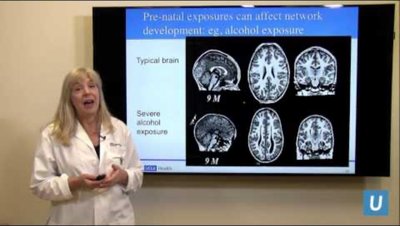
Example: MRI scans show differences in brain structure between children with typical development and those exposed to alcohol pre-natally, highlighting the importance of maternal health during pregnancy.
Chapter 3: Biological Psychology
Introduction to Biological Psychology
Biological psychology explores the connections between biological processes and psychological phenomena. This field examines how genetics, evolution, and neural mechanisms influence behavior, thoughts, and emotions.
The Genetic Code
DNA, Genes, and Chromosomes
Genetic information is stored in the form of DNA, which is organized into genes and chromosomes within the cell nucleus. These structures determine inherited traits and influence both physical and psychological characteristics.
DNA (Deoxyribonucleic Acid): The molecule that carries genetic instructions for the development, functioning, growth, and reproduction of all living organisms.
Genes: Segments of DNA that code for specific proteins, which in turn affect traits and behaviors.
Chromosomes: Structures within cells that contain a person's genes; humans typically have 23 pairs.
Nucleus: The part of the cell where chromosomes are located.
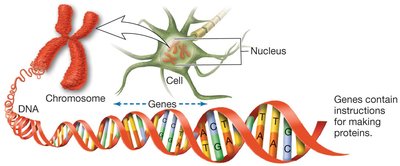
Example: The gene for eye color is located on a specific chromosome and determines pigment production in the iris.
Human Chromosomes
Humans have 23 pairs of chromosomes, including one pair of sex chromosomes (XX for females, XY for males). Each chromosome contains many genes that contribute to individual differences.
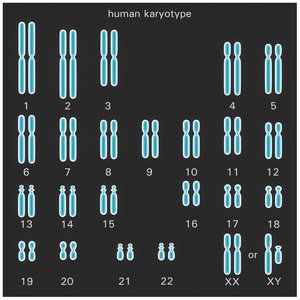
Key Point: Chromosomal abnormalities can lead to genetic disorders, such as Down syndrome (trisomy 21).
Genetic Inheritance
Traits are inherited from parents through the combination of their genes. The patterns of inheritance can be predicted using principles of Mendelian genetics.
Homozygous: Having two identical alleles for a gene.
Heterozygous: Having two different alleles for a gene.
Dominant and Recessive Genes: Dominant alleles mask the effect of recessive alleles in heterozygous individuals.
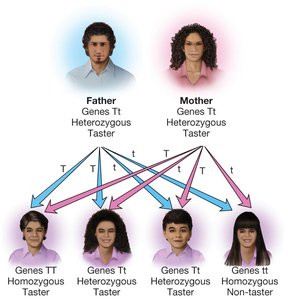
Example: The ability to taste certain chemicals (e.g., PTC) is determined by a dominant gene.
Behavioural Genomics and Genetics
Behavioural Genomics: The Molecular Approach
Behavioural genomics investigates how specific genes and their interactions influence behavior. The Human Genome Project mapped all human genes, providing insights into the genetic basis of psychological traits.
Key Point: Many psychological traits are polygenic, meaning they are influenced by multiple genes.
Behavioural Genetics: Twin and Adoption Studies
Researchers use twin and adoption studies to estimate the heritability of traits and to separate genetic influences from environmental ones.
Monozygotic Twins: Identical twins who share 100% of their genes.
Dizygotic Twins: Fraternal twins who share about 50% of their genes.
Heritability: A statistic (ranging from 0 to 1) that describes the proportion of variance in a trait attributable to genetic differences.
Environmental Interactions: The environment can influence the expression of genetic traits (gene-environment interaction).
Gene Expression and Behaviour
Gene expression is the process by which information from a gene is used to synthesize functional gene products (like proteins). This process can be influenced by environmental factors throughout life, a field known as epigenetics.
Epigenetics: The study of changes in gene expression that do not involve alterations to the DNA sequence itself.
Example: Exposure to stress can alter gene expression related to emotional regulation.
Evolutionary Psychology
Principles of Evolutionary Psychology
Evolutionary psychology examines how evolutionary processes, such as natural selection, have shaped psychological traits and behaviors to enhance survival and reproduction.
Natural Selection: The process by which heritable traits that increase an organism's chances of survival and reproduction become more common in a population over generations.
Heritability of Traits: For a trait to evolve, it must be heritable and confer a reproductive advantage.
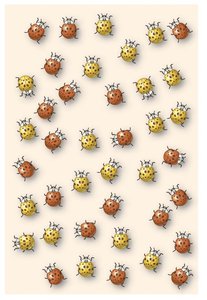
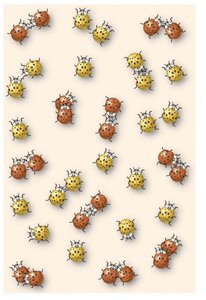
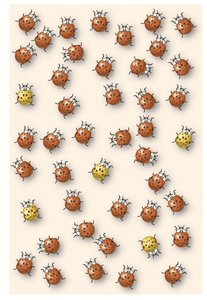
Example: Fear responses to snakes may have evolved because they increased the likelihood of survival in ancestral environments.
Neural Communication
The Organization of the Nervous System
The nervous system is divided into the central nervous system (CNS) and the peripheral nervous system (PNS). It coordinates sensory input, integration, and motor output.
Central Nervous System (CNS): Consists of the brain and spinal cord.
Peripheral Nervous System (PNS): Connects the CNS to the rest of the body.
Structure of a Neuron
Neurons are specialized cells that transmit information throughout the nervous system. Each part of a neuron has a specific function in communication.
Dendrites: Receive signals from other neurons.
Cell Body (Soma): Contains the nucleus and integrates incoming signals.
Axon: Transmits electrical impulses away from the cell body.
Axon Terminals: Release neurotransmitters to communicate with other cells.
Glial Cells: Support and protect neurons.
Neural Transmission: Resting and Action Potentials
Neurons communicate via electrical impulses called action potentials. The resting potential is the baseline electrical charge of a neuron, while the action potential is a rapid change in charge that travels down the axon.
Resting Potential: The difference in electrical charge across the neuron's membrane when it is not transmitting a signal (typically around -70 mV).
Action Potential: A brief electrical impulse that travels down the axon, triggered when the membrane potential reaches a threshold.
Refractory Period: A short period after an action potential during which the neuron cannot fire again.
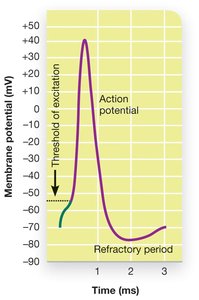
Equation: The change in membrane potential during an action potential can be described as:
Synaptic Transmission
Neurons communicate with each other at synapses, where neurotransmitters are released from the presynaptic cell and bind to receptors on the postsynaptic cell, influencing whether it will generate an action potential.
Presynaptic Cell: The neuron sending the signal.
Postsynaptic Cell: The neuron receiving the signal.
Neurotransmitters: Chemical messengers that transmit signals across the synaptic gap.
Summary Table: Key Concepts in Biological Psychology
Concept | Definition | Example |
|---|---|---|
Gene | Segment of DNA coding for a protein | Gene for eye color |
Chromosome | Structure containing many genes | Chromosome 21 |
Heritability | Proportion of trait variance due to genetics | Height heritability ≈ 0.8 |
Action Potential | Electrical impulse in a neuron | Nerve signal transmission |
Epigenetics | Changes in gene expression without DNA change | Stress-induced gene expression changes |
Additional info: This summary integrates foundational concepts from genetics, evolutionary theory, and neuroscience, providing a comprehensive overview for students beginning their study of biological psychology.
