Indietro
Chapter 1: Psychology and Scientific Thinking – A Framework for Everyday Life
Guida di studio - Note intelligenti
 Appunti personalizzati basati sui tuoi materiali, ampliati con definizioni chiave, esempi e contesto.
Psychology and Scientific Thinking
What Is Psychology?
Psychology is defined as the scientific study of the mind, brain, and behavior. Unlike intuition or common sense, psychology relies on systematic observation and empirical evidence to understand human experience.
Science versus Intuition: Science uses rigorous methods to test ideas, while intuition relies on subjective feelings and experiences.
Empiricism: The premise that knowledge should be acquired through observation.
Example: Studying how children learn by observing their behavior in controlled experiments.

Levels of Analysis in Psychology
To fully understand psychological phenomena, it is essential to consider multiple levels of analysis, ranging from social to molecular.
Social: Influence of relationships and culture (e.g., loss of important personal relationships).
Behavioral: Observable actions (e.g., decrease in pleasurable activities).
Mental: Thoughts and feelings (e.g., depressed thoughts).
Neurological/Physical: Brain structure and function (e.g., smaller hippocampus, abnormal amygdala).
Neurochemical: Chemical messengers in the brain (e.g., low serotonin and dopamine).
Molecular: Genetic predispositions (e.g., thousands of combined genetic variations).
Distinctive Features of Psychology
Psychology is fascinating because human behavior is multiply determined and influenced by many factors, including individual differences and culture.
Multiply Determined: Human behavior is produced by many factors.
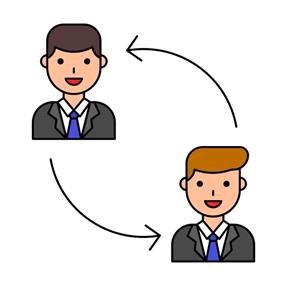
Reciprocal Determinism: We mutually influence each other's behavior.
Influence of Culture: Cultural context shapes psychological processes.

Why We Can’t Always Trust Our Common Sense
Common sayings and beliefs often contradict each other and may not be reliable guides to truth. Naive realism is the belief that we see the world exactly as it is, but psychological research shows this is often not the case.
Naive Realism: The belief that our perceptions reflect reality.
Example: Optical illusions demonstrate that our perceptions can be misleading.


Psychology as a Science
Science is not just a body of knowledge, but a systematic approach to evidence designed to prevent self-deception. It begins with empiricism and uses rigorous methods to test observations.
Scientific Method: Involves forming theories and hypotheses, collecting data, and testing predictions.
Theory: A general explanation for a range of phenomena.
Hypothesis: A specific, testable prediction derived from a theory.




Bias in Scientific Thinking
Biases such as confirmation bias and belief perseverance can distort scientific thinking and interpretation of evidence.
Confirmation Bias: Tendency to seek out evidence that supports our hypotheses and ignore evidence that contradicts them.
Belief Perseverance: Tendency to stick to our initial beliefs even when evidence contradicts them.
Metaphysical Claims and Pseudoscience
Metaphysical claims are non-testable assertions that fall outside the realm of science. Pseudoscience consists of claims that seem scientific but lack the hallmarks of genuine science.
Metaphysical Claims: Not necessarily wrong or unimportant, but cannot be tested scientifically.
Pseudoscience: Lacks self-correction, overuses anecdotes, makes exaggerated claims, and uses meaningless "psychobabble."
Warning Signs of Pseudoscience
Pseudoscientific claims often display certain warning signs, such as overuse of ad hoc immunizing hypotheses, lack of self-correction, and absence of peer review.
Sign of Pseudoscience | Example |
|---|---|
Ad hoc immunizing hypotheses | The psychic failed tests because experimenters inhibited his powers. |
Lack of self-correction | Claims to harness additional brain power despite contrary evidence. |
Overreliance on anecdotes | Yoga cured depression after three weeks. |
Exaggerated claims | Three steps will change your love life forever. |
Meaningless psychobabble | Sine-wave filtered auditory stimulation encourages maximal orbitofrontal dendritic development. |
Absence of connectivity | Eye massage increases reading speed tenfold. |
Lack of peer review | Fifty studies by the company show overwhelming success. |
Talk of "proof" instead of "evidence" | Program proven to reduce social anxiety by 50%. |
Why Are We Drawn to Pseudoscience?
Humans are predisposed to make order out of disorder and see patterns where none exist, a phenomenon known as patternicity. Pseudoscientific beliefs often offer a sense of control over an unpredictable world.
Patternicity: The tendency to perceive meaningful patterns in their absence.
Example: Seeing faces in clouds or believing in lucky numbers.


The Dangers of Pseudoscience
Pseudoscience can lead to opportunity costs, direct harm, and an inability to think scientifically. Scientific thinking is the best safeguard against human error.
Opportunity Cost: Wasting resources on ineffective treatments.
Direct Harm: Physical or psychological harm from untested interventions.
Inability to Think Scientifically: Reduces critical thinking skills.
Antidote Against Pseudoscience: Thinking Clearly
Clear thinking involves recognizing logical fallacies and relying on evidence rather than emotions or popular opinion.
Emotional Reasoning Fallacy: Using emotions as a guide instead of evidence.
Bandwagon Fallacy: Believing something is true because many people believe it.
"Not Me" Fallacy: Believing others are biased, but not oneself.
Summary Table: Warning Signs of Pseudoscience
Warning Sign | Description |
|---|---|
Ad hoc immunizing hypotheses | Escape hatch to protect theory from falsification |
Lack of self-correction | Failure to update beliefs when evidence contradicts them |
Overreliance on anecdotes | Using personal stories instead of scientific evidence |
Exaggerated claims | Promises of dramatic results |
Absence of connectivity | No connection to established research |
Lack of peer review | No independent verification |
Meaningless psychobabble | Use of scientific-sounding but meaningless terms |
Talk of "proof" | Claims of absolute certainty |