 Indietro
Chapter 2: second part
Guida di studio - Note intelligenti
 Appunti personalizzati basati sui tuoi materiali, ampliati con definizioni chiave, esempi e contesto.
Chapter 2: Reading and Evaluating Scientific Research
Introduction to Scientific Research in Psychology
Scientific research forms the foundation of psychological knowledge. Understanding how to critically evaluate research is essential for distinguishing credible findings from misleading claims. This chapter explores the characteristics of quality and poor research, ethical considerations, and the basics of statistical analysis in psychology.

Five Characteristics of Poor Research
Poor research can mislead the public and undermine scientific progress. Recognizing its features helps students become critical consumers of information.
Lack of Falsifiable Hypotheses: A hypothesis must be testable and capable of being proven false. Without falsifiability, research cannot be objectively evaluated.
Anecdotal Evidence: Reliance on personal stories or isolated examples, such as weight loss commercials, does not constitute scientific proof.
Biased Selection of Data: Choosing data that supports a claim while ignoring contradictory evidence leads to misleading conclusions.
Appeal to Authority: Using the opinion of an expert without supporting data can be problematic, especially if the expert is biased.
Appeal to Common Sense: Arguments based solely on what seems obvious (e.g., "Earth is the centre of the universe") are not scientifically valid.

Research Ethics
Ethical standards protect participants and ensure the integrity of psychological research. Ethics boards review studies to weigh risks and benefits before research begins.
Minimal Stress: Researchers must minimize physical, cognitive, and emotional stress for participants.
Informed Consent: Participants must be given enough information to consent freely, with the right to opt out or withhold responses at any time.
Debriefing: After participation, individuals are informed about the study’s purpose and any deception used.
Anonymity and Confidentiality: Protecting participant identity reduces social risks and ensures data security.
Animal Welfare: Ethical committees oversee humane treatment, ensuring housing, feeding, and sanitation standards. Harm must be justified and minimized.
Ethical Collection, Storage, and Reporting of Data
Data integrity is crucial for scientific progress. Researchers must store data securely for 5–7 years, acknowledge conflicts of interest, and avoid scientific misconduct.
Replication: Keeping data allows other scientists to replicate findings, strengthening reliability.
Honesty: Researchers must report data truthfully and transparently.
Hypothesis Testing
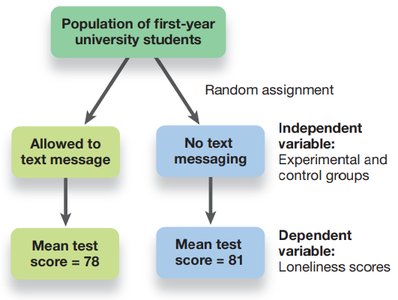
Hypothesis testing is a systematic process for evaluating whether observed differences are due to chance or experimental manipulation. It involves comparing groups and analyzing variables.
Null Hypothesis (H0): Assumes differences are due to random chance.
Experimental Hypothesis (H1): Suggests differences are due to the variable controlled by the experimenter.
P-Value: Indicates the probability that results occurred by chance. A value of is typically considered statistically significant.
Descriptive Statistics
Descriptive statistics summarize and describe the main features of a dataset. They include measures of frequency, central tendency, and variability.
Frequency: The number of times a value appears in a dataset. Often visualized as a normal curve.
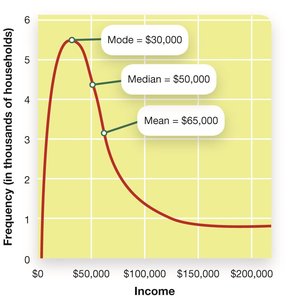
Central Tendency: Indicates the typical value in a dataset. Includes mean, median, and mode.
Variability: Measures how spread out the values are. Common measures include range and standard deviation.
Central Tendency in Skewed Distributions
In skewed distributions, mean, median, and mode differ, reflecting the asymmetry of the data.
Mean: The arithmetic average.
Median: The middle value.
Mode: The most frequent value.
Variability
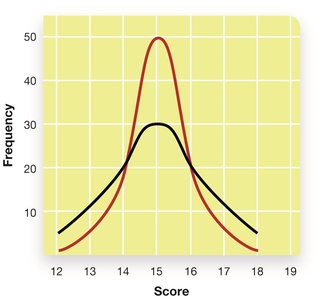
Variability shows how much scores differ from each other. High variability means scores are spread out; low variability means scores are clustered.
Standard Deviation (): Measures the average distance of scores from the mean.
Range: Difference between the highest and lowest scores.
Statistical Significance and Critical Evaluation
Statistical significance helps determine whether observed differences are meaningful. However, it is important to consider sample size, effect sizes, and multiple comparisons when interpreting results.
Effect Size: Indicates the magnitude of the difference between groups.
Replication Crisis: Many psychological studies have failed to replicate, highlighting the need for transparency and rigorous methods.
Five Characteristics of Quality Scientific Research
Quality research is the cornerstone of scientific progress. It is defined by objectivity, validity, reliability, generalizability, reduced bias, public availability, and replicability.
Objective, Valid, and Reliable Measurements: Ensures accuracy and consistency.
Generalizability: Findings apply to broader populations.
Bias Reduction: Techniques such as random assignment minimize bias.
Public and Replicable: Research is shared and can be repeated by others.
Sharing Results
Results are disseminated through academic journals, peer review, and replication studies. Transparency and openness are essential for scientific progress.
Peer Review: Experts evaluate research before publication.
Replication: Repeating studies confirms reliability.
Summary Table: Poor vs. Quality Research
Characteristic | Poor Research | Quality Research |
|---|---|---|
Hypotheses | Not falsifiable | Falsifiable and testable |
Evidence | Anecdotal | Objective, valid, reliable |
Bias | Biased selection | Bias reduction techniques |
Transparency | Not public | Made public, replicable |
Generalizability | Limited | Generalizable |
Additional info: Academic context was added to clarify definitions, provide examples, and expand on statistical concepts for completeness.
