 Indietro
Culture and Theories of Personality: An Introduction to Personality Psychology
Guida di studio - Note intelligenti
 Appunti personalizzati basati sui tuoi materiali, ampliati con definizioni chiave, esempi e contesto.
Personality Psychology: Culture and Theories
Introduction to Personality Psychology
Personality psychology explores the unique patterns of thoughts, feelings, and behaviors that characterize individuals. Theories of personality have evolved in specific socio-historical contexts, often reflecting the values and assumptions of their originators. Understanding personality requires examining both individual traits and the influence of culture and community.
The Classical Personality Theorists
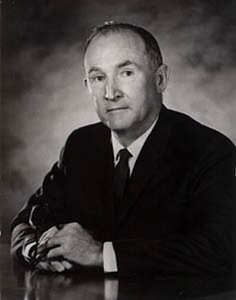
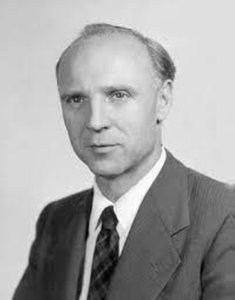
Classical theorists have shaped the field of personality psychology through diverse approaches, including psychoanalytic, trait, humanistic, and social-cognitive perspectives.
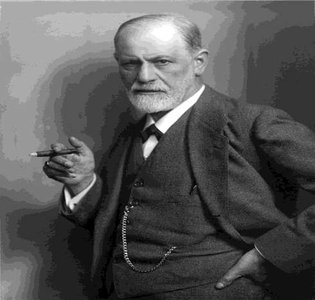
Sigmund Freud: Developed psychoanalytic theory, emphasizing unconscious motives and childhood experiences.
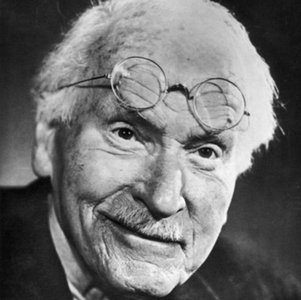
Carl Jung: Introduced concepts of the collective unconscious and archetypes.
Erik Erikson: Proposed psychosocial stages of development.
B.F. Skinner: Focused on behaviorism and environmental influences.
Abraham Maslow: Developed hierarchy of needs and self-actualization.
Carl Rogers: Emphasized self-concept and unconditional positive regard.
Raymond Cattell: Used factor analysis to identify core personality traits.
Robert McCrae & Paul Costa: Developed the Five-Factor Model (Big Five).
George Kelly: Introduced personal construct theory.
Albert Bandura: Developed social-cognitive theory, emphasizing self-efficacy.

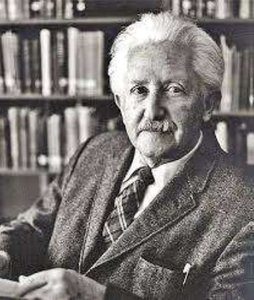
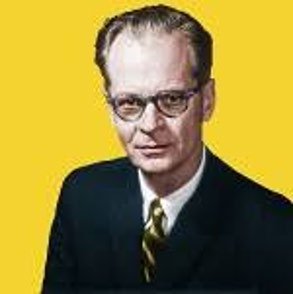
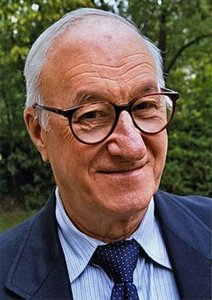
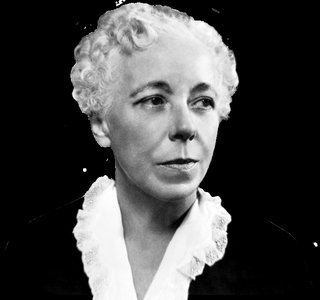
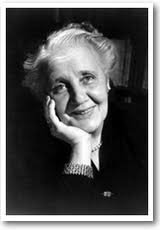
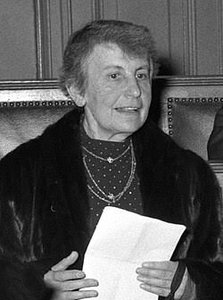
Women Theorists in Personality Psychology
Women theorists have expanded the field by focusing on relational, cultural, emotional, and developmental aspects of personality. Their work often emphasizes personhood in relation to others, aligning with collective cultural views.
Karen Horney: Critiqued Freud's theories and emphasized social and cultural factors.
Melanie Klein: Developed object relations theory.
Anna Freud: Advanced child psychoanalysis.
Mary Ainsworth: Pioneered attachment theory.
Hazel Markus: Studied self-concept and cultural influences.

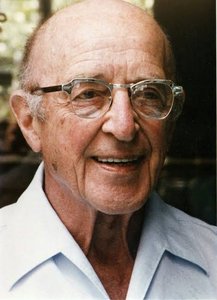
Why Culture? The Socio-Historical Context of Personality Theories
Most mainstream personality theories originated in Western, middle-class, heteronormative, male contexts. This raises questions about their applicability in diverse cultural settings, such as Japan, Kenya, or South Africa. Many theorists argue for the inclusion of societal factors—culture and community—in understanding personality.
Key Question: Can personality and behavior in non-Western contexts be understood using Western theories?
Neglect of Societal Factors: Purely Euro-American theories may overlook the role of culture and community.
African Theorists and Models of Personhood
African understandings of personhood are rooted in philosophical, communal, oral, and ethical traditions. The focus is on relationality, moral standing, social responsibility, and the process of becoming, rather than fixed traits.
Key Figures: John Mbiti, Ifeanyi Menkiti, Augustine Nwoye
Western Question: 'What kind of person are you?'
African Question: 'How are you a person among others?'
Emphasis: Relationality, moral standing, social responsibility, and dynamic becoming
Culture and Personality: Definitions and Influence
Culture is a shared set of beliefs, values, customs, behaviors, and knowledge passed down through generations. It shapes, but does not determine, individual behavior and interpretations.
Definition (Spencer-Oatey, 2008): Culture is a "fuzzy set of basic assumptions and values, orientations to life, beliefs, policies, procedures, and behavioral conventions that are shared by a group of people and that influence (but do not determine) each member’s behavior and interpretations."
Transmission: Culture is learned, shared, and transmitted across generations.
Cultural Influence on Personality: Individualistic vs Collectivist Cultures
Cultures shape personality through their values and social structures. Individualistic cultures emphasize independence and self-reliance, while collectivist cultures value interdependence and relationality.
Individualistic Cultures: Encourage independence, nuclear families, inward focus (e.g., North America, parts of Europe).
Collectivist Cultures: Encourage interdependence, extended families, outward focus (e.g., Africa, China, Japan).
Key Principle: "A person is only a person among other persons. I am because we are."
Locus of Control: Internal vs External
Locus of control refers to the degree to which individuals believe they have control over their behavior and outcomes. This concept is influenced by cultural context.
Internal Locus of Control: Outcomes are controlled by factors intrinsic to the self.
External Locus of Control: Outcomes are dependent on factors outside the individual and beyond their control.
Type | Description |
|---|---|
Internal | Belief in personal agency and responsibility |
External | Belief in external forces, fate, or community influence |
Three-Tiered Model of African Personhood
African models of personhood often conceptualize the self as comprising three interconnected tiers: spiritual, psychological, and physiological. This structure reflects the holistic nature of African understandings of personhood.
Spiritual: Connection to spiritual agencies and beliefs
Psychological: Thoughts, feelings, and will
Physiological: Physical embodiment
Augustine Nwoye’s Synoptic Theory of the Modern African Self
Nwoye’s synoptic theory offers a comprehensive view of African personhood, integrating multiple dimensions and emphasizing the extensive nature of the self within community.
Key Concepts: The self extends into the community; considers spiritual, mental, and physical dimensions.
Synoptic: From Greek "synoptikos," meaning "seeing together." Provides a general view of the whole.
Eight Dimensions: Embodied, Generative, Communal, Melioristic, Narratological, Structural, Liminal, Spiritual
The Eight Dimensions of Nwoye’s Synoptic Theory
Each dimension represents a unique aspect of the African self, contributing to a holistic understanding of personhood.
Embodied Self: Physical aspects, self-image, openness to criticism, respect, and marriage prospects. Awkward embodiment may lead to emotional distress.
Generative Self: Enterprising, goal-oriented, driven to provide for others, craves status, fears failure.
Communal Self: Relational, inclusive, mutual dependence, economy of affection.
Melioristic Self: Reflective, copes with challenges, maintains psychological serenity, natural hopefulness.
Narratological Self: Cultural memory, transmission of values and morals through stories.
Structural Self: Thoughts, feelings, will; psychological balance; links body parts to psychological aspects.
Liminal Self: Transitional self, marked by rituals during life cycle changes.
Spiritual Self: Belief in a Supreme Being, spiritual agencies, meaning-making, power of thoughts and words.
Dimension | Description |
|---|---|
Embodied | Physical self and self-image |
Generative | Enterprising, goal-driven |
Communal | Relational, mutual dependence |
Melioristic | Reflective, hopeful |
Narratological | Cultural memory, storytelling |
Structural | Thoughts, feelings, will |
Liminal | Transitional, ritual-marked |
Spiritual | Belief in spiritual agencies |
Evaluating Nwoye’s Synoptic Theory
Nwoye’s theory fills a gap by synthesizing uniquely African aspects of personhood with classical personality theories. However, it is not necessarily uniquely African and may not apply to all African peoples.
Praise: Comprehensive, fills a gap, integrates African and Western perspectives.
Critique: Not universally applicable, not uniquely African.
Summary Table: Classical vs African Models of Personality
Model | Key Question | Focus |
|---|---|---|
Western (Classical) | What kind of person are you? | Traits, individualism |
African (Synoptic) | How are you a person among others? | Relationality, community, becoming |
Next Theme
The next topic in the course is Personality Assessment, as indicated in the textbook (pp. 144–154).
Additional info: Expanded explanations and tables were added to clarify the academic context and make the notes self-contained for exam preparation.
