 Indietro
Developmental Psychology: Biological, Cognitive, and Social Foundations
Guida di studio - Note intelligenti
 Appunti personalizzati basati sui tuoi materiali, ampliati con definizioni chiave, esempi e contesto.
Developmental Psychology
Overview of Human Development
Developmental psychology studies the changes in behavior, cognition, and biology that occur throughout the lifespan. This field explores how genetic, biological, and environmental factors interact to shape human growth from conception through adulthood.
I. Prenatal Development
Stages of Neural Development
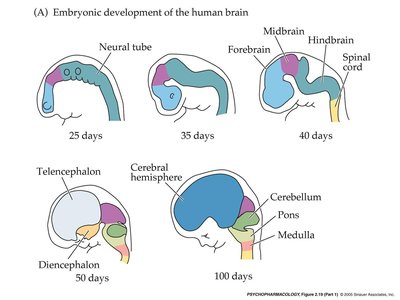
Prenatal development is a critical period for the formation of the nervous system. The process involves several key stages:
Proliferation: Rapid increase in the number of neurons through cell division.
Migration (8–16 weeks): Neurons move to their destined locations in the brain.
Differentiation: Neurons specialize to perform specific functions.
Continued Differentiation: Includes synapse formation and myelination, which continue after birth.
After birth, myelination (the formation of the myelin sheath around neurons) and synaptic pruning (elimination of excess synapses) are essential for efficient brain function.
Teratogens and Critical Periods
A teratogen is any disease, drug, or other harmful agent that can cause abnormal prenatal development. The effects of teratogens depend on the timing of exposure, with certain periods being especially sensitive (critical periods).
Tobacco: Associated with Sudden Infant Death Syndrome (SIDS), slowed cognitive development, and ADHD.
Alcohol: Can cause Fetal Alcohol Syndrome (FAS), characterized by physical abnormalities, cognitive deficits, and behavioral problems.
The critical period is a specific time during which exposure to certain environmental influences can have a lasting impact on development. For example, alcohol exposure during the first trimester can severely disrupt brain development.
II. Newborn Development
Reflexes and Social Responsiveness
Newborns are equipped with several reflexes that aid survival and social interaction:
Rooting Reflex: Turning the head toward a touch on the cheek, facilitating feeding.
Grasping Reflex: Closing the hand around an object placed in the palm.
Social Responsiveness: Newborns prefer human-like sights and high-pitched sounds, which promote bonding and early communication.
III. Cognitive Development
Piaget’s Stages of Cognitive Development
Jean Piaget proposed that children progress through four stages of cognitive development, each characterized by distinct ways of thinking and understanding the world.
Sensorimotor Stage (0–2 years): Infants learn about the world through sensory experiences and motor actions. Object permanence (understanding that objects continue to exist even when not seen) develops gradually.
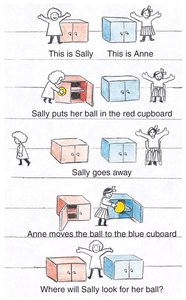
Preoperational Stage (2–7 years): Children begin to use language and mental imagery but lack logical reasoning. They struggle with conservation (understanding that quantity remains the same despite changes in shape) and exhibit egocentrism (difficulty seeing things from others’ perspectives).
Concrete Operational Stage (7–12 years): Logical thinking about concrete events emerges. Children can perform conservation tasks, understand mathematical transformations, and classify objects on multiple dimensions.
Formal Operational Stage (12 years and up): Abstract, logical, and systematic thinking develops, allowing for hypothetical reasoning and reflective thought.
Beyond Piaget: Vygotsky’s Sociocultural Theory
Lev Vygotsky emphasized the role of social interaction and culture in cognitive development. He argued that:
Cognitive development is fueled by social interactions.
Language acquisition is key to cognitive growth.
Cultural context shapes the way children think and learn.
Additional info: Piaget may have underestimated young children’s abilities and the influence of cultural variability on cognitive development.
IV. Social Development
Attachment and Early Relationships
Attachment refers to the emotional bond between a child and caregiver. Early attachment experiences are crucial for social and emotional development.
Body Contact: Harlow’s monkey studies demonstrated the importance of comfort and physical closeness in attachment formation.
Familiarity: Attachment is influenced by exposure during a critical period.
Responsive Parenting: Leads to different attachment styles:
Secure Attachment: Associated with resilience, competence, self-esteem, leadership, and better peer and romantic relationships.
Avoidant or Anxious/Ambivalent Attachment: May result from inconsistent or unresponsive caregiving.
Importance of Early Nurturing
Early nurturing and environmental factors significantly impact brain development and later outcomes:
Philadelphia Study (2010): Found a correlation between nurturing, hippocampal size at age 4, IQ, and memory.
Low Socioeconomic Status: Associated with reduced brain growth, lower IQ, and fewer spoken words in early childhood.
Face-to-Face Interaction: Essential for healthy social and cognitive development.
V. Milestones in Physical and Cognitive Development
Selected Developmental Milestones
Physical: Sitting without support, walking unassisted, kicking a ball, standing on one foot, pedaling a tricycle.
Social/Emotional: Recognizing and smiling at caregivers, feeling shame.
Cognitive/Language: Making two-word sentences, thinking about things that cannot be seen.
VI. Biological Foundations of Development
Comparative Embryology
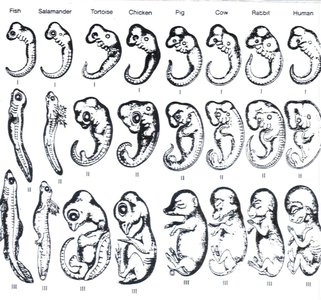
Comparative embryology demonstrates similarities in early development across species, highlighting evolutionary relationships and the conserved nature of developmental processes.
Brain Development and Imaging
Brain development can be visualized using imaging techniques such as MRI, which reveal the structure and maturation of different brain regions over time.
Myelination: The process of forming a myelin sheath around nerves to increase the speed of neural transmission.
Synaptic Pruning: The elimination of excess synapses to improve neural efficiency.
Additional info: Proper brain structure is essential for correct brain function, and disruptions during development can have lasting effects.
VII. Summary and Big Picture
The correct structure of the brain is crucial for its proper function.
Children’s thinking differs fundamentally from adults’ due to developmental changes in the brain.
Nurturing and love are vital for healthy social and cognitive development.
