 Indietro
Foundations and Methods of Psychological Science: Study Notes
Guida di studio - Note intelligenti
 Appunti personalizzati basati sui tuoi materiali, ampliati con definizioni chiave, esempi e contesto.
Psychology’s Roots
Early Philosophical Influences
The origins of psychology trace back to ancient philosophers who explored questions about the mind, behavior, and knowledge. Their ideas laid the groundwork for later scientific approaches.
Socrates: Focused on politics and morality, using the Socratic Method—asking questions to stimulate critical thinking and illuminate ideas.
Plato: Emphasized "thinking about thinking" and believed in preexisting knowledge (nature). He founded The Academy and proposed that knowledge is innate.
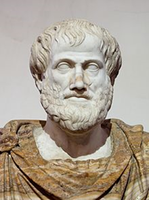
Aristotle: Theorized about learning, memory, motivation, emotion, perception, and personality. He believed knowledge comes from experience (nurture) and used observation and inference to study human behavior.

Key Concepts:
Cognitive: Intellectual activities such as thinking, reasoning, and remembering.
Nurture vs. Nature: Debate over whether knowledge and behavior are learned (nurture) or innate (nature).
Modern Methodology: Emphasizes observation and inference in studying human behavior.
Rationalism and Empiricism
Philosophers debated how knowledge is acquired, leading to two major schools of thought:
Rationalism: Knowledge is gained through intellectual reasoning and deduction; it is considered innate.
Empiricism: Knowledge comes from sensory experience and observation.

Rene Descartes: Famous for "I think therefore I am." Advocated rationalism.
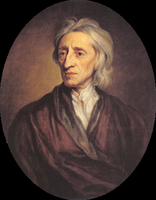
John Locke: Asserted that knowledge is limited to experience. "No man’s knowledge here can go beyond his experience." Advocated empiricism.
Psychological Science Is Born
First Psychology Laboratory
The formal scientific study of psychology began in the late 19th century with the establishment of the first laboratory dedicated to psychological research.
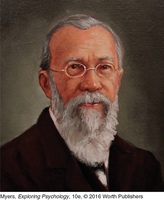
Wilhelm Wundt: Founded the first psychology laboratory at the University of Leipzig, Germany. Introduced measurement, observation, and experimentation as key elements of psychological science.
Structuralism and Introspection
Structuralism was one of the first schools of thought in psychology, focusing on breaking down mental processes into their most basic components.
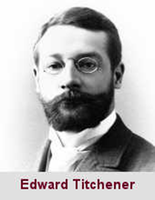
Edward B. Titchener: Student of Wundt. Developed structuralism and used introspection (self-reporting sensations and reactions to stimuli) to study the mind’s structure.
Introspection: Method of examining one’s own conscious thoughts and feelings.
Structuralism: The mind is viewed as a structure composed of basic elements (sensations, feelings).
Functionalism
Functionalism emerged as a reaction to structuralism, emphasizing the purpose of mental processes and behavior in helping organisms adapt to their environment.
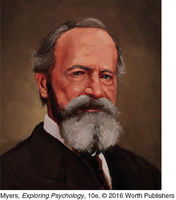
William James: American philosopher and psychologist. Proposed that thinking developed because it was adaptive and helped survival.
Functionalism: Studies how mental and behavioral processes function to enable organisms to flourish.
Consciousness: Serves a function and is shaped by past experiences.
Academic Disciplines and Social Sciences
Natural vs. Social Sciences
Psychology is classified as a social science, but it shares methods with natural sciences.
Natural Sciences: Study the universe by the laws of nature (e.g., biology, chemistry).
Social Sciences: Study social life in groups or individually (e.g., sociology, psychology).

Psychology, Psychiatry, and Sociology
These disciplines differ in their focus and methods:
Psychology: Study of mental processes and behavior.
Psychiatry: Medical study and treatment of mental disorders (not a social science).
Sociology: Study of how people are influenced by groups and society, seeking patterns.

Psychological Research Methods
Scientific Approach and Hypothesis
Psychological research uses the scientific method to investigate questions about behavior and mental processes.
Hypothesis: An educated guess or prediction about the relationship between variables.
Theory: A set of statements generally accepted as true, explaining phenomena.
Law: An absolute, universal, and true statement.
Variables and Experimental Design
Experiments manipulate variables to test hypotheses.
Independent Variable: The variable that causes change.
Dependent Variable: The variable that may change as a result.
Operational Definitions: Precise ways to measure variables (e.g., "a lot" = more than 1 hour).
Steps in Scientific Research
The scientific method involves several steps:
Question
Hypothesis
Research
Results
Conclusions (prove or disprove hypothesis)
Types of Research Methods
Different methods are used to collect data in psychology:
Survey: Uses questionnaires. Advantages: cheap, fast, private. Disadvantage: people may lie.
Experiment: Creates artificial environments. Advantage: control over setting. Disadvantage: people may act differently when watched.
Case Study: In-depth study of an individual or group. Advantage: specific and detailed. Disadvantage: may be too narrow for generalization.
Naturalistic Observation: Observing behavior in natural settings. Advantage: not controlling the situation. Disadvantage: may not reveal all contributing factors.
Experimental Groups and Procedures
Experiments often use groups and procedures to ensure validity:
Experimental Group: Receives the treatment.
Control Group: Does not receive treatment.
Double-Blind Procedure: Both participants and administrators are unaware of group assignments, separating actual effects from placebo effects.
Placebo Effect: Results caused by expectations alone.
Biases in Research
Researchers must be aware of biases that can affect results:
Hindsight Bias: Tendency to believe, after learning an outcome, that it could have been predicted.
Summary Table: Research Methods Comparison
Method | Strengths | Weaknesses |
|---|---|---|
Survey | Cheap, fast, private | People may lie |
Experiment | Control over setting | People act differently when watched |
Case Study | Specific, in-depth | May be too narrow |
Naturalistic Observation | Not controlling situation | May not reveal all factors |
Key Terms and Concepts
Cognitive: Intellectual activity such as thinking, reasoning, or remembering.
Introspection: Self-reporting sensations and reactions to stimuli.
Structuralism: Viewing the mind as a structure with building blocks of sensations.
Functionalism: Studying the function of mental and behavioral processes.
Empiricism: Knowledge through sensory experience.
Rationalism: Knowledge through intellectual reasoning.
Hypothesis: Educated guess.
Theory: General statements explaining phenomena.
Law: Universal, absolute truth.
Operational Definition: Precise measurement of variables.
Placebo Effect: Results caused by expectations.
Hindsight Bias: Belief that outcomes could have been predicted after the fact.
