 Indietro
Introduction to Psychology: Foundations, Research Methods, and Statistics
Guida di studio - Note intelligenti
 Appunti personalizzati basati sui tuoi materiali, ampliati con definizioni chiave, esempi e contesto.
Chapter 1: The Science of Psychology
Psychology: Historical Development and Perspectives
Psychology is the scientific study of behavior and mental processes. It aims to understand both observable actions and internal mental activities, using precise and unbiased measurement to prevent faulty observations. The field has evolved through various historical perspectives and continues to expand its scope.
Behavior: Outward or overt actions and reactions.
Mental processes: Internal, covert activity of the mind.
The Four Goals of Psychology
Psychology as a science pursues four primary goals:
Description: Observing and noting everything about a behavior.
Explanation: Understanding why a behavior occurs, often through theories.
Prediction: Determining when a behavior will happen again.
Control: Modifying undesirable behaviors to desirable ones.
The Development of Psychology as a Science
Psychology developed as a scientific discipline in the late 19th century, with Wilhelm Wundt establishing the first psychology laboratory in Germany in 1879. He introduced objective introspection, a method for examining and measuring one's thoughts and mental activities.
Structuralism: Edward Titchener expanded Wundt's ideas, focusing on the structure of the mind. Margaret F. Washburn was the first woman to earn a PhD in psychology.
Functionalism: William James emphasized how the mind helps people adapt to their environment, influenced by Darwin's theory of natural selection. Contributions from Mary Whiton Calkins, Francis Cecil Sumner, Kenneth and Mamie Clark, and Jorge Sanchez highlighted diversity in early psychology.
Influential Approaches
Gestalt Psychology: Max Wertheimer argued that psychological events must be understood as organized wholes, not as parts.

Psychoanalysis: Sigmund Freud proposed that unconscious urges and early childhood experiences shape personality and behavior.
Behaviorism: Ivan Pavlov and John Watson focused on observable behavior and conditioning. Watson's "Little Albert" experiment demonstrated learned phobias, while Mary Cover Jones pioneered behavior therapy.
Modern Perspectives in Psychology
Psychodynamic Perspective: Focuses on self-development and motivation.
Behavioral Perspective: B.F. Skinner's operant conditioning explains how behavior is learned and reinforced.
Humanistic Perspective: Emphasizes free will and self-actualization, founded by Abraham Maslow and Carl Rogers.
Cognitive Perspective: Studies memory, intelligence, perception, and problem-solving, including cognitive neuroscience.
Sociocultural Perspective: Examines the relationship between social behavior and culture.
Biopsychological Perspective: Attributes behavior to biological events, such as genetics and nervous system activity.
Evolutionary Perspective: Focuses on universal mental characteristics shared by humans.
Positive Psychology and Eclectic Perspective
Martin Seligman founded positive psychology, which emphasizes strengths, well-being, and happiness. The eclectic perspective combines elements from multiple approaches to best fit specific situations.
Psychological Professionals and Subfields
Psychologists undergo extensive academic training and specialize in various subfields. Psychiatrists are medical doctors specializing in psychological disorders, while psychiatric social workers focus on environmental impacts on mental health.
Subfields: Clinical, counseling, educational, industrial/organizational, developmental, and more.
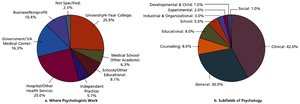
Role of Psychology in Society
Researching social issues and strategies to minimize prejudice and violence.
Improving engineering and human factors.
Enhancing childhood development and education.
Helping individuals overcome psychological challenges.
Chapter 2: Research Methods and Ethics
The Scientific Method in Psychology
The scientific method is a systematic approach to gathering data, reducing bias, and ensuring reliable results. It involves several steps:
Perceiving the question
Forming a hypothesis
Testing the hypothesis
Drawing conclusions
Reporting results
Descriptive Research Methods
Naturalistic Observation: Observing behavior in its natural environment for realistic data.

Observer effect: Subjects may alter behavior if they know they are being observed.
Observer bias: Observers may see what they expect; blind observers help reduce this.
Laboratory Observation: Observing behavior in a controlled environment, allowing use of specialized equipment but may result in artificial behavior.
Case Study: In-depth study of a single individual, useful for rare conditions but not generalizable.
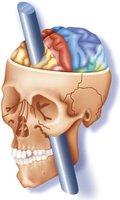
Surveys: Collecting data from large groups via questionnaires or interviews. Requires representative samples and careful question wording to avoid bias.
Correlational Research
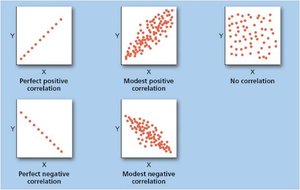
Correlation measures the relationship between two variables, represented by the correlation coefficient (r), which ranges from -1.00 to +1.00.
Positive correlation: Both variables increase or decrease together.
Negative correlation: One variable increases as the other decreases.
No correlation: No relationship between variables.
Correlation does not prove causation.
Experimental Research
Experiment: Manipulates variables to determine cause-and-effect relationships.
Independent Variable (IV): Manipulated by the experimenter.
Dependent Variable (DV): Measured response or behavior.
Experimental Group: Exposed to the IV.
Control Group: Not exposed to the IV; used for comparison.
Randomization: Assigning subjects randomly to groups to control for confounding variables.
Placebo Effect: Participants' expectations influence behavior.
Experimenter Effect: Experimenters' expectations unintentionally influence results.
Single-Blind Study: Subjects do not know their group assignment.
Double-Blind Study: Neither experimenter nor subjects know group assignments.
Ethics in Psychological Research
Institutional Review Boards (IRB): Evaluate research proposals for participant safety.
Ethical Guidelines:
Weigh participant rights against scientific value.
Informed consent and justified deception.
Right to withdraw, protection from risks, debriefing, confidentiality.
Researchers must correct any undesirable consequences.
Nonhuman Animal Research: Used to study effects not possible in humans; must avoid unnecessary pain or suffering.
Chapter 3: Statistics
Descriptive and Inferential Statistics
Statistics help psychologists summarize and interpret data. Descriptive statistics organize numbers to reveal patterns, while inferential statistics analyze data sets to reduce error and determine significance.
Descriptive Statistics:
Measures of Central Tendency: Mean, median, mode.
Measures of Variability: Range and standard deviation.
Inferential Statistics:
Determine if differences between groups are statistically significant.
Statistical significance: (less than 5% probability results are due to chance).
Graphical Representation of Data
Frequency Distribution: Shows how often scores appear.
Histogram: Bar graph of frequency distribution.
Polygon: Line graph of frequency distribution.
Normal Curve (Bell Curve): Symmetrical distribution with scores clustering around the mean.
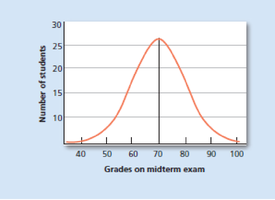
Skewed Distributions: Scores concentrated on one side; negatively or positively skewed.
Validity and Reliability
Reliability: Consistency of test scores across repeated administrations.
Validity: Degree to which a test measures what it is intended to measure.
Qualitative Data in Psychology
Qualitative data provides a holistic, subjective view of psychological phenomena. It is used to identify themes and insights not accessible through experiments.
Forms include interviews, self-reports, open-ended survey responses, journals, diaries, and anecdotes.
Summary Table: Correlation Types
Type | Description |
|---|---|
Perfect Positive | Both variables increase together |
Modest Positive | Variables increase together, but less strongly |
No Correlation | No relationship between variables |
Perfect Negative | One variable increases as the other decreases |
Modest Negative | Inverse relationship, but less strongly |
Summary Table: Measures of Central Tendency
Measure | Definition |
|---|---|
Mean | Average score |
Median | Middle score in ordered distribution |
Mode | Most frequent score |
Summary Table: Research Methods
Method | Advantages | Disadvantages |
|---|---|---|
Naturalistic Observation | Realistic picture of behavior | Observer effect, observer bias |
Laboratory Observation | Control over environment | Artificial behavior |
Case Study | Detailed information | Not generalizable |
Survey | Large data sets, covert behaviors | Sampling bias, inaccurate responses |
