 Indietro
Introduction to Psychology: The Science of Mind - Chapter 1 Study Notes
Guida di studio - Note intelligenti
 Appunti personalizzati basati sui tuoi materiali, ampliati con definizioni chiave, esempi e contesto.
The Science of Mind: Introduction to Psychology
What Is Psychology?
Psychology is the scientific study of behavior, mental processes, and brain functions. It seeks to understand thoughts, emotions, and behaviors through systematic observation and experimentation.
Mind: Refers to thoughts, emotions, and behaviors.
Introspection: The personal observation of one's own thoughts, feelings, and behaviors.
Scientific Approach: Psychology uses empirical methods to study and explain human and animal behavior.
Psychology as a Hub Science
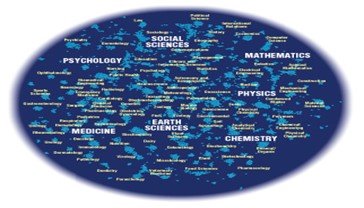
Psychology is considered a hub science because it connects and informs many other academic fields, including medicine, social sciences, mathematics, chemistry, and earth sciences. Its principles are applied across disciplines to solve complex problems and shape public policy.
Interdisciplinary Applications: Psychology contributes to fields such as health, education, business, and law.
Critical Thinking: Studying psychology improves critical thinking and problem-solving skills.
Origins of Psychology
Philosophical and Scientific Roots
Psychology originated from philosophical inquiry and natural sciences. Philosophers examined concepts like free will, the source of knowledge, and the balance between nature (biological factors) and nurture (environmental influences).
Philosophy: Provided foundational questions about mind and behavior.
Natural Sciences: Introduced scientific methods to study the mind as a physical property.

Major Early Movements in Psychology
Wilhelm Wundt and Structuralism
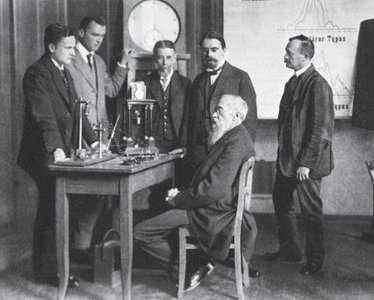
Wilhelm Wundt is considered the founder of experimental psychology. He tested reaction times and viewed mental experience as a hierarchy. Edward Titchener expanded Wundt’s ideas to establish structuralism, which breaks the mind into the smallest elements of mental experience.
Structuralism: Analyzes the structure of mental processes.
Introspection: Used as a method to explore mental elements.
Max Wertheimer and Gestalt Psychology
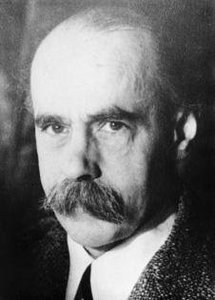
Gestalt psychology, founded by Max Wertheimer, challenged structuralism by emphasizing that experience is different from the sum of its parts. Gestalt psychologists argued that breaking perception into building blocks loses important information.
Gestalt Principle: The whole is greater than the sum of its parts.
Perception: Focuses on holistic processing.

William James and Functionalism
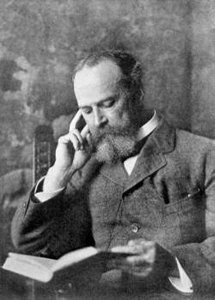
William James developed functionalism, which views behavior as purposeful and contributing to survival. Functionalism studies why mental processes work in particular ways and emphasizes the role of evolution.
Functionalism: Focuses on the function and purpose of behavior.
Stream of Consciousness: Describes the flow of ideas experienced while awake.
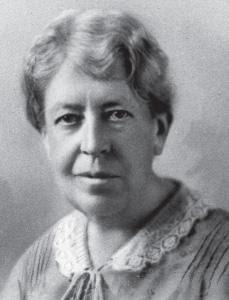
Mary Whiton Calkins: Studied memory and the self, contributing to functionalism.
Clinical Roots: Freud and Humanistic Psychologists
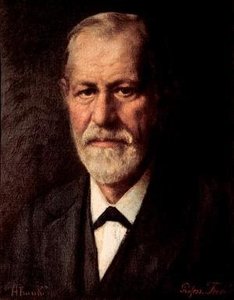
Sigmund Freud developed psychodynamic theory, focusing on the unconscious mind, sexuality, dream analysis, and the psychological roots of abnormal behavior. Abraham Maslow and humanistic psychologists emphasized the innate goodness of people and motivation to improve, leading to client-centered therapy.
Psychodynamic Theory: Explores unconscious influences on behavior.
Humanistic Psychology: Views people as innately good and motivated to improve.
The Behaviorist and Cognitive Revolution
Behaviorism
Behaviorism studies observable behaviors and their relationship to environmental cues. Ivan Pavlov introduced classical conditioning, John B. Watson focused on observable behaviors, and B.F. Skinner developed operant conditioning.
Classical Conditioning: Learning through association between events.
Law of Effect: Behaviors followed by pleasant outcomes are more likely to be repeated.
Operant Conditioning: Behavior is shaped by reinforcement and punishment.
Cognitive Revolution
The cognitive revolution shifted focus to internal mental processes such as information processing, thinking, reasoning, and problem solving. Ulric Neisser was a key figure in this movement.
Cognition: Includes memory, perception, intelligence, and problem solving.
Five Perspectives of Psychology
Biological Perspective
The biological perspective focuses on the relationship between mind and behavior, including genetics, biochemistry, anatomy, and physiology. Evolutionary psychology examines how physical structure and behavior are shaped by survival needs.
Neuroscience: Studies brain function and its impact on behavior.
Sensation and Consciousness: Examines how we perceive and experience the world.
Cognitive Perspective
Cognitive psychology studies how we process information, remember names and dates, and perform tasks like riding a bicycle. It includes cognition, memory, perception, and intelligence.
Information Processing: How the brain encodes, stores, and retrieves information.

Developmental Perspective
Developmental psychology examines normal changes in behavior across the life span, including memory functions at different ages, learning, physical development, and language acquisition.
Life Span Development: Studies growth and change from infancy to old age.
Social and Personality Perspective
This perspective focuses on the social environment, including social and cultural diversity, and individual differences in behavior. It recognizes that we construct our own realities, which influence our thoughts, feelings, and behavior.
Social Psychology: Studies how social context affects behavior.
Personality Psychology: Examines individual differences in thinking, feeling, and behaving.
Clinical Perspective
Clinical psychology explains, defines, and treats psychological disorders. It focuses on well-being, health, and abnormal behavior, including Freud's concept of repression.
Therapies: Includes various approaches to treating mental health issues.
Integrating Psychology’s Five Perspectives
Using multiple perspectives allows for a more comprehensive understanding of complex phenomena, such as attraction. It combines biological factors, personality, social experience, cognition, and psychological disorders.
What Does It Mean To Be A Psychologist?
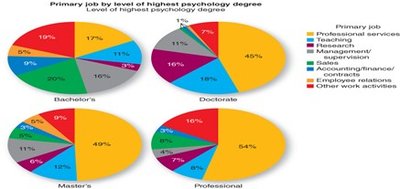
Psychology is a popular field of study, but the title "psychologist" is reserved for those with graduate degrees, usually a doctorate. Psychologists can specialize in clinical or counseling and work in various fields, including management, education, human resources, and journalism.
Education: Takes 2–5 years beyond a master's degree.
Career Paths: Includes professional services, teaching, research, and management.
Summary
Identified the five perspectives of psychology and their integration for a comprehensive view of behavior and mental processes.
Explored the importance of diversity and ethics in psychology.
Examined the contributions of philosophy and natural sciences to modern psychology.
Described early movements and their significance for modern psychology.
Discussed the scientific method as a foundation for psychology.
Explained psychology’s role as a hub science and its applications in various fields.
