 Indietro
Introduction to Psychology: The Science of Mind
Guida di studio - Note intelligenti
 Appunti personalizzati basati sui tuoi materiali, ampliati con definizioni chiave, esempi e contesto.
Chapter 1: The Science of Mind
What Is Psychology?
Psychology is the scientific study of behavior, mental processes, and brain functions. It seeks to understand thoughts, emotions, and behaviors through systematic observation and empirical research.
Mind: Refers to thoughts, emotions, and behaviors.
Introspection: The personal observation of one’s own thoughts, feelings, and behaviors.

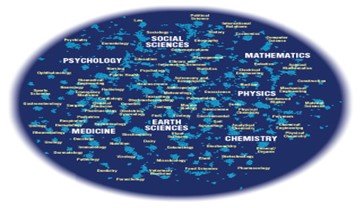
Psychology as a Hub Science
Psychology is considered a hub science because it connects and informs many other academic disciplines, including medicine, social sciences, mathematics, and the natural sciences. Its findings are widely applicable and influence various fields.
Why Do We Study Psychology?
To gain a deeper understanding of ourselves and others.
To appreciate the social nature of humans and the importance of social connectivity for health and well-being.
To improve critical thinking skills, such as discerning misinformation and solving problems.
To address contemporary issues, including social justice and public health crises.
To satisfy curiosity about human behavior and mental processes.
Origins of Psychology
Philosophical and Scientific Roots
Psychology originated from philosophical inquiry and the natural sciences. Philosophers systematically examined concepts such as the source of knowledge, free will, and the balance between nature (biological factors) and nurture (environmental factors).
Natural Sciences: Contributed the idea that the mind is a physical property that can be studied scientifically.

Nature vs. Nurture
The debate over whether human behavior is determined by biological factors (nature) or environmental influences (nurture) is central to psychology. Most psychologists agree that both play a role in shaping behavior.
Major Early Movements in Psychology
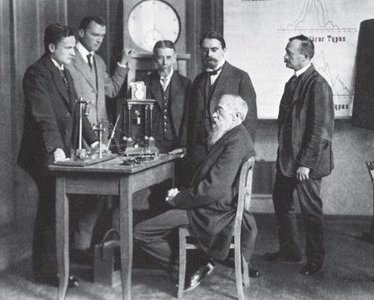
Wilhelm Wundt and Structuralism
Wilhelm Wundt is considered the father of experimental psychology. He tested reaction times and viewed mental experience as a hierarchy. Edward Titchener expanded Wundt’s ideas into structuralism, which sought to break the mind into its smallest elements.
Structuralism: An approach that analyzes the mind by breaking it down into basic components.
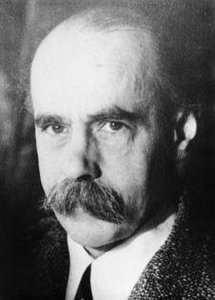
Max Wertheimer and Gestalt Psychology
Gestalt psychology, founded by Max Wertheimer, challenged structuralism by arguing that experience is different from the sum of its parts. Gestalt psychologists believed that breaking perception into components loses essential information.
Gestalt Psychology: Focuses on holistic perception and the idea that the whole is greater than the sum of its parts.

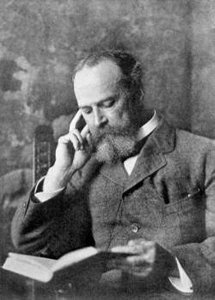
William James and Functionalism
William James developed functionalism, which emphasized the purpose of behavior and mental processes in adapting to the environment. Functionalism studied why behaviors and mental processes work in particular ways and highlighted the role of evolution.
Functionalism: Focuses on the function and purpose of consciousness and behavior.
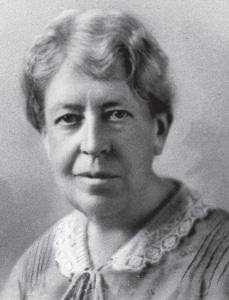
Mary Whiton Calkins, a student of James, contributed to the study of memory and the self.
Clinical Roots: Freud and Humanistic Psychologists
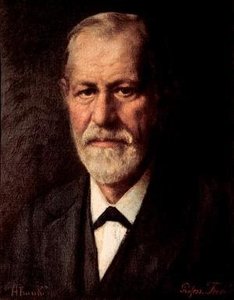
Sigmund Freud developed the psychodynamic theory, emphasizing the influence of the unconscious mind, sexuality, and early experiences on behavior. Abraham Maslow and humanistic psychologists focused on human potential, viewing people as innately good and motivated to improve.
Psychodynamic Theory: Explores unconscious motives and conflicts.
Humanistic Psychology: Emphasizes personal growth and self-actualization.
The Behaviorist and Cognitive Revolution
Behaviorism, led by Ivan Pavlov, John B. Watson, and B.F. Skinner, focused on observable behaviors and their relationship to environmental stimuli. The cognitive revolution, initiated by Ulric Neisser, reintroduced the study of mental processes such as thinking, reasoning, and problem-solving.
Classical Conditioning (Pavlov): Learning through association.
Law of Effect (Thorndike): Behaviors followed by positive outcomes are more likely to be repeated.
Cognitive Psychology: Studies mental processes like memory and information processing.
Five Major Perspectives of Psychology
1. Biological Psychology
Focuses on the relationship between mind and behavior, emphasizing genetics, biochemistry, anatomy, and physiology. Evolutionary psychology examines how behavior and physical structure are shaped by survival needs.
Includes neuroscience, sensation, and consciousness.
2. Cognitive Psychology
Studies how information is processed, stored, and retrieved. It explores cognition, memory, perception, and intelligence.
Examples include remembering names, dates, and learning new skills.

3. Developmental Psychology
Examines behavioral changes across the lifespan, including learning, physical development, and language acquisition.
Studies memory functions at different ages and stages of life.
4. Social and Personality Psychology
Focuses on how social environments and individual differences influence behavior. It considers social and cultural diversity, emotion, motivation, and the construction of personal realities.
Explores how social context shapes thoughts, feelings, and actions.
5. Clinical Psychology
Explains, defines, and treats psychological disorders. It addresses well-being, health, and abnormal behavior, including Freud’s concept of repression.
Includes therapy and interventions for mental health issues.
Integrating Psychology’s Five Perspectives
Using multiple perspectives allows for a more comprehensive understanding of complex phenomena, such as attraction, by considering biological, cognitive, social, personality, and clinical factors.
What Does It Mean To Be A Psychologist?
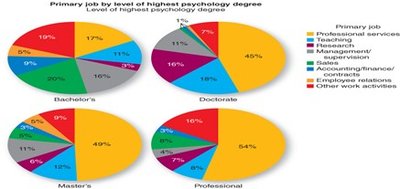
Becoming a psychologist typically requires a graduate degree (usually a doctorate), with specialization possible in clinical or counseling psychology. Psychologists work in diverse fields, including healthcare, education, management, and human resources.
Summary
Psychology is a scientific discipline rooted in philosophy and the natural sciences.
Major early movements include structuralism, functionalism, Gestalt psychology, psychodynamic theory, humanistic psychology, behaviorism, and cognitive psychology.
The five major perspectives are biological, cognitive, developmental, social and personality, and clinical psychology.
Integrating these perspectives leads to a more accurate understanding of behavior and mental processes.
Psychology’s role as a hub science supports its application in many fields and informs public policy.
