 Indietro
Learning: Principles and Applications in Psychology
Guida di studio - Note intelligenti
 Appunti personalizzati basati sui tuoi materiali, ampliati con definizioni chiave, esempi e contesto.
Learning
Definition and Importance
Learning is a fundamental psychological process that enables organisms to adapt to their environment through changes in behavior and knowledge. It involves both conscious and unconscious processes and is essential for acquiring new skills and knowledge.
Learning: A relatively permanent change in behavior or knowledge resulting from experience.
Helps organisms adapt to their environment.
Involves acquiring new skills and knowledge.
Includes both conscious and unconscious processes.
Approaches to Learning
There are three primary approaches to learning, all rooted in behaviorism:
Observational Learning
Classical Conditioning
Operant Conditioning
Observational Learning
Principles and Process
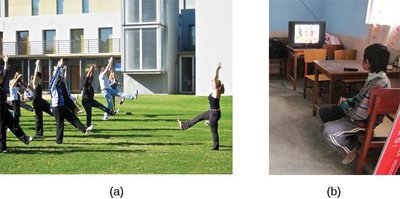
Observational learning occurs when individuals learn by watching others and then imitating their actions. The person being observed is called the model. This approach is central to social learning theory, which emphasizes the role of internal mental states and the absence of direct reinforcement.
Model: The individual being observed by others.
Learning occurs through imitation and observation.
Bobo Doll Experiment
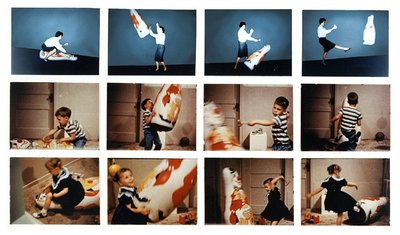
Albert Bandura's famous Bobo Doll experiments demonstrated how children imitate aggressive behaviors observed in adults. The experiment showed that children were more likely to imitate behaviors if the model was rewarded or not punished.
Children observed adults acting aggressively toward a Bobo doll.
Adults were either punished, praised, or ignored for their behavior.
Children who saw adults punished were less likely to imitate aggression.
Children who saw adults praised or ignored were more likely to imitate aggression.
Social Learning Theory
Bandura's social learning theory explains learning without external reinforcement, emphasizing the importance of internal mental states and cognitive processes.
Observational learning involves more than imitation; internal mental states are crucial.
Learning can occur vicariously through observing others' rewards and punishments.
Steps in the Modeling Process
Attention: Focus on the behavior.
Retention: Remember what was observed.
Reproduction: Ability to perform the behavior.
Motivation: Desire to imitate the behavior.
Vicarious Reinforcement: Observer sees the model rewarded, increasing likelihood of imitation.
Vicarious Punishment: Observer sees the model punished, decreasing likelihood of imitation.
Classical Conditioning
Principles and Process
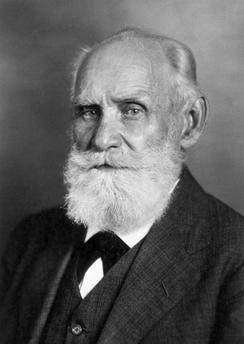
Classical conditioning is a learning process in which organisms learn to associate stimuli and anticipate events. Ivan Pavlov pioneered this approach through experiments with dogs.
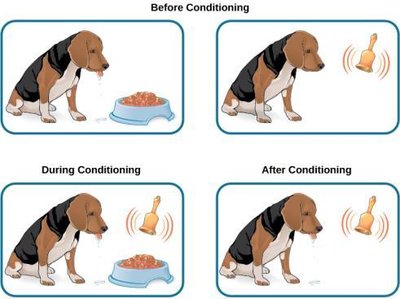
Unconditioned Response (UCR): Natural, unlearned reaction to a stimulus (e.g., salivation to food).
Unconditioned Stimulus (UCS): Stimulus that elicits a reflexive response (e.g., food).
Neutral Stimulus (NS): Stimulus that does not naturally elicit a response (e.g., bell before conditioning).
Conditioned Stimulus (CS): Stimulus that elicits a response after being paired with UCS (e.g., bell after conditioning).
Conditioned Response (CR): Learned response to the CS (e.g., salivation to bell).
Higher-Order Conditioning
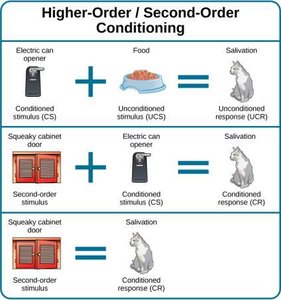
Higher-order (second-order) conditioning occurs when an established conditioned stimulus is paired with a new neutral stimulus, resulting in the new stimulus eliciting the conditioned response.
Example: A cat learns to associate the squeaky cabinet door (second-order stimulus) with the electric can opener (CS), which is associated with food (UCS).
The cat salivates (CR) when it hears the squeaky cabinet door (CS).
Classical Conditioning in Humans
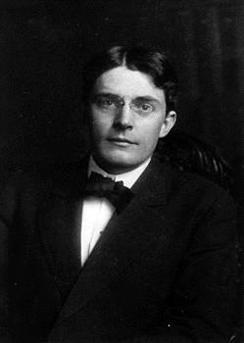
John Watson applied classical conditioning principles to human emotion, notably in the "Little Albert" experiment. Watson believed all behavior could be studied as stimulus-response reactions.
Little Albert was exposed to neutral stimuli (rabbit, dog, cotton wool, white rat).
Watson paired these with a loud sound, causing fear.
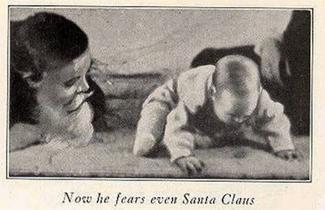
After repeated pairings, Little Albert became fearful of the stimulus alone.
Stimulus generalization occurred: Little Albert feared all furry things, including a Santa Claus mask.
Processes in Classical Conditioning
Acquisition: Initial learning phase when NS and UCS are paired.
Extinction: Decrease in CR when UCS is no longer presented with CS.
Spontaneous Recovery: Return of a previously extinguished CR after a rest period.
Operant Conditioning
Principles and Process
Operant conditioning, proposed by B.F. Skinner, involves learning to associate behaviors with their consequences. Reinforcement increases the likelihood of a behavior, while punishment decreases it.
Positive: Adding something.
Negative: Removing something.
Reinforcement: Increases behavior.
Punishment: Decreases behavior.
Types of Reinforcement and Punishment
Positive Reinforcement: Adding something to increase behavior (e.g., praise, paychecks).
Negative Reinforcement: Removing something to increase behavior (e.g., seatbelt beeping stops when seatbelt is fastened).
Positive Punishment: Adding something to decrease behavior (e.g., scolding).
Negative Punishment: Removing something to decrease behavior (e.g., taking away a toy).
Classical vs. Operant Conditioning
Comparison Table
The following table compares classical and operant conditioning:
Aspect | Classical Conditioning | Operant Conditioning |
|---|---|---|
Conditioning Approach | UCS paired with NS; NS becomes CS, elicits CR | Behavior followed by reinforcement or punishment |
Stimulus Timing | Stimulus occurs before response | Stimulus occurs after response |
Shaping and Reinforcement
Shaping
Shaping is used in operant conditioning to teach complex behaviors by rewarding successive approximations toward the target behavior.
Behaviors are broken into small steps.
Each step closer to the desired behavior is reinforced.
Commonly used by animal trainers.
Types of Reinforcers
Primary Reinforcers: Innate reinforcing qualities (e.g., food, water).
Secondary Reinforcers: No inherent value; associated with primary reinforcers (e.g., money, praise).
Token Economies: Tokens exchanged for other reinforcers; used in prisons, schools, institutions.
Reinforcement Schedules
Continuous Reinforcement: Reinforcer presented every time behavior occurs; quickest way to teach behavior.
Partial Reinforcement: Reinforcer presented intermittently; several types of schedules exist.
Example: A dog receives a treat immediately after sitting, associating the behavior with the consequence.
Additional info: Academic context and definitions were expanded for clarity and completeness. All images included are directly relevant to the adjacent explanations.
