 Indietro
Memory: Processes, Types, and Errors – Introduction to Psychology Study Guide
Guida di studio - Note intelligenti
 Appunti personalizzati basati sui tuoi materiali, ampliati con definizioni chiave, esempi e contesto.
Memory
Overview of Memory
Memory is a fundamental cognitive process that allows us to encode, store, and retrieve information. Psychologists study memory to understand how information is processed, the types of memory systems, and the reasons for forgetting. Memory is often compared to an information processing system, similar to a computer.
Encoding: Input of information into the memory system.
Storage: Retention of encoded information over time.
Retrieval: Accessing stored information and bringing it into conscious awareness.
Modal Model of Memory
The Atkinson and Shiffrin (1968) modal model describes memory as a flow of information through three distinct stages: sensory memory, short-term memory, and long-term memory.
Sensory Memory: Brief retention of sensory stimulation (1-2 seconds).
Short-Term Memory (STM): Holds information for about 20-30 seconds.
Long-Term Memory (LTM): Continuous storage of information, potentially for years.
Sensory Memory
Echoic Memory: Persistence of sound for 1-2 seconds after stimulus.
Iconic Memory: Brief memory for visual stimuli.
Haptic Memory: Brief memory for tactile stimuli.
Short-Term Memory
Capacity: Miller's (1956) famous "7 ± 2" items.
Duration: Roughly 20-30 seconds.
Chunking: Combining small units into meaningful groups to increase capacity.

Encoding: Transferring Information to Long-Term Memory
Encoding is the process of transforming information from short-term/working memory into long-term memory. The brain labels, organizes, and connects new information to existing concepts.
Automatic Processing: Encoding details like time, space, and frequency without conscious awareness.
Effortful Processing: Encoding that requires attention and effort, such as learning new skills.
Types of Encoding
Semantic Encoding: Encoding of words and their meanings; most effective for recall.
Visual Encoding: Encoding of images; concrete words are easier to recall than abstract words.
Acoustic/Auditory Encoding: Encoding of sounds.
Self-Reference Effect
Information related to oneself is remembered better than less personally relevant material.
Retrieval: Accessing Stored Information
Retrieval is the act of bringing information from memory storage back into conscious awareness. It is essential for everyday functioning.
Recall: Accessing information without cues.
Recognition: Identifying previously learned information when encountered again.
Relearning: Learning information more quickly after having learned it previously.
Working Memory
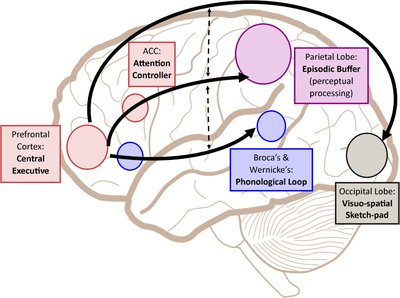
Baddeley and Hitch (1974) proposed the concept of working memory (WM), a limited-capacity system for temporary storage and manipulation of information for complex tasks. WM emphasizes the distinction between storage and manipulation, and the functional independence of information channels.
Phonological Loop: Processes auditory information.
Visuospatial Sketch Pad: Processes visual and spatial information.
Central Executive: Controls attention and coordinates information.
Episodic Buffer: Integrates information across channels and links to long-term memory.
Long-Term Memory (LTM)
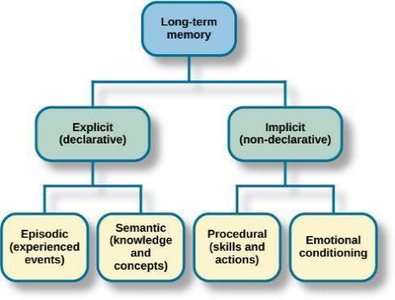
LTM is the continuous storage of information. It is divided into explicit (declarative) and implicit (non-declarative) memory.
Explicit (Declarative) Memory: Conscious recollection of facts and events.
Semantic Memory: Knowledge about words, concepts, and language.
Episodic Memory: Information about personally experienced events (autobiographical memory).
Implicit (Non-Declarative) Memory: Memories not part of conscious awareness.
Procedural Memory: Knowledge of how to perform tasks (skills and actions).
Emotional Conditioning: Learned emotional responses.
Memory Techniques and Study Strategies
Effective memory techniques can enhance learning and recall.
Elaborative Rehearsal: Linking new information to existing memories for deeper processing.
Self-Reference Effect: Making information personally meaningful.
Frequent Rehearsal and Retrieval: Regular practice strengthens memory.
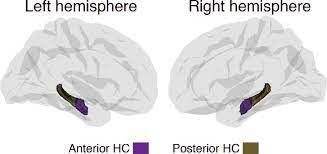
Exercise: Promotes neurogenesis in the hippocampus.
Sleep: Consolidates information during sleep.
Mnemonic Devices: Cognitive strategies to enhance encoding and retrieval.
Memory Errors: Construction, Reconstruction, and Suggestibility
Memories are susceptible to errors and distortions. Construction refers to the formation of new memories, while reconstruction involves retrieving and potentially altering old memories.
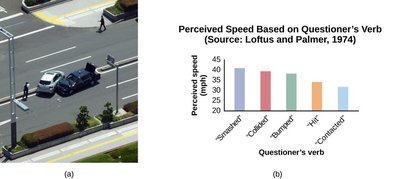
Suggestibility: Misinformation from external sources can lead to false memories.
Misinformation Effect: Exposure to incorrect information alters memory of the original event.
False Memory Syndrome: Recall of false autobiographical memories.
Repressed Memories: Controversial idea that traumatic memories can be completely repressed and later recalled.
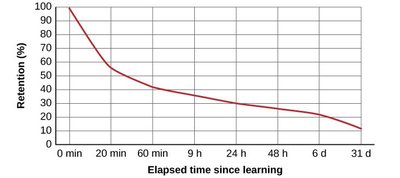
Forgetting: Ebbinghaus Forgetting Curve
Forgetting occurs when unused information fades from memory. Ebbinghaus (1885) studied memorization and found that memory for new information decays rapidly.
50% of information is forgotten after 20 minutes.
70% is forgotten after 24 hours.
Application Example: Identifying the US Nickel
Memory can be tested by asking individuals to identify familiar objects, such as the accurate US nickel, from similar alternatives. This demonstrates the limits of visual memory and recognition.


Example: Many people struggle to recall the exact features of common objects, illustrating the difference between recognition and recall.
