 Indietro
Personality Assessment in Psychology: Methods, Measurement, and Approaches
Guida di studio - Note intelligenti
 Appunti personalizzati basati sui tuoi materiali, ampliati con definizioni chiave, esempi e contesto.
Personality Psychology
Introduction to Personality Assessment
Personality assessment is a core area in psychology, focusing on the systematic evaluation of individual differences in behavior, cognition, and emotion. The goal is to understand and measure personality traits using formal methods.
Personality is defined as the characteristic sets of behaviors, cognitions, and emotional patterns that evolve from biological and environmental factors.
Assessment helps psychologists diagnose, understand, and predict behavior.
Methods of Personality Assessment
There are several formal methods used to assess personality, each with unique strengths and limitations.
Interviews: Gathering information through conversation and observation.
Psychometric Tests: Standardized tests designed to measure psychological traits.
Projective Techniques: Using ambiguous stimuli to reveal unconscious aspects of personality.
Interviews
Interviews are a primary method for personality assessment, varying in structure and purpose.
Unstructured Interviews: Open-ended questions allow for flexible, in-depth exploration. Example: "Tell me why you are here?"
Structured Interviews: Closed-ended questions with set protocols, efficient for specific information gathering.
Semi-Structured Interviews: Combines both approaches, allowing for specific questions and elaboration.


Psychometric Tests & Theory of Measurement
Psychometric tests are based on the premise that psychological traits exist in measurable quantities.
Measurement Principle: "If something exists, it must exist in some quantity and that quantity can be measured." (Thorndike)
Scores from tests are never 100% accurate; every score has an error component.
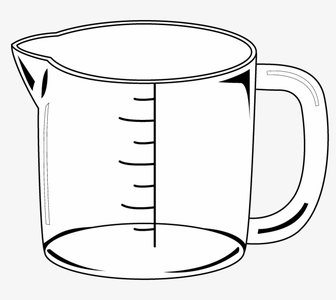

Theory of Measurement: Error, Reliability, and Validity
Observed Score = True Score + Error
Reliability: Consistency or repeatability of measurement. A reliable test produces similar results under consistent conditions.
Validity: Accuracy of measurement. A valid test measures what it is intended to measure and is free from bias.
Fairness of Norms: Ensuring that test norms are appropriate and unbiased for all populations.
Reliability
Defined as the degree to which test scores are free from measurement errors.
Reliable instruments yield consistent results across time and conditions.
Validity
Defined as the accuracy with which a test measures what it is supposed to measure.
Validity also includes freedom from bias towards specific populations.
Fairness and Norms
Norms are statistical standards used to interpret test scores.
Fairness ensures that tests are equitable and unbiased for all groups.
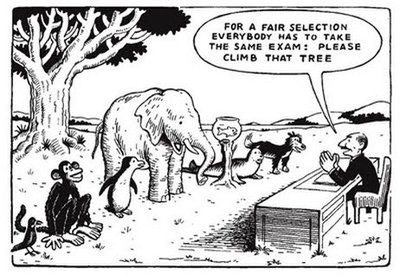
Domains and Approaches in Psychometric Testing
Psychometric testing of personality can be divided into objective and projective approaches.
Objective Approaches
Objective tests use structured formats and fixed scoring rules.
Logical Content Approach: Items are logically related to the trait being measured.
Factor Analysis Approach: Statistical method to identify underlying factors.
Empirical Approach: Items are selected based on empirical evidence.
Theoretical Approach: Based on psychological theories.
Self-report Questionnaires: Examples include CORE-OM, 16PF, NEO-PI, MMPI, MBTI.
Projective Approaches
Projective tests use ambiguous stimuli to uncover unconscious aspects of personality.
Projective Hypothesis: Psychological organization determines perceptions and symbolism, which are unique to each individual.
Association Techniques: Respondents associate words or images.
Completion Techniques: Respondents complete sentences or stories.
Expressive Techniques: Respondents express themselves through drawings or other creative means.
Constructive Techniques: Respondents construct stories or scenarios.
Examples: Rorschach Inkblot Test, Sentence Completion Test, Thematic Apperception Test (TAT), Drawings (DAP, KFD, KCD, HTP).
Comparison of Objective and Projective Approaches
Objective Tests | Projective Tests |
|---|---|
Fixed scoring rules | Interpretative and subjective |
Quantitative | Qualitative |
Restricted (MCQ) responses | Open-ended responses |
Direct measure | Indirect measure |
Nomothetic (common traits) | Idiographic (unique traits) |
Examples: MMPI, 16PF, MBTI | Examples: TAT, Rorschach, Drawings |
Summary of Personality Assessment Approaches
Personality can be assessed using interviews, objective tests, and projective techniques.
Each method has strengths and limitations regarding reliability, validity, and fairness.
Objective tests are structured and quantitative; projective tests are unstructured and qualitative.
Key Terms and Concepts
Personality: Characteristic patterns of behavior, cognition, and emotion.
Reliability: Consistency of measurement.
Validity: Accuracy of measurement.
Norms: Statistical standards for interpreting scores.
Objective Tests: Structured, quantitative assessments.
Projective Tests: Unstructured, qualitative assessments using ambiguous stimuli.
Example Applications
Clinical psychologists use interviews to diagnose personality disorders.
Psychometric tests are used in employment settings to assess personality fit.
Projective techniques are used in therapy to explore unconscious motivations.











Additional info: The notes expand on brief points from the original material, providing definitions, examples, and comparisons to ensure completeness and academic quality for exam preparation.
