 Indietro
Week 3-PP -Sensation and Perception: Foundations of Experience
Guida di studio - Note intelligenti
 Appunti personalizzati basati sui tuoi materiali, ampliati con definizioni chiave, esempi e contesto.
3.1–3.3 The ABCs of Sensation
Introduction to Sensation
Sensation is the process by which sensory organs receive information from the environment and transmit it to the brain. This process is fundamental for perception and interaction with the world.
Sensation: Activation of receptors in sense organs (eyes, ears, nose, skin, taste buds).
Transduction: The conversion of external stimuli into neural signals that the brain can interpret.
Sensory receptors: Specialized neurons that respond to specific types of energy (e.g., light, sound, chemicals).
Synesthesia: A condition where stimulation of one sense leads to involuntary experiences in another sense (e.g., seeing colors when reading letters).
Sensory Thresholds
Sensory thresholds define the limits of our sensory systems, determining what stimuli we can detect and differentiate.
Just Noticeable Difference (JND): The smallest difference between two stimuli that can be detected 50% of the time.
Absolute Threshold: The minimum intensity of a stimulus that can be detected 50% of the time.
Subliminal Stimuli: Stimuli below the threshold of conscious awareness but still capable of influencing behavior.
Signal Detection Theory: A framework for understanding how decisions are made under conditions of uncertainty, considering both the stimulus and psychological factors.
Habituation and Sensory Adaptation
The brain and sensory receptors can become less responsive to constant, unchanging stimuli, allowing us to focus on new information.
Habituation: The brain stops attending to constant, unchanging information.
Sensory Adaptation: Sensory receptors become less responsive to unchanging stimuli.
Microsaccades: Tiny eye movements that help prevent sensory adaptation to visual stimuli.

3.4–3.6 The Science of Seeing
Physical Properties of Light
Light is both a wave and a particle (photon). Its physical properties determine how we perceive brightness, color, and saturation.
Brightness: Determined by the amplitude of the light wave.
Color (Hue): Determined by the wavelength of light.
Saturation: The purity of the color, with highly saturated colors containing only one wavelength.
Structure and Function of the Eye
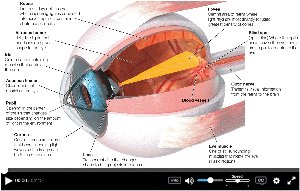
The eye is a complex organ that focuses light and converts it into neural signals for the brain to interpret as vision.
Cornea: Clear membrane that protects the eye and focuses light.
Aqueous Humor: Fluid that nourishes the eye.
Pupil: Opening through which light enters the eye.
Iris: Muscle that controls the size of the pupil.
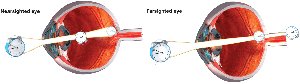
Lens: Changes shape to focus light on the retina (visual accommodation).
Vitreous Humor: Jelly-like fluid that maintains eye shape.
Retina: Contains photoreceptors (rods and cones) that detect light.
Blind Spot: Area with no photoreceptors where the optic nerve exits the eye.


The Visual Pathway
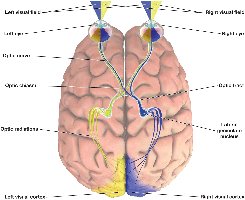
Neural signals from the retina travel through the optic nerve, cross at the optic chiasm, and reach the visual cortex in the occipital lobe for processing.
Visual pathway: Retina → Optic nerve → Optic chiasm → Optic tract → Thalamus (LGN) → Visual cortex.
Dark adaptation: Recovery of sensitivity in darkness.
Light adaptation: Recovery of sensitivity in bright light.
Theories of Color Vision
Color vision is explained by two major theories: the trichromatic theory and the opponent-process theory.
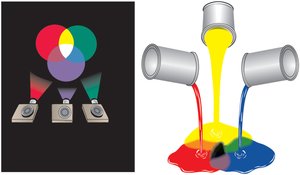
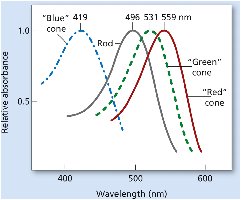
Trichromatic Theory: Three types of cones (red, green, blue) combine to produce all colors.
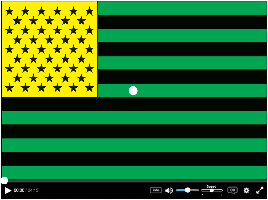
Opponent-Process Theory: Four primary colors (red-green, blue-yellow) are paired, and activation of one inhibits the other.
Afterimages: Visual sensations that persist after the original stimulus is removed, supporting the opponent-process theory.
Color-Deficient Vision
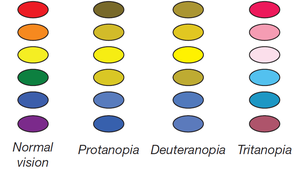
Color-deficient vision (commonly called color blindness) results from problems with the cones in the retina.
Monochromatic Vision: Only one type of cone functions.
Dichromatic Vision: Only two types of cones function (e.g., protanopia, deuteranopia, tritanopia).
Sex-linked inheritance: More common in males due to genetic factors.
3.7–3.9 The Hearing Sense
Physical Properties of Sound
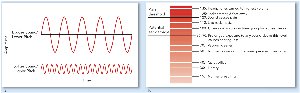
Sound is a form of energy that travels in waves and is interpreted by the auditory system as pitch, volume, and timbre.
Wavelength: Perceived as pitch (frequency, measured in Hertz).
Amplitude: Perceived as volume (loudness, measured in decibels).
Purity: Perceived as timbre (quality of sound).
Structure of the Ear
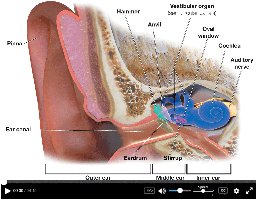
The ear is divided into three main sections: outer, middle, and inner ear, each playing a role in hearing.
Pinna: Collects sound waves.
Auditory Canal: Channels sound to the eardrum.
Eardrum: Vibrates in response to sound waves.
Ossicles (Hammer, Anvil, Stirrup): Amplify vibrations to the inner ear.
Cochlea: Fluid-filled structure where sound is transduced into neural signals.
Organ of Corti: Contains hair cells that act as auditory receptors.
Auditory Nerve: Transmits auditory information to the brain.
Theories of Pitch Perception
The brain interprets pitch using several mechanisms:
Place Theory: Different pitches stimulate different places on the basilar membrane.
Frequency Theory: Pitch is related to the rate of vibrations in the basilar membrane.
Volley Principle: Groups of auditory neurons take turns firing to encode higher frequencies.
Hearing Impairments and Treatments
Hearing loss can be due to problems in the outer, middle, or inner ear, or in the auditory pathways of the brain.
Conduction Hearing Impairment: Problems with the outer or middle ear (e.g., damaged eardrum or ossicles).
Nerve Hearing Impairment: Damage to inner ear or auditory pathways.
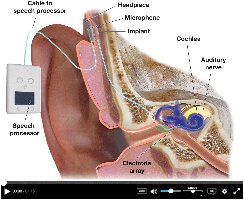
Cochlear Implant: Device that converts sound into electrical signals sent directly to the auditory nerve.
3.10–3.11 Chemical Senses: Taste and Smell
Gustation (Taste)
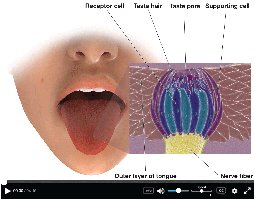
Taste is detected by taste buds, which are clusters of receptor cells located on the tongue.
Five Basic Tastes: Sweet, sour, salty, bitter, umami (savory).
Proposed Sixth Taste: Oleogustus (fatty acids).
Olfaction (Smell)
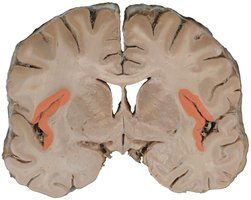
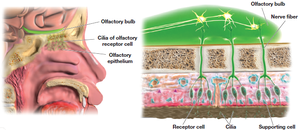
Smell is detected by olfactory receptor cells in the nasal cavity, which send signals directly to the olfactory bulbs in the brain.
Olfactory Bulbs: Brain structures that process smell information before sending it to other brain regions.
Direct Pathway: Unlike other senses, olfactory signals do not pass through the thalamus before reaching the cortex.
3.12–3.13 The Other Senses: Touch, Body Position, and Movement
Somesthetic Senses
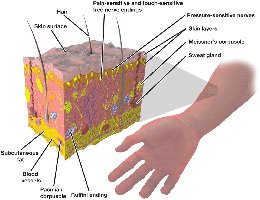
These senses include touch, pressure, temperature, and pain, as well as the kinesthetic and vestibular senses.
Pacinian Corpuscles: Detect changes in pressure.
Free Nerve Endings: Detect temperature, pressure, and pain.
Types of Pain: Visceral (organs), somatic (skin, muscles, joints).
Gate-Control Theory: Pain signals must pass through a 'gate' in the spinal cord.
Pain Disorders: Congenital analgesia, CIPA, phantom limb pain.
Kinesthetic and Vestibular Senses
These senses provide information about body movement, position, and balance.
Kinesthesia: Awareness of body movement.
Proprioception: Awareness of body position in space.
Vestibular Sense: Awareness of balance and movement, located in the inner ear.
Sensory Conflict Theory: Explains motion sickness as a result of conflicting sensory information.
3.14–3.16 The ABCs of Perception
Perceptual Constancies and Gestalt Principles
Perception is the process of organizing and interpreting sensory information. Gestalt principles explain how we group and interpret visual stimuli.
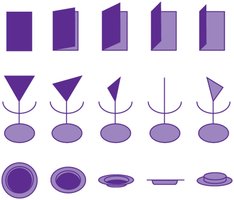
Size Constancy: Perceiving objects as the same size despite changes in distance.
Shape Constancy: Perceiving objects as having a constant shape despite changes in the retinal image.
Brightness Constancy: Perceiving brightness as constant despite changes in illumination.
Figure-Ground: Distinguishing objects from their background.
Gestalt Principles: Proximity, similarity, closure, continuity, contiguity, common region, elemental connectedness.

Depth Perception
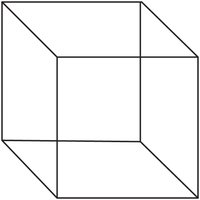
Depth perception allows us to see the world in three dimensions using monocular and binocular cues.
Monocular Cues: Linear perspective, relative size, overlap, aerial perspective, texture gradient, motion parallax, accommodation.
Binocular Cues: Convergence (eye rotation), binocular disparity (difference in images between eyes).


Perceptual Illusions
Illusions are misinterpretations of sensory information, revealing how perception can differ from reality.
Hermann Grid: Illusion of gray spots at intersections.
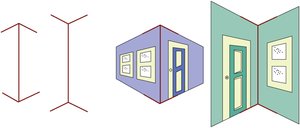
Müller-Lyer Illusion: Lines of equal length appear different due to arrow-like ends.
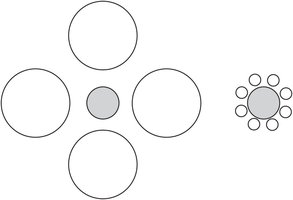
Ebbinghaus Illusion: Perceived size of a circle is influenced by surrounding circles.
Moon Illusion: The moon appears larger on the horizon than in the sky.
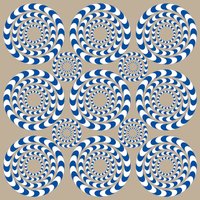
Illusions of Motion: Autokinetic effect, stroboscopic motion, phi phenomenon, rotating snakes, Enigma.
Perceptual Set: Expectations and prior experiences influence perception.
Top-Down Processing: Using prior knowledge to interpret sensory information.
Bottom-Up Processing: Building perception from sensory input.


3.17 Mindfulness and Perception
Mindfulness and Well-Being
Mindfulness, or focused awareness, involves paying attention to present experiences, including sensory input, thoughts, and feelings. Practicing mindfulness can enhance perception, enrich personal experiences, and improve overall well-being.
