 Indietro
Sensation and Perception: Study Guide for Introduction to Psychology
Guida di studio - Note intelligenti
 Appunti personalizzati basati sui tuoi materiali, ampliati con definizioni chiave, esempi e contesto.
Sensation and Perception
Overview
Sensation and perception are fundamental concepts in psychology, describing how we gather information from the environment and interpret it. Sensation refers to the process of detecting physical energy from the environment, while perception involves the brain's interpretation of these sensory inputs. Understanding these processes is essential for exploring how humans experience the world.
Sensation vs. Perception
Sensation: The process of gathering raw data from the environment through sensory organs. This is often described as bottom-up processing.
Perception: The brain's interpretation of sensory information, influenced by prior knowledge, expectations, and context. This is known as top-down processing.
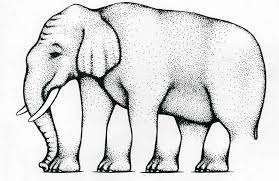
Illusions: Occur when perception does not match reality, highlighting the difference between sensation and perception.
Example: Visual illusions, such as ambiguous images or color perception debates, demonstrate how perception can differ among individuals.
Principles of Sensation
Transduction: The conversion of physical energy (e.g., light, sound) into neural signals by sense receptors.
Sense Receptors: Specialized cells that detect specific types of stimuli.
Sensory Adaptation: The tendency for sensory receptors to respond most strongly when a stimulus is first detected, then decrease their response over time (e.g., adapting to repetitive sounds).

Psychophysics
Psychophysics is the study of the relationship between physical stimuli and the sensations and perceptions they produce. Gustav Fechner pioneered this field in 1860.
Absolute Threshold: The lowest level of a stimulus that can be detected 50% of the time (e.g., a feather touching skin).
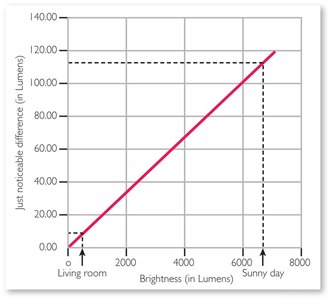
Just Noticeable Difference (JND): The smallest change in a stimulus that can be detected (e.g., adjusting radio volume).
Weber's Law: The principle that the stronger the stimulus, the larger the JND required for detection.

Signal Detection Theory
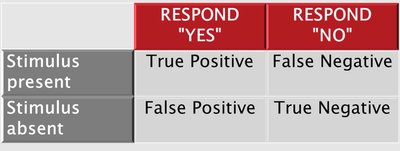
Signal detection theory examines how we detect signals amidst noise and accounts for response biases.
Response Bias: Tendency to respond in a certain way regardless of actual stimulus presence.
True Positive, False Positive, True Negative, False Negative: Outcomes in signal detection tasks.
RESPOND "YES" | RESPOND "NO" | |
|---|---|---|
Stimulus present | True Positive | False Negative |
Stimulus absent | False Positive | True Negative |
Selective Attention and (In)Attention
Selective Attention: The brain's ability to focus on important sensory information while ignoring others.
Cocktail Party Effect: Ability to focus on one conversation in a noisy environment.
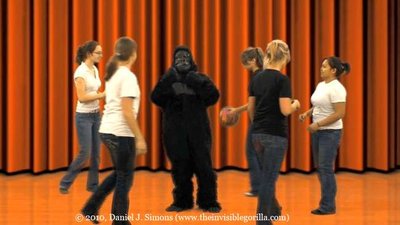
Inattentional Blindness: Failure to notice stimuli in plain sight when attention is focused elsewhere.
Change Blindness: Failure to detect changes in the environment.

The Visual System
Light and Color
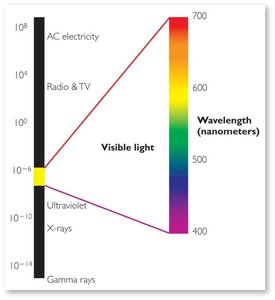
Visible Light: The portion of the electromagnetic spectrum detectable by the human eye (wavelengths ~400-700 nm).
Brightness: Intensity of reflected light.
Hue: Color determined by wavelength.
White objects: Reflect all wavelengths; black objects: absorb all wavelengths.
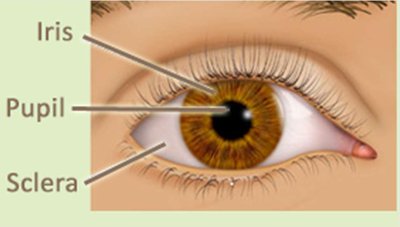
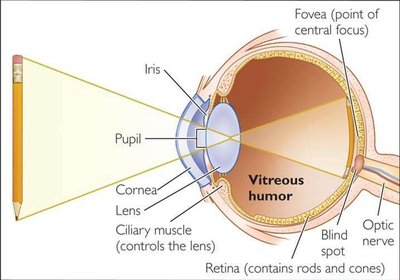
Anatomy of the Eye
Sclera: White portion of the eye.
Iris: Colored portion controlling pupil size.
Pupil: Opening where light enters; dilates or constricts reflexively.
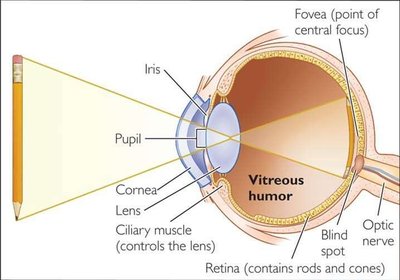
Cornea: Transparent layer covering the eye.
Lens: Focuses light onto the retina.
Retina: Contains rods and cones, the sensory receptors for vision.
Fovea: Point of central focus.
Optic Nerve: Transmits visual information to the brain.
Blind Spot: Area where the optic nerve leaves the eye; no photoreceptors.
Rods and Cones
Rods: Detect basic shapes and forms; function well in low light.
Cones: Responsible for color and detail; function best in bright light.
Visual Processing in the Brain
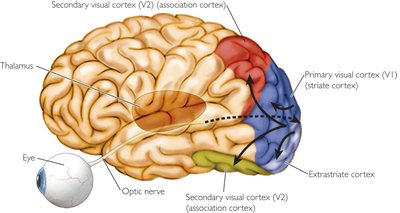
Occipital Lobe: Primary visual processing area.
Visual Cortex: Processes and interprets visual information.
Theories of Color Vision
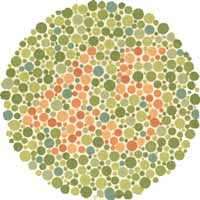
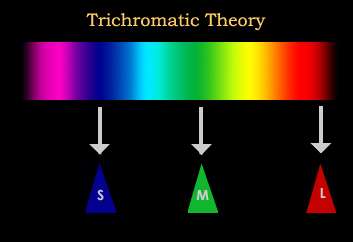
Trichromatic Theory: Three types of cones (red, green, blue) allow us to perceive color. Supported by color blindness cases.
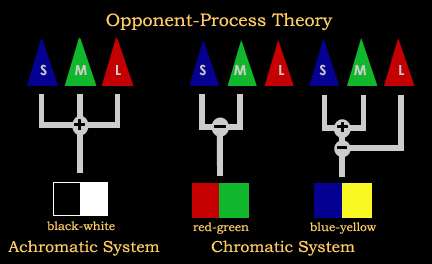
Opponent Process Theory: Three pairs of opponent cells (red-green, blue-yellow, black-white) explain phenomena like afterimages.
Both theories: The nervous system uses both principles for color vision.
The Auditory System
Sound Waves
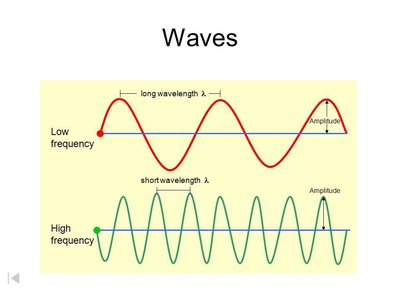
Sound waves: Mechanical vibrations traveling through air, solid, liquid, or gas.
Pitch: Determined by frequency (Hz); higher frequency = higher pitch.
Loudness: Determined by amplitude (dB); higher amplitude = louder sound.
Timbre: Quality or complexity of sound; allows distinction between voices and instruments.
Anatomy of the Ear
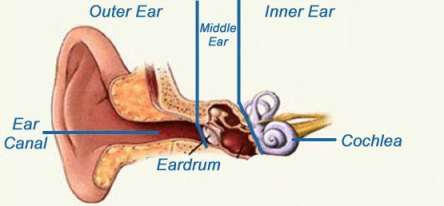
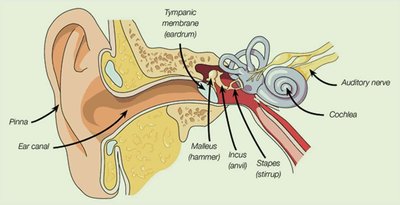
Outer Ear: Funnels sound to the eardrum (includes pinna and ear canal).
Middle Ear: Transmits sound via ossicles (hammer, anvil, stirrup).
Inner Ear: Site of auditory transduction; cochlea converts vibrations into neural activity via hair cells.
Pitch Perception Theories
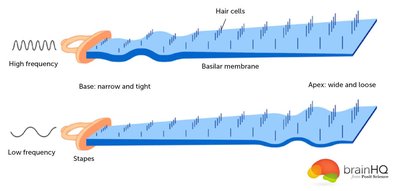
Place Theory: Different places on the basilar membrane respond to different frequencies; explains high-pitched tones.
Frequency Theory: Neurons' firing rate matches the frequency of the sound; explains low-pitched tones.
Volley Theory: Sets of neurons fire together to produce medium-range pitches.
Smell and Taste
Olfaction (Smell)
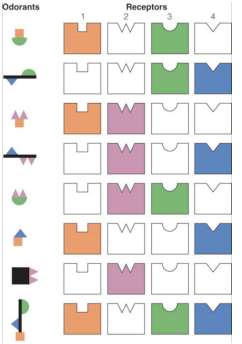
Odors: Chemical stimuli detected by olfactory neurons, each with a specific receptor type.
Shape Theory: Receptors recognize odorants based on their shape.

Gustation (Taste)
Taste Buds: Contained in bumps on the tongue; detect five basic flavors: sweet, salty, sour, bitter, umami.
Taste Map: The idea that different regions of the tongue detect different tastes is largely a myth.
Individual Differences: "Supertasters" have heightened taste sensitivity; taste perception can decline with age or disease.
Other Body Senses
Somatosensory, Proprioception, and Vestibular Senses
Somatosensory: Touch and pain.
Proprioception: Kinesthetic sense; awareness of body position.
Vestibular Sense: Equilibrium and balance.

Perception: Processing Information
Parallel Processing
Parallel Processing: Attending to multiple senses simultaneously.
Bottom-Up vs. Top-Down Processing
Bottom-Up Processing: Features of the stimulus affect perception.
Top-Down Processing: Beliefs, expectations, and prior knowledge influence perception.
Example: Understanding ambiguous messages or images based on context.
Visual Perception: Depth Cues
Monocular Cues: Require one eye; include relative size, texture gradient, interposition.
Binocular Cues: Require both eyes; include binocular disparity and convergence.
Subliminal Perception
Subliminal Perception: Stimuli presented outside of awareness may affect behavior, but effects are limited and disappear when subjects gain awareness.
Subliminal Persuasion: Not supported by scientific evidence.
Summary Table: Sensation vs. Perception
Aspect | Sensation | Perception |
|---|---|---|
Definition | Detection of physical energy | Interpretation of sensory input |
Processing | Bottom-up | Top-down |
Example | Seeing light | Recognizing a face |
Additional info: Academic context was added to clarify definitions, provide examples, and expand on brief points for completeness.
