 Indietro
Chapter 2: The Biological Perspective
Guida di studio - Note intelligenti
 Appunti personalizzati basati sui tuoi materiali, ampliati con definizioni chiave, esempi e contesto.
The Biological Perspective
Introduction
The biological perspective in psychology explores how the brain, nervous system, and other biological processes influence behavior and mental processes. This chapter provides foundational knowledge about the structure and function of neurons, neurotransmission, brain anatomy, and the interaction between the nervous and endocrine systems.
Neurons and Neurotransmitters
Structure of the Neuron
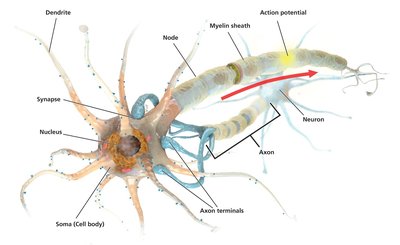
Neurons are the basic building blocks of the nervous system, specialized for receiving and transmitting information throughout the body.
Dendrites: Branch-like extensions that receive messages from other neurons.
Soma (Cell Body): Contains the nucleus and maintains the life of the cell.
Axon: Long, tubelike structure that carries neural messages away from the soma to other cells.
Axon Terminals: Rounded ends of the axon branches that communicate with other nerve cells.
Glial Cells: Support neurons by providing nutrients, cleaning up waste, and producing myelin.
Myelin Sheath: Fatty coating produced by glial cells that insulates axons and speeds up neural impulses.
The Neural Impulse: Action Potential
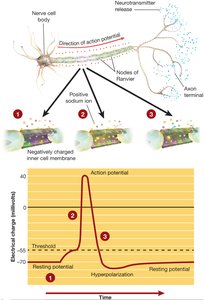
Neurons communicate via electrical impulses known as action potentials.
Ions: Charged particles whose movement creates electrical changes across the neuron's membrane.
Resting Potential: The state of a neuron when not firing a neural impulse; inside is negatively charged relative to outside.
Action Potential: A brief reversal of electrical charge that travels down the axon, triggered when the threshold is reached.
All-or-None Principle: A neuron either fires completely or not at all.
Neurotransmission
Neurons communicate with each other and with the body through chemical messengers called neurotransmitters.
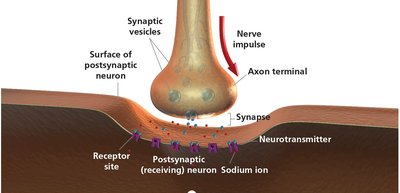
Synapse: The microscopic gap between the axon terminal of one neuron and the dendrite of another.
Synaptic Vesicles: Saclike structures in axon terminals containing neurotransmitters.
Neurotransmitters: Chemicals that transmit signals across the synapse to receptor sites on the receiving neuron.
Receptor Sites: Protein structures on the postsynaptic neuron that bind specific neurotransmitters.
Excitatory Synapse: Neurotransmitter causes the receiving cell to fire.
Inhibitory Synapse: Neurotransmitter causes the receiving cell to stop firing.
Neurotransmitter Regulation
Agonists: Mimic or enhance the effects of neurotransmitters.
Antagonists: Block or reduce the effects of neurotransmitters.
Reuptake: Process by which neurotransmitters are taken back into the synaptic vesicles for reuse.
Enzymatic Degradation: Enzymes break down neurotransmitters so they can no longer act on receptors.
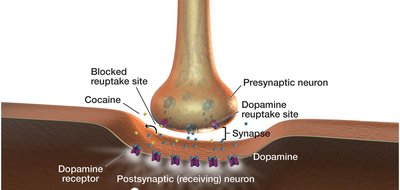
Table: Major Neurotransmitters and Their Functions
Neurotransmitter | Function |
|---|---|
Acetylcholine (ACh) | Excitatory or inhibitory; involved in arousal, attention, memory, and muscle contractions |
Norepinephrine (NE) | Mainly excitatory; involved in arousal and mood |
Dopamine (DA) | Excitatory or inhibitory; involved in movement and sensations of pleasure |
Serotonin (5-HT) | Excitatory or inhibitory; involved in sleep, mood, anxiety, and appetite |
GABA | Major inhibitory neurotransmitter; involved in sleep and inhibits movement |
Glutamate | Major excitatory neurotransmitter; involved in learning, memory, and synaptic plasticity |
Endorphins | Inhibitory neural regulators; involved in pain relief |
Studying the Brain
Lesioning and Brain Stimulation
Researchers use various methods to study brain structure and function.
Lesioning: Destroying specific brain areas to observe effects on behavior.
Electrical Stimulation of the Brain (ESB): Applying mild electrical current to stimulate brain regions.
Deep Brain Stimulation (DBS): Implanted electrodes deliver impulses to targeted brain areas.
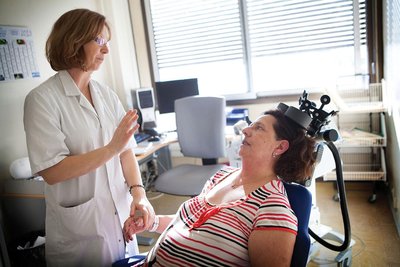
Transcranial Magnetic Stimulation (TMS): Noninvasive technique using magnetic fields to stimulate the cortex.
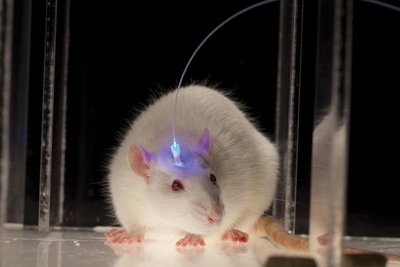
Optogenetics: Genetically modifying neurons to respond to light, allowing precise control of neural activity.
Neuroimaging Techniques
Modern imaging methods allow scientists to map brain structure and function.
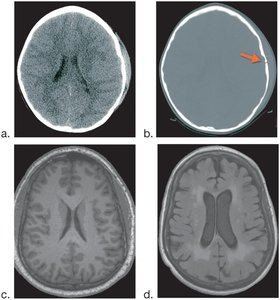
CT (Computed Tomography): Uses X-rays to create images of brain structure.
MRI (Magnetic Resonance Imaging): Uses magnetic fields and radio waves for detailed brain images.
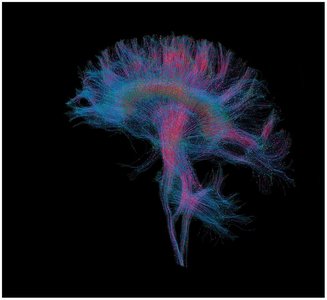
DTI (Diffusion Tensor Imaging): Maps white matter tracts in the brain.
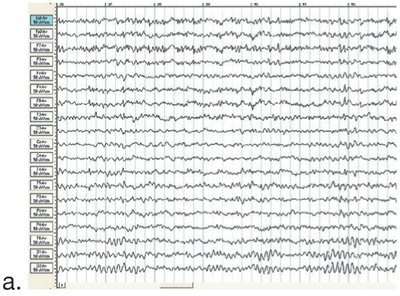
EEG (Electroencephalogram): Records electrical activity of the cortex via scalp electrodes.
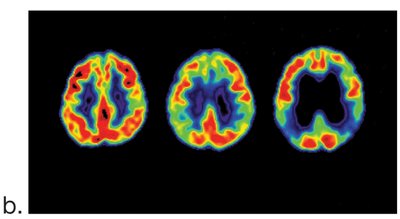
PET (Positron Emission Tomography): Tracks radioactive glucose to visualize brain activity.
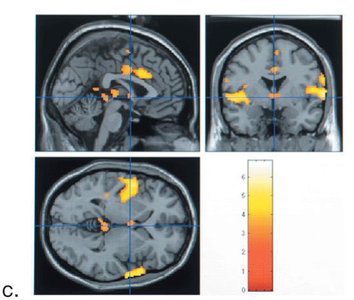
fMRI (Functional MRI): Measures changes in blood oxygen to show brain activity over time.
NIRS (Near-Infrared Spectroscopy): Uses light to measure blood oxygen changes in the cortex.
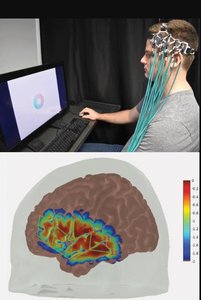
Major Structures of the Brain
The Hindbrain
The hindbrain controls basic life functions and coordination.
Medulla: Controls vital functions such as breathing and heart rate.
Pons: Involved in sleep, dreaming, and coordination between left and right sides of the body.
Reticular Formation (RF): Regulates selective attention and arousal.
Cerebellum: Coordinates involuntary, rapid, fine motor movement.
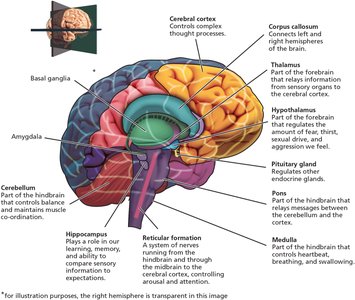
The Limbic System
The limbic system is involved in emotion, learning, memory, and motivation.
Thalamus: Relays sensory information to the cortex (except smell).
Hypothalamus: Regulates hunger, thirst, sleep, and sexual behavior.
Hippocampus: Essential for forming long-term memories.
Amygdala: Responsible for fear responses and memory of fear.
Cingulate Cortex: Involved in cognitive and emotional processing.
The Cortex
Organization and Function
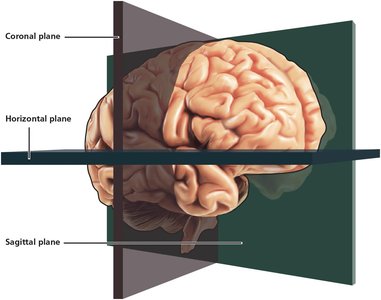
The cortex is the outermost layer of the brain, responsible for higher thought processes and sensory interpretation.
Corticalization: Wrinkling of the cortex, allowing more surface area for neurons.
Cerebral Hemispheres: The left and right halves of the cortex, connected by the corpus callosum.
Lobes of the Cortex
Occipital Lobe: Processes visual information.
Parietal Lobe: Processes touch, taste, and temperature sensations.
Somatosensory Cortex: Receives information about touch and body position.
Temporal Lobe: Processes auditory information and is involved in language.
Frontal Lobe: Involved in higher mental processes, decision-making, and motor control.
Motor Cortex: Controls voluntary muscle movements.
Association Areas and Hemispheric Specialization
Association Areas
Association areas coordinate and interpret information, playing a key role in language and higher mental processes.
Broca’s Area: Involved in speech production; damage causes Broca’s aphasia (difficulty speaking).
Wernicke’s Area: Involved in understanding language; damage causes Wernicke’s aphasia (difficulty understanding or producing meaningful language).
Spatial Neglect: Damage to right hemisphere association areas can cause neglect of the left visual field.
Hemispheric Specialization
The left and right hemispheres of the brain have specialized functions.
Left Hemisphere: Language, logic, analysis, and mathematical abilities.
Right Hemisphere: Emotional expression, spatial perception, recognition of faces and patterns, and holistic processing.
Split-Brain Research: Studies of patients with severed corpus callosum reveal hemispheric specialization.
Table: Specialization of the Two Hemispheres
Left Hemisphere | Right Hemisphere |
|---|---|
Controls right hand | Controls left hand |
Spoken and written language | Nonverbal, visual-spatial perception |
Mathematical calculations | Music and artistic processing |
Logical thought, analysis of detail | Emotional thought, pattern and facial recognition |
The Nervous System
Central Nervous System (CNS)
The CNS consists of the brain and spinal cord, serving as the main processing center for the nervous system.
Spinal Cord: Transmits messages between the body and brain; responsible for reflexes.
Sensory (Afferent) Neurons: Carry information from senses to CNS.
Motor (Efferent) Neurons: Carry commands from CNS to muscles.
Interneurons: Connect sensory and motor neurons; found in the spinal cord and brain.
Reflex Arc: Direct connection between sensory input and motor output, allowing rapid response to stimuli.
Neuroplasticity: The brain's ability to change structure and function in response to experience or injury.
Neurogenesis: Formation of new neurons.
Peripheral Nervous System (PNS)
The PNS includes all nerves outside the CNS and is divided into the somatic and autonomic nervous systems.
Somatic Nervous System: Controls voluntary muscles and transmits sensory information.
Autonomic Nervous System (ANS): Regulates involuntary functions (e.g., heart rate, digestion).
Sympathetic Division: Activates the fight-or-flight response during stress.
Parasympathetic Division: Restores the body to normal after stress; responsible for routine maintenance of the body.
The Endocrine System
Endocrine Glands and Hormones
The endocrine system consists of glands that secrete hormones directly into the bloodstream, influencing behavior and bodily functions.
Pituitary Gland: The "master gland" that regulates other endocrine glands and releases growth hormone, oxytocin, and vasopressin.
Pineal Gland: Secretes melatonin, regulating sleep-wake cycles.
Thyroid Gland: Regulates metabolism.
Pancreas: Controls blood sugar levels via insulin and glucagon.
Gonads (Ovaries and Testes): Regulate sexual development and reproduction.
Adrenal Glands: Produce hormones for stress response, salt regulation, and secondary sex characteristics.
Hormones, Stress, and Health
Stress Response and Adaptation
The autonomic nervous system and endocrine system work together to manage stress through the General Adaptation Syndrome (GAS).
Alarm Stage: Sympathetic nervous system activates, preparing the body for action.
Resistance Stage: Body remains alert and resists the stressor.
Exhaustion Stage: Resources are depleted, increasing risk of illness or death.
Effects of Stress on Health
Immune System: Chronic stress weakens immune response, increasing vulnerability to illness.
Allostasis: The process of achieving stability through physiological or behavioral change.
Allostatic Load: The cumulative wear and tear on the body due to chronic stress.
Health Risks: Chronic stress is linked to heart disease, diabetes, and cancer due to its effects on the immune system and behavior.
Attention-Deficit/Hyperactivity Disorder (ADHD)
Biological Basis and Coping Strategies
ADHD is a biological disorder influenced by genetics, environment, and brain structure. Behavioral and cognitive strategies can help manage symptoms and improve daily functioning.
Additional info: This guide covers the core concepts of the biological perspective in psychology, including neuron structure, neurotransmission, brain anatomy, neuroimaging, the nervous and endocrine systems, and the physiological basis of stress and related disorders.
