 Indietro
The Endocrine System: Structure, Function, and Hormonal Regulation
Guida di studio - Note intelligenti
 Appunti personalizzati basati sui tuoi materiali, ampliati con definizioni chiave, esempi e contesto.
The Endocrine System
Overview of Body Control Systems
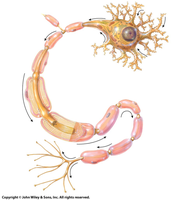
The human body maintains internal balance and regulates physiological processes through two main control systems: the nervous system and the endocrine system. Each system uses distinct mechanisms to influence tissues and organs.
Nervous System: Controls tissues via rapid nerve impulses transmitted by neurons. Effects are quick and short-lived.
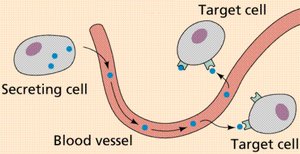
Endocrine System: Controls tissues via hormones released into the blood and tissue fluids. Effects are slower but longer-lasting.
General Properties and Functions of Hormones
Hormones are chemical messengers secreted by endocrine glands. They act on specific target tissues, affecting metabolism and regulating various physiological functions.
Key Functions: Regulation of extracellular fluid (ECF), metabolism, biological clock, muscle contraction, glandular secretion, growth and development, reproduction, and some immune functions.
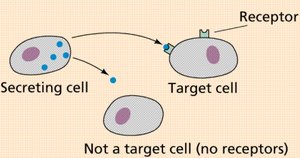
Target Specificity: Only cells with appropriate receptors respond to a given hormone.
Exocrine vs. Endocrine Glands
Exocrine Glands: Secrete substances to a body surface, often via ducts (e.g., sweat glands).
Endocrine Glands: Secrete hormones directly into the blood or body fluids (e.g., pituitary, thyroid).
Major Endocrine Glands and Their Hormones
Pituitary Gland (Hypophysis)
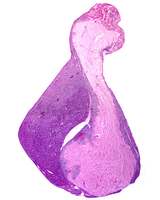
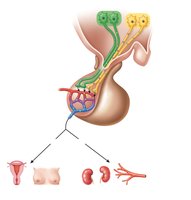
The pituitary gland is a central endocrine organ with two distinct lobes, connected to the hypothalamus by the infundibulum.
Anterior Lobe: Secretes tropic hormones that regulate other endocrine glands.
Posterior Lobe: Secretes neurohormones produced by the hypothalamus.
Anterior Pituitary Hormones
Follicle Stimulating Hormone (FSH): Stimulates growth of ovarian follicles and estrogen release in females; sperm production in males.
Luteinizing Hormone (LH): Triggers ovulation and estrogen/progesterone release in females; testosterone release in males.
Thyroid Stimulating Hormone (TSH): Stimulates thyroid hormone release.
Adrenocorticotropic Hormone (ACTH): Stimulates steroid hormone release from adrenal cortex.
Growth Hormone (GH): Stimulates growth in most body cells; not a tropic hormone.
Prolactin: Stimulates breast development and milk production; not a tropic hormone.
Posterior Pituitary Hormones
Antidiuretic Hormone (ADH, Vasopressin): Promotes water conservation in kidneys and vasoconstriction in blood vessels.
Oxytocin: Stimulates uterine contractions and milk ejection.
Thyroid Gland
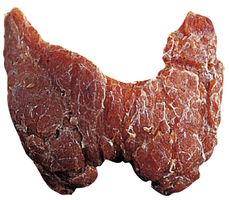
Located anterior to the trachea, the thyroid gland produces thyroid hormones (e.g., thyroxine) and calcitonin.
Thyroxine: Increases basal metabolic rate, body temperature, CNS activity, muscular action, and protein synthesis.
Calcitonin: Lowers blood calcium by acting on bone and kidneys.
Parathyroid Gland
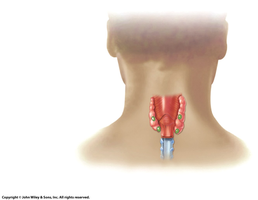
Embedded within the thyroid gland, the parathyroid glands produce parathyroid hormone (PTH).
Parathyroid Hormone (PTH): Raises blood calcium by acting on bone and kidneys.
Pancreas
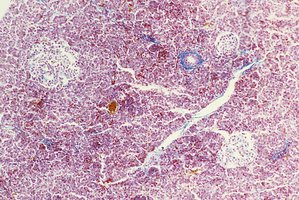
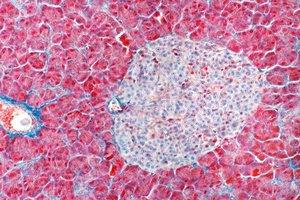
The pancreas is a mixed gland with both exocrine (digestive enzyme production) and endocrine (hormone production) functions.
Pancreatic Islets: Secrete hormones (insulin and glucagon).
Acini: Secrete pancreatic juice.
Beta Cells: Produce insulin, which lowers blood sugar.
Alpha Cells: Produce glucagon, which raises blood sugar.
Adrenal Glands
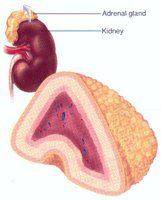
Located at the superior pole of the kidneys, the adrenal glands consist of two functionally distinct regions:
Adrenal Cortex: Produces steroid hormones (glucocorticoids, mineralocorticoids, sex hormones).
Adrenal Medulla: Produces catecholamines (epinephrine and norepinephrine).
Adrenal Cortex Hormones
Glucocorticoids (e.g., cortisol): Increase blood glucose, have anti-inflammatory effects, suppress immune system.
Mineralocorticoids (e.g., aldosterone): Conserve sodium and increase potassium loss in kidneys.
Sex Hormones: Small amounts contribute to secondary sex characteristics.
Adrenal Medulla Hormones
Catecholamines: Adrenaline (epinephrine) and noradrenaline (norepinephrine) mimic sympathetic nervous system effects.
Ovaries and Testes
Ovaries: Produce estrogen and progesterone, regulate ovarian cycle and female secondary sex characteristics.
Testes: Produce testosterone, regulate sperm production and male secondary sex characteristics.
Summary Table: Major Endocrine Glands and Their Hormones
Gland | Main Hormones | Primary Targets | Main Effects |
|---|---|---|---|
Pituitary (anterior) | FSH, LH, TSH, ACTH, GH, Prolactin | Ovary, Testes, Thyroid, Adrenal Cortex, Most cells, Breast | Growth, reproduction, metabolism, milk production |
Pituitary (posterior) | ADH, Oxytocin | Kidney, Blood vessels, Uterus, Breast | Water conservation, uterine contraction, milk ejection |
Thyroid | Thyroxine, Calcitonin | Most cells, Bone, Kidney | Metabolism, calcium regulation |
Parathyroid | PTH | Bone, Kidney | Increase blood calcium |
Pancreas | Insulin, Glucagon | Liver, Cell membranes | Blood sugar regulation |
Adrenal Cortex | Cortisol, Aldosterone, Sex hormones | Most cells, Kidneys | Glucose regulation, sodium/potassium balance, sex characteristics |
Adrenal Medulla | Epinephrine, Norepinephrine | Various tissues | Sympathetic responses |
Ovaries | Estrogen, Progesterone | Ovary, Uterus, Body cells | Ovarian cycle, female characteristics |
Testes | Testosterone | Testes, Body cells | Sperm production, male characteristics |
Key Concepts and Applications
Hormonal Regulation: Hormones are essential for maintaining homeostasis and coordinating complex physiological processes.
Clinical Relevance: Disorders of endocrine glands can lead to significant health issues, such as diabetes (pancreas), hypothyroidism (thyroid), and Addison's disease (adrenal cortex).
Formulas and Equations
Blood Glucose Regulation:
Calcium Regulation:
Additional info:
Some images and histological details were inferred to clarify gland structure and function.
Hormone effects and clinical relevance were expanded for academic completeness.
