 Indietro
The Measure of Mind: Scientific Methods in Psychology
Guida di studio - Note intelligenti
 Appunti personalizzati basati sui tuoi materiali, ampliati con definizioni chiave, esempi e contesto.
The Scientific Mindset in Psychology
Objectivity and Scientific Reasoning
Psychology relies on systematic observation and experimentation to understand behavior and mental processes. Objectivity is essential, requiring conclusions to be based on facts rather than personal emotions or biases. Scientific reasoning differs from common sense by demanding evidence and logical analysis.
Science: Learning about reality through systematic observation and experimentation.
Objectivity: Basing conclusions on facts, free from personal bias.
Confirmation bias: Tendency to notice information that supports existing beliefs.
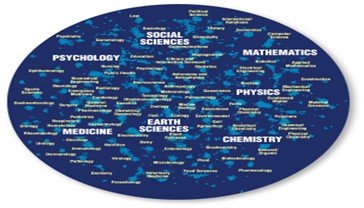
Critical Thinking in Psychology
Critical thinking is the ability to think clearly, rationally, and independently. It is vital for evaluating evidence and making reasoned conclusions.
Key Steps:
Identify what is being asked.
Evaluate supporting evidence.
Consider alternative interpretations.
Determine what additional evidence is needed.
Draw the most reasonable conclusions.
Vulnerabilities:
Bias toward believing information is true.
Pictures can increase perceived truthiness without adding evidence.
Prior knowledge may interfere with new learning.
Neglecting important information.
The Scientific Enterprise
Theories, Hypotheses, and Peer Review
Scientific theories are sets of facts and relationships based on observation. Hypotheses are proposed explanations that link variables to predictions. Peer review and replication are essential for validating scientific findings.
Theory: Set of facts and relationships based on observation.
Hypothesis: Proposed explanation for a situation; an educated guess.
Peer review: Evaluation by other experts to improve research quality.
Replication: Repeating experiments to confirm results.
Descriptive Methods of Research
Case Studies, Naturalistic Observation, and Surveys
Descriptive methods are used to make careful, systematic observations of behavior. These include case studies, naturalistic observation, and surveys.
Case study: In-depth analysis of one or a few individuals.
Naturalistic observation: Study of phenomena in their natural setting.
Survey: Asking large numbers of people about attitudes and behaviors.
Sample: Subset of the population being studied.
Population: Entire group from which a sample is drawn.

Correlational Methods
Understanding Relationships Between Variables
Correlational methods measure the direction and strength of relationships between variables. They do not establish causality.
Correlation: Measure of the relationship between two variables (positive or negative).
Variable: Factor with a range of values (e.g., height, weight).
Third variable: Variable responsible for observed correlation between two others.
Experimental Methods
Testing Hypotheses and Establishing Causality
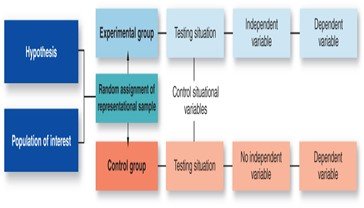
Experiments test hypotheses and allow researchers to make conclusions about causality. Key features include manipulation of variables and control groups.
Independent variable: Variable manipulated by the experimenter.
Dependent variable: Variable measured to assess effects of the independent variable.
Control group: Group not exposed to the independent variable.
Experimental group: Group exposed to the independent variable.
Random assignment: Equal chance for participants to be placed in any group.
Confounding variable: Irrelevant variable that can distort conclusions.
Operationalization and Quantitative Measures
Operationalization involves translating abstract variables into measurable forms. Quantitative measures must be determined and methods developed for obtaining them.
Operationalization: Defining variables in measurable terms.
Meta-analysis: Statistical analysis of multiple experiments on the same topic.
Publication bias: Tendency for published studies to not represent all research done.
Studying the Effects of Time
Cross-Sectional, Longitudinal, and Mixed Longitudinal Studies
Researchers use various methods to study changes over time, including cross-sectional, longitudinal, and mixed longitudinal studies.
Cross-sectional study: Data from people of different ages.
Cohort effect: Generational effects based on birth period.
Longitudinal study: Data from the same individuals over time.
Mixed longitudinal study: Combines cross-sectional and longitudinal approaches.
Reliability and Validity in Measurement
Ensuring Consistency and Accuracy
Reliable and valid measures are essential for scientific research. Reliability refers to consistency, while validity refers to accuracy.
Reliability: Consistency of a measure (test-retest, interrater, inter-method, internal consistency).
Validity: Quality of measure that leads to correct conclusions.
Good measures are both reliable and valid.
Descriptive Statistics
Organizing and Summarizing Data
Descriptive statistics organize data into meaningful patterns, such as averages and measures of variability.
Central Tendency: Pattern of data distribution.
Mean: Numerical average.
Median: Halfway mark in data.
Mode: Most frequent score.
Variance: Degree of clustering in scores.
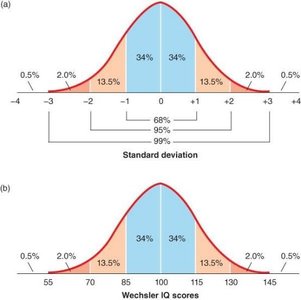
Standard Deviation: Measure of how tightly data cluster around the mean.
The Normal Curve
The normal distribution is a symmetrical probability function, often used to describe data in psychology.
Inferential Statistics
Drawing Conclusions Beyond the Sample
Inferential statistics allow researchers to extend conclusions to larger populations and test hypotheses.
Generalization: Extending conclusions to populations outside the sample.
Null hypothesis: Default position that there is no real difference between measures.
Statistical significance: Standard for deciding if observed results are likely under the null hypothesis.
Ethical Guidelines in Psychological Research
Conducting Ethical Research with Human Participants
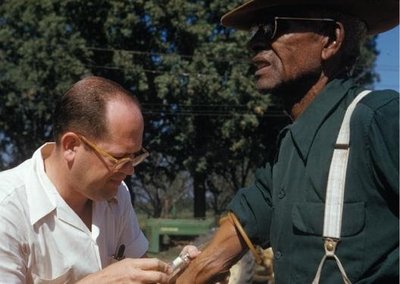
Ethical research requires informed consent, privacy, and protection from irreversible harm for human participants.
Informed Consent: Permission after risks and benefits are explained.
Privacy: Control over sharing personal information.
No irreversible harm: Research must avoid causing lasting harm.
Ethical Guidelines for Animal Subjects
Research with animals must have a clear purpose, provide excellent care, and minimize pain and suffering.
Clear purpose: Experiment must have scientific justification.
Excellent care: Animals must be well cared for.
Minimize pain: Procedures must reduce suffering.
Summary of Key Concepts
Distinguish between scientific reasoning and common sense.
Assess the value of case studies, naturalistic observations, and surveys.
Analyze features, strengths, and limitations of correlational and experimental methods.
Understand reliability and validity.
Differentiate descriptive and inferential statistics.
Critique ethical guidelines for human and animal research.
Research Method | Main Features | Strengths | Limitations |
|---|---|---|---|
Case Study | In-depth analysis of individuals | Rich detail | Limited generalizability |
Naturalistic Observation | Observation in natural setting | Realistic behavior | Limited control |
Survey | Self-report from large groups | Quick, broad data | Social desirability bias |
Correlation | Measures relationships | Identifies associations | No causality |
Experiment | Manipulates variables | Establishes causality | Artificial setting |
Additional info: Table entries inferred from standard psychology research methods.
