 Indietro
The Story of Psychology: Foundations, History, and Contemporary Perspectives
Guida di studio - Note intelligenti
 Appunti personalizzati basati sui tuoi materiali, ampliati con definizioni chiave, esempi e contesto.
The Story of Psychology
Psychology as a Science
Psychology is the scientific study of behavior and mental processes. It employs an empirical approach, relying on observation and experimentation to explore and understand phenomena without bias or misleading conclusions. The scientific attitude in psychology is characterized by three core elements: curiosity, skepticism, and humility.
Curiosity: The desire to explore and ask questions about behavior and mental processes.
Skepticism: The practice of questioning assumptions, evaluating evidence, and appraising sources.
Humility: The willingness to accept new evidence and recognize the limits of one’s own understanding.
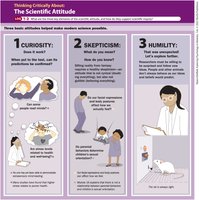
Critical thinking is essential in psychology. It involves examining assumptions, discerning hidden biases, evaluating evidence, and assessing conclusions. This approach supports scientific inquiry and helps individuals think more clearly in everyday life.
Psychological Science Is Born
The formal discipline of psychology began in the late 19th century. Early psychologists established foundational schools of thought and research methods that continue to influence the field today.
Wilhelm Wundt: Established the first psychology laboratory; sought to measure the "atoms of the mind."
Edward Titchener: Developed structuralism, using introspection to explore the structure of the mind.
William James: Influenced by Darwin, he founded functionalism, focusing on adaptive thinking and the stream of consciousness. Authored Principles of Psychology (1890).
Women made significant early contributions:
Mary Whiton Calkins: Pioneering memory researcher; first female president of the American Psychological Association (APA).
Margaret Floy Washburn: First woman to receive a Ph.D. in psychology; synthesized animal behavior in The Animal Mind (1908).
Today, psychological science embraces diversity, with increasing representation of women and people of color in the field.
Psychological Science Matures
From the 1920s to the 1960s, psychology was shaped by several major forces:
Behaviorism: Championed by John B. Watson and B.F. Skinner, behaviorism defined psychology as the scientific study of observable behavior. It emphasized conditioning, observation, and measurement, and rejected introspection.
Freudian (Psychoanalytic) Psychology: Focused on the influence of the unconscious mind and childhood experiences on behavior.
Humanistic Psychology: Emerged in the 1960s as a response to the limitations of behaviorism and psychoanalysis. Carl Rogers and Abraham Maslow emphasized human growth potential, the need for love and acceptance, and the importance of nurturing environments.
Contemporary Psychology
Modern psychology is a diverse and global science, integrating multiple perspectives and research areas.
Cognitive Revolution: Beginning in the 1960s, cognitive psychology studies mental processes such as perception, learning, memory, thinking, communication, and problem-solving.
Cognitive Neuroscience: An interdisciplinary field linking brain activity with cognition, including perception, thinking, memory, and language.
Evolutionary Psychology: Examines the evolution of behavior and the mind using principles of natural selection. Explores the nature–nurture issue: Are traits present at birth or developed through experience?
Behavior Genetics: Studies the relative power and limits of genetic and environmental influences on behavior.
Cross-Cultural and Gender Psychology: Investigates how culture (shared ideas and behaviors) and gender identity (sense of being male, female, both, or neither) shape behavior and mental processes.
Positive Psychology: Centers on happiness as a by-product of a pleasant, engaged, and meaningful life. Uses scientific methods to study human flourishing (Seligman and others).
Biopsychosocial Approach: Integrates biological, psychological, and social-cultural levels of analysis to provide a comprehensive understanding of behavior and mental processes.
Psychology’s Main Subfields
Psychology encompasses a variety of subfields, each with a common goal: describing and explaining behavior and the mind.
Basic Research: Expands the scientific knowledge base (e.g., biological, developmental, cognitive, personality, and social psychology).
Applied Research: Tackles practical problems (e.g., industrial-organizational psychology, human factors psychology).
Professional Practice:
Counseling Psychologists: Help people cope with challenges and improve personal and social functioning.
Clinical Psychologists: Assess and treat mental, emotional, and behavioral disorders.
Psychiatrists: Medical doctors who can prescribe drugs and treat physical causes of psychological disorders.
Community Psychologists: Work to create healthy social and physical environments.
Summary Table: Major Approaches in Psychology
Approach | Focus | Key Figures |
|---|---|---|
Structuralism | Structure of the mind via introspection | Wundt, Titchener |
Functionalism | Functions of mental processes; adaptation | James, Darwin |
Behaviorism | Observable behavior; conditioning | Watson, Skinner |
Psychoanalytic | Unconscious mind; childhood experiences | Freud |
Humanistic | Human growth potential; self-actualization | Rogers, Maslow |
Cognitive | Mental processes; information processing | Neisser, Piaget |
Evolutionary | Evolution of behavior and mind | Darwin |
Biopsychosocial | Integration of biological, psychological, and social-cultural factors | Engel (model) |
Example: A psychologist using the biopsychosocial approach might study depression by examining genetic predispositions (biological), thought patterns (psychological), and cultural expectations (social-cultural).
Additional info: The scientific attitude and critical thinking are foundational to all psychological research and practice, ensuring that findings are reliable, valid, and applicable to diverse populations.
