 Indietro
Thinking Critically With Psychological Science: Introduction to Psychology Study Notes
Guida di studio - Note intelligenti
 Appunti personalizzati basati sui tuoi materiali, ampliati con definizioni chiave, esempi e contesto.
Introduction to Psychology
Thinking Critically With Psychological Science
Psychology is the scientific study of behavior and mental processes. Thinking like a scientist in psychology involves being actively open-minded, searching for reasons why we might be wrong, and revising our views based on new evidence. This approach is foundational to the discipline and helps distinguish fact from fiction.
The History and Scope of Psychology
Psychology as a Science
Psychology is rooted in a passion for exploring and understanding human behavior without misleading or being misled. The scientific attitude is essential for shifting fact from fiction and involves skepticism and humility.
Curiosity: Asking if something works and testing predictions.
Skepticism: Questioning what things mean and seeking evidence.
Humility: Being aware of vulnerability to error and openness to new perspectives.
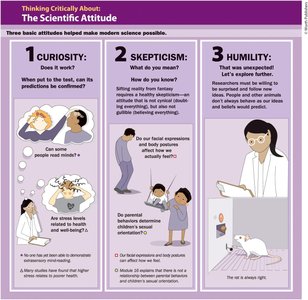
Critical thinking is a key component, involving examination of assumptions, appraisal of sources, discernment of hidden biases, evaluation of evidence, and assessment of conclusions.
Psychology’s First Laboratory and Schools of Thought
The origins of psychology trace back to ancient philosophers like Aristotle, but the first laboratory was established by Wilhelm Wundt, who sought to study the "atoms of the mind." Early schools of thought included structuralism, led by Edward Bradford Titchener, and functionalism, led by William James, who was influenced by Darwin.
Structuralism: Focused on the structure of the mind and introspection.
Functionalism: Emphasized the functions of thoughts and feelings and the stream of consciousness.
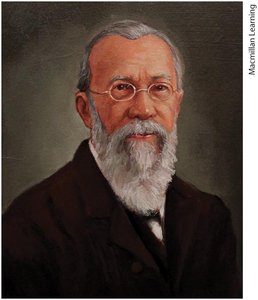
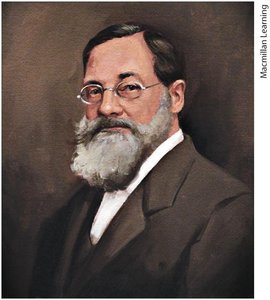
Example: Introspection was used to analyze sensations and feelings, but was later criticized for its subjectivity.
Psychology’s First Women
Women made significant contributions to early psychology, despite facing barriers. Mary Whiton Calkins was a memory researcher and the first female APA president. Margaret Floy Washburn was the first woman to earn a Ph.D. in psychology and became the second female APA president.


Example: Calkins developed important theories on memory, while Washburn authored influential works on animal behavior.
Increasing Diversity in Psychology
Psychology has become increasingly diverse. In 1964, the Society of Experimental Psychologists was predominantly White and male. Today, women comprise 61 percent of APS members, and one-third of recent psychology doctorates are earned by people of color.
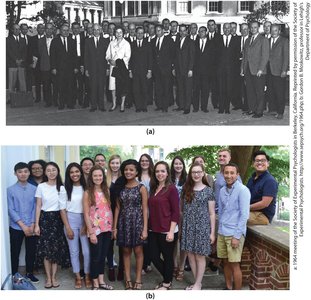
Example: Diversity in psychology enriches research perspectives and broadens the understanding of human behavior.
Psychological Science Matures
Behaviorism
Behaviorism became a dominant school of thought, emphasizing that psychology should be an objective science studying behavior without reference to mental processes. John B. Watson and Rosalie Rayner conducted the "Little Albert" experiment, demonstrating learned fear. B. F. Skinner further developed behaviorism, focusing on how consequences shape behavior.
Behaviorism: Studies observable behavior and rejects introspection.
Key Figures: John B. Watson, Rosalie Rayner, B. F. Skinner.
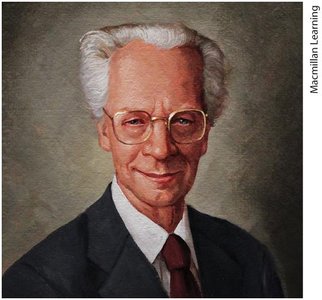
Example: Skinner's operant conditioning experiments showed how rewards and punishments influence behavior.
Freudian (Psychoanalytic) Psychology and Humanistic Psychology
Psychoanalytic psychology, founded by Sigmund Freud, emphasizes the influence of the unconscious mind and childhood experiences on behavior. Humanistic psychology, developed by Carl Rogers and Abraham Maslow, rejected behaviorism and Freudian psychology as too limiting, focusing instead on growth potential and the need for love and acceptance.
Psychoanalytic Psychology: Focuses on unconscious drives and childhood experiences.
Humanistic Psychology: Emphasizes personal growth and self-actualization.
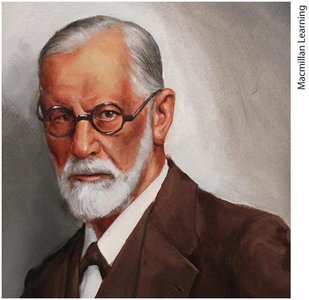
Example: Maslow's hierarchy of needs illustrates the importance of fulfilling basic and psychological needs for human flourishing.
Contemporary Psychology
Science of Behavior and Mental Processes
Contemporary psychology is defined as the science of behavior and mental processes. It integrates cognition, biology, experience, culture, gender, and human flourishing. Cognitive psychology studies mental processes such as perceiving, learning, remembering, thinking, communicating, and problem solving. Cognitive neuroscience links brain activity to cognition.
Cognitive Psychology: Study of mental processes.
Cognitive Neuroscience: Study of brain activity and its link to cognition.
Example: Research on memory formation combines cognitive psychology and neuroscience.
Evolutionary Psychology and Behavior Genetics
Evolutionary psychology studies the evolution of behavior and mind using principles of natural selection. Behavior genetics explores how humans differ due to genes and environments. These fields examine both shared biology and individual differences.
Evolutionary Psychology: How shared biology and evolutionary history shape behavior.
Behavior Genetics: How genes and environment contribute to individual differences.
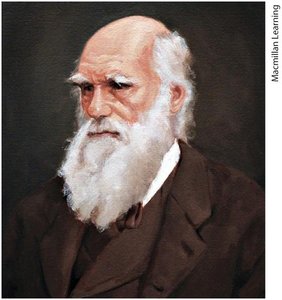
Example: Twin studies help disentangle genetic and environmental influences on traits.
Cross-Cultural and Gender Psychology
Psychology recognizes that while specific attitudes and behaviors may vary across cultures and genders, underlying psychological processes are often similar. Culture involves shared ideas and behaviors passed from one generation to the next, shaping individuals in various ways. Historically, most studies were conducted in WEIRD (Western, Industrial, Rich, Democratic) cultures, but contemporary research aims for global understanding.
Culture: Shared ideas and behaviors influencing individuals.
Gender: Studies examine similarities and differences in psychological processes.

Example: Deep grammar principles and emotional expressions like smiling and frowning are shared across cultures.
Positive Psychology
Positive psychology is the scientific study of human flourishing. It aims to discover and promote strengths and virtues that help individuals and communities thrive. Martin Seligman and others called for more research on happiness, suggesting it is a by-product of a pleasant, engaged, and meaningful life.
Positive Psychology: Focuses on strengths, virtues, and well-being.
Human Flourishing: Promoting happiness and thriving communities.
Example: Research on gratitude and optimism shows positive effects on mental health.
Psychology’s Three Main Levels of Analysis: The Biopsychosocial Approach
The biopsychosocial approach integrates biological, psychological, and social-cultural levels of analysis to provide a comprehensive understanding of behavior and mental processes. Each perspective offers complementary insights, but none alone reveals the whole picture.
Biological: Genetic predispositions, brain mechanisms, hormonal influences.
Psychological: Learned fears, emotional responses, cognitive processing.
Social-Cultural: Presence of others, cultural expectations, peer influences.

Example: Understanding depression requires examining genetic factors, cognitive patterns, and social environment.
Psychology’s Theoretical Perspectives
Psychology encompasses several theoretical perspectives, each focusing on different aspects of behavior and mental processes. These perspectives guide research questions and subfields.
Perspective | Focus | Sample Questions | Subfields |
|---|---|---|---|
Neuroscience | Body and brain enable emotions, memories, sensory experiences | How do pain messages travel from hand to brain? | Biological, cognitive, clinical |
Evolutionary | Natural selection of traits promotes survival | How does evolution influence behavior? | Biological, developmental, social |
Behavior Genetics | Genes and environment influence individual differences | To what extent are traits products of genes or environment? | Personality, developmental, legal/forensic |
Psychodynamic | Unconscious drives and conflicts | How can personality traits be explained by childhood traumas? | Clinical, counseling, personality |
Behavioral | Learning observable responses | How do we learn to fear objects? | Clinical, counseling, industrial-organizational |
Cognitive | Encoding, processing, storing, retrieving information | How do we use information in remembering? | Cognitive neuroscience, clinical, counseling |
Social-Cultural | Behavior and thinking across situations and cultures | How are we affected by people and culture? | Developmental, social, clinical, counseling |
Example: Each perspective contributes to understanding complex phenomena like anxiety or learning.
Psychology’s Subfields
Psychology includes a cluster of subfields involving different disciplines and wide-ranging interests. The common quest is to describe and explain behavior and the mind underlying it. Subfields are divided into basic research (biological, developmental, cognitive, personality, social psychologists) and applied research (industrial-organizational).

Example: Clinical psychologists diagnose and treat mental disorders, while industrial-organizational psychologists apply principles to workplace settings.
Additional info: Where original content was brief, academic context was added to clarify definitions, examples, and applications for exam preparation.
