 Indietro
Measuring Victimization: Methods and Challenges in Sociology
Guida di studio - Note intelligenti
 Appunti personalizzati basati sui tuoi materiali, ampliati con definizioni chiave, esempi e contesto.
Measuring Victimization
Introduction to Victimization Measurement
Victimology, a subfield of sociology, utilizes various methods to collect data on the nature and extent of victimization. The purpose of measuring victimization depends on the agency or researcher, ranging from establishing the amount and types of victimization to understanding risk factors, contexts, and impacts at personal, social, or community levels. The tools used often reflect institutional interests and have specific strengths and limitations.
Key Point: Victimization measurement is essential for understanding crime beyond offender statistics.
Key Point: Multiple approaches are integrated to provide a fuller picture, including police statistics, victim surveys, self-report studies, institutional data, and inquests.
Example: Measuring systemic victimization, such as racial profiling, requires more critical and nuanced tools.
Uniform Crime Reports and Official Statistics
Police-Generated Crime Statistics
Traditionally, crime measurement has focused on offenders rather than victims, with police statistics (Uniform Crime Reports, UCR) serving as the primary tool. UCRs are administrative tools for law enforcement, recording only the most serious crime per incident and often omitting victim characteristics.
Key Point: UCRs are limited in measuring victimization, as they prioritize offender identification.
Key Point: Early UCRs overestimated serious crime and underestimated less serious crime due to recording practices.
Example: Incident-Based UCR2 now includes data on multiple incidents, victim and accused demographics, and relationships.
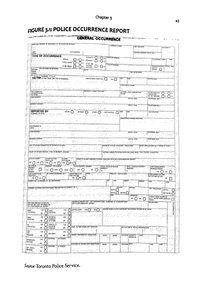
Limitations of Police Statistics
Police statistics are highly discretionary and reflect decisions to report crime, not the actual amount of crime or victimization. Many incidents go unreported, creating a "dark figure" of crime. Reporting rates vary by offence type, with sexual assaults having the highest non-reporting rates.
Key Point: Only incidents reported to police are included in statistics, missing most victimizations.
Key Point: Police decide whether incidents are "founded" or "unfounded," affecting inclusion in statistics.
Example: In 2009, only 33% of criminal victimizations were reported to police.
Influence of Legislation, Policy, and Practice
Changes in criminal law, judicial decisions, and police practices affect crime definitions and reporting. Proactive policing (e.g., crackdowns, undercover operations) can artificially inflate crime statistics. Police statistics are also used to measure police effectiveness, influencing resource allocation and political decisions.
Key Point: Legislative changes can broaden or narrow crime definitions, affecting statistics without reflecting real changes in crime rates.
Key Point: Police practices and resource allocation are often justified using crime statistics.
Example: Budget debates may use crime statistics to argue for more or fewer police officers.
Victimization Surveys
Survey-Based Measurement
Victimization surveys are designed to uncover the "dark figure" of crime and provide insight into unreported victimizations. These surveys use victims as the main source of information and can be administered in various ways (telephone, mail, in-person). They are not limited to incidents reported to police.
Key Point: Victimization surveys offer greater accuracy for certain offences, especially those underreported to police.
Key Point: Surveys can provide detailed context, including victim characteristics, incident circumstances, and impact.
Example: Surveys may ask about assaults, threats, unwanted sexual activity, and abuse by partners.
Sample Survey Questions
Have you been attacked in the past 12 months? How many times?
Has anyone threatened you with a weapon?
Has anyone forced you into unwanted sexual activity?
Has your spouse/partner limited your contact with family or friends?
Has your spouse/partner physically or sexually abused you?
Advantages and Limitations
Victimization surveys are often more accurate for sensitive crimes and provide a broader picture of victimization. However, they face challenges such as competing definitions of crime, inaccurate reporting (e.g., telescoping), limited scope (e.g., rarely include crimes against children or state violence), and ethical/legal dilemmas.
Key Point: Surveys must use language meaningful to both victims and researchers.
Key Point: Confidentiality and anonymity are critical for accurate responses.
Example: Surveys may misclassify victims based on arbitrary time frames.
Alternative Approaches
Self-Report Studies
Self-report studies ask individuals about their own criminal behavior, often focusing on juveniles and minor crimes. These studies are anonymous and confidential, and may reveal crimes not reported to police.
Key Point: Self-report studies can uncover hidden criminal activity, especially among youth.
Key Point: They often underestimate serious crimes and focus on minor offenses.
Example: Student questionnaires about drug use, theft, and violence.
Institutional Data
Institutional data are collected from social, health, and community institutions serving vulnerable populations (children, elderly, institutionalized individuals). These data can reveal otherwise hidden victimizations but are often limited by reporting practices and access issues.
Key Point: Institutional data provide insight into victimization in settings like hospitals, care facilities, and correctional centers.
Key Point: Access to data and participation by residents may be restricted, leading to non-representative samples.
Example: Emergency room data on gunshot wounds, child welfare reports on abuse.
Inquests
Coroner's inquests and other quasi-judicial procedures investigate deaths and systemic victimization, often leading to policy recommendations. Inquests can reveal broader social and institutional failures contributing to victimization.
Key Point: Inquests provide testimony and recommendations for systemic reform.
Key Point: They cannot make criminal findings but can influence policy and practice.
Example: The Arlene May and Randy Iles inquest led to recommendations on domestic violence risk assessment and firearm controls.
Triangulation in Victimization Research
Combining Methods for Comprehensive Understanding
Researchers use triangulation, combining multiple methodologies to uncover different layers of social reality. This approach provides a fuller picture of victimization than reliance on a single method.
Key Point: Triangulation helps confirm and contradict findings across methods.
Key Point: It is essential for studying complex social phenomena like victimization.
Example: Combining police statistics, victimization surveys, and institutional data for a comprehensive analysis.
Questions for Further Consideration
Which methods might be used to measure criminal victimization of the homeless? Discuss strengths and weaknesses.
What effect might an increase in police officers have on violent crime? Can police statistics reliably measure this impact?
What complications arise in measuring victimization of people in prison? Consider police statistics, victimization surveys, and alternative approaches.
