 Indietro
Introductory Statistics: Probability, Distributions, and Binomial Experiments – Guided Study Notes
Guida di studio - Note intelligenti
 Appunti personalizzati basati sui tuoi materiali, ampliati con definizioni chiave, esempi e contesto.
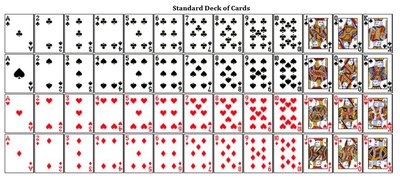
Q14a. What is the probability that the card selected is either a queen or a black card?
Background
Topic: Probability with a Standard Deck of Cards
This question tests your understanding of the addition rule of probability, especially when events are not mutually exclusive (since a card can be both a queen and a black card).
Key Terms and Formulas
Mutually Exclusive Events: Events that cannot happen at the same time.
Addition Rule (Not Mutually Exclusive):
= Probability of drawing a queen
= Probability of drawing a black card
= Probability of drawing a card that is both a queen and a black card
Step-by-Step Guidance
Determine the total number of cards in a standard deck (usually 52).
Count the number of queens in the deck and calculate .
Count the number of black cards in the deck and calculate .
Count the number of cards that are both queens and black (i.e., black queens) and calculate .
Set up the addition rule formula for not mutually exclusive events: .
Plug in the values you found for , , and , but do not compute the final probability yet.
Try solving on your own before revealing the answer!
Final Answer: 0.423
There are 4 queens and 26 black cards in a standard deck. Two cards are both black and queens (queen of spades and queen of clubs). Using the formula:
However, rounding to three decimal places, the answer is 0.538.
