 Indietro
Precalculus Foundations: Sets, Numbers, and Functions
Guida di studio - Note intelligenti
 Appunti personalizzati basati sui tuoi materiali, ampliati con definizioni chiave, esempi e contesto.
Introduction to Sets and Numbers
Classification of Numbers
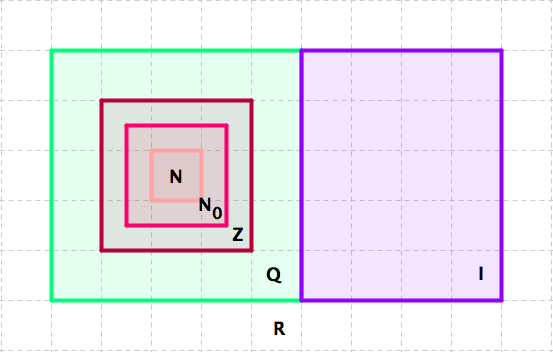
Understanding the different types of numbers and their relationships is foundational in mathematics. The main sets of numbers are:
Natural Numbers (N): The counting numbers, N = {1, 2, 3, ...}
Whole Numbers (N0): Natural numbers including zero, N0 = {0, 1, 2, 3, ...}
Integers (Z): All positive and negative whole numbers, including zero, Z = {..., -3, -2, -1, 0, 1, 2, 3, ...}
Rational Numbers (Q): Numbers that can be expressed as a fraction p/q where p and q are integers and q ≠ 0
Irrational Numbers (I): Numbers that cannot be written as a ratio of two integers (e.g., √2, π)
Real Numbers (R): All rational and irrational numbers
Key Properties:
Every natural number is a whole number, every whole number is an integer, every integer is a rational number, and every rational and irrational number is a real number.
Rational and irrational numbers are disjoint sets: Q ∩ I = ∅.
The set of real numbers is the union of rational and irrational numbers: R = Q ∪ I.
Variables and Mathematical Objects
What is a Variable?
A variable is a symbol or object that represents elements of a certain set. For example, in mathematics, x can represent any real number, while in real life, a passport can represent a Canadian citizen.

Intervals and Inequalities
Interval Notation
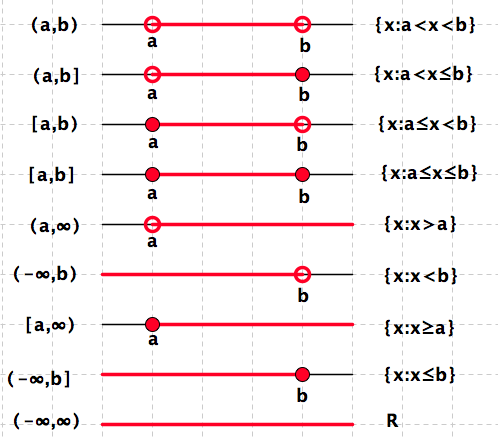
Intervals are used to describe sets of numbers between two endpoints. The notation and corresponding set-builder forms are:
Interval | Set-Builder Notation |
|---|---|
(a, b) | {x : a < x < b} |
(a, b] | {x : a < x ≤ b} |
[a, b) | {x : a ≤ x < b} |
[a, b] | {x : a ≤ x ≤ b} |
(a, ∞) | {x : x > a} |
(−∞, b) | {x : x < b} |
[a, ∞) | {x : x ≥ a} |
(−∞, b] | {x : x ≤ b} |
(−∞, ∞) | ℝ |
Functions: Definitions and Examples
What is a Function?
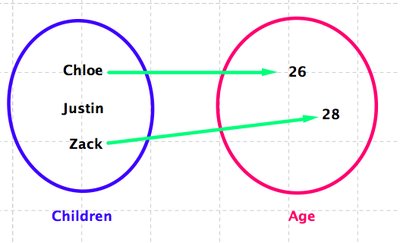
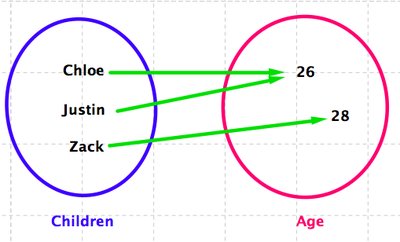
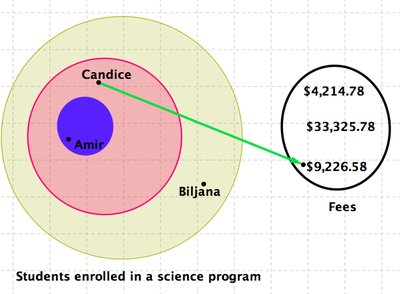
A function is a rule that assigns to each element in a set A exactly one element in a set B. This concept is crucial for avoiding ambiguity in mathematical relationships.
Example: Assigning each child to their unique age is a function, but assigning a person to a city (if there are multiple cities with the same name) may not be.
Function Notation and Representation
Notation: If f is a function from set A to set B, we write f: A → B.
Domain: The set A (inputs for the function)
Range: The set of all possible outputs f(x) as x varies over the domain
Example: f(x) = x^2 for x ∈ {−2, −1, 0, 1, 2}
Piecewise Defined Functions
Some functions are defined by different expressions over different parts of their domain. These are called piecewise defined functions.
Example: The total annual fee for students in a science program depends on their residency status, with different formulas for Quebec residents, other Canadian residents, and international students.
Summary Table: Number Sets
Set | Definition | Example Elements |
|---|---|---|
Natural Numbers (N) | Counting numbers | 1, 2, 3, ... |
Whole Numbers (N0) | Natural numbers + 0 | 0, 1, 2, ... |
Integers (Z) | Positive and negative whole numbers | ..., -2, -1, 0, 1, 2, ... |
Rational Numbers (Q) | Numbers as fractions | 1/2, -3/4, 5 |
Irrational Numbers (I) | Not expressible as fractions | √2, π |
Real Numbers (R) | All rational and irrational numbers | All above |
