Different proteins are composed of different sequences of .
a. sugars;
b. lipids;
c. fats;
d. amino acids;
e. carbohydrates
Guida verificata passo dopo passo
1
Understand that proteins are macromolecules essential for various biological functions.
Recall that proteins are polymers made up of smaller units called monomers.
Identify the monomers that make up proteins, which are linked together in specific sequences.
Consider the options provided: sugars, lipids, fats, amino acids, and carbohydrates.
Recognize that the correct monomers that form proteins are amino acids.
Risposta video verificata per un problema simile:
Questa soluzione video è stata consigliata dai nostri tutor come utile per risolvere questo problema.
Durata del video:
27s
Guarda un video:
0 Commenti
Concetti chiave
Ecco i concetti essenziali che devi comprendere per rispondere correttamente alla domanda.
Proteins
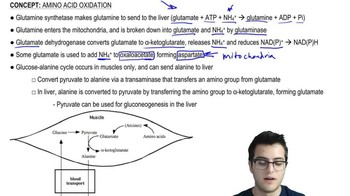
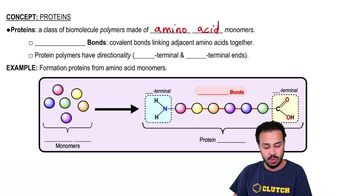
Proteins are large, complex molecules made up of long chains of amino acids. They play critical roles in the body, including catalyzing biochemical reactions, providing structural support, and regulating cellular processes. The specific sequence of amino acids in a protein determines its unique structure and function.
Amino acids are organic compounds that serve as the building blocks of proteins. There are 20 different amino acids, each with a unique side chain that influences the protein's properties. The sequence and arrangement of these amino acids dictate how a protein folds and functions, making them essential for protein diversity.
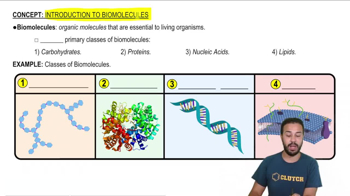
Biomolecules are organic molecules that are essential for life, including proteins, carbohydrates, lipids, and nucleic acids. Each type of biomolecule has distinct roles; for instance, proteins are involved in catalysis and structure, while carbohydrates provide energy. Understanding the differences among these biomolecules is crucial for grasping biological processes.