 Indietro
Anatomical Terminology & Introduction to Homeostasis – ANP1111 Study Notes
Guida di studio - Note intelligenti
 Appunti personalizzati basati sui tuoi materiali, ampliati con definizioni chiave, esempi e contesto.
Anatomical Terminology & Introduction to Homeostasis
Overview: Why Study Anatomy & Physiology Together?
Anatomy is the study of the structure of body parts, while physiology is the study of the function of those parts. These disciplines are closely linked because the structure of a body part determines its function, and vice versa. Understanding both is essential for a comprehensive knowledge of the human body.
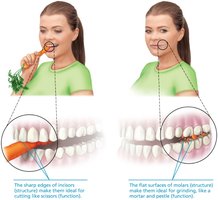
Complementarity of Structure and Function: The form of a structure (e.g., the shape of teeth) is directly related to its function (e.g., cutting or grinding food).
Example: Incisors are sharp for cutting, while molars are flat for grinding.
Levels of Structural Organization in the Human Body
Hierarchy of Organization
The human body is organized into a hierarchy of structural levels, each building on the previous one. Understanding these levels is foundational for studying anatomy and physiology.
Atom: The smallest unit of an element that retains its properties. Atoms are composed of protons, neutrons, and electrons.
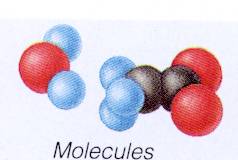
Molecule: A group of atoms bonded together. Examples include water (H2O), carbon dioxide (CO2), and glucose (C6H12O6).

Organelle: Specialized structures within cells that perform specific functions. Examples include the nucleus, mitochondria, endoplasmic reticulum, and Golgi apparatus.
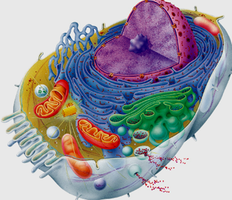
Cell: The basic structural and functional unit of life. Cells vary in size, shape, and function (e.g., muscle cells, nerve cells, red blood cells).
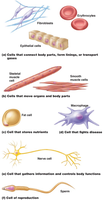
Tissue: Groups of similar cells that perform a common function. The four basic tissue types are epithelial, connective, muscle, and nervous tissue.
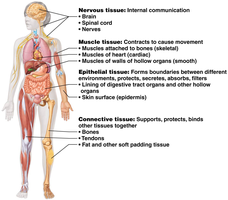
Organ: A structure composed of at least two tissue types that performs a specific function. Example: The stomach contains epithelial, muscle, connective, and nervous tissues, each contributing to digestion.
Organ System: Groups of organs that work together to perform complex functions. Example: The digestive system includes the stomach, intestines, liver, and other organs.
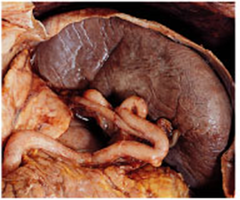
Organism: The highest level of organization; a living being composed of all the organ systems working together.
Anatomical Position and Directional Terms
Standard Anatomical Position
The anatomical position is a reference posture used to describe locations and directions on the human body. The body stands erect, feet slightly apart, arms at the sides, and palms facing forward with thumbs pointing away from the body.
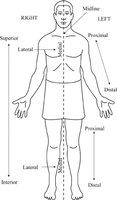
Directional Terms: Used to describe the location of one body part relative to another (e.g., superior, inferior, anterior, posterior, medial, lateral, proximal, distal).
Regional Terms
The body is divided into two main regions:
Axial: Head, neck, and trunk
Appendicular: Limbs (arms and legs)
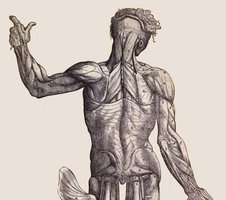
Body Planes and Sections
Common Body Planes
Body planes are imaginary lines used to divide the body for anatomical study:
Sagittal Plane: Divides the body into right and left parts. The midsagittal (median) plane divides it into equal halves; a parasagittal plane is offset from the midline.
Frontal (Coronal) Plane: Divides the body into anterior (front) and posterior (back) parts.
Transverse Plane: Divides the body into superior (upper) and inferior (lower) parts.
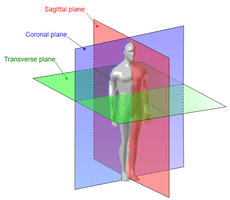
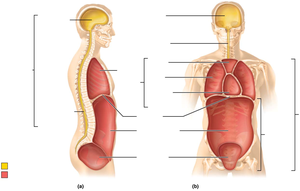
Body Cavities and Subdivisions
Major Body Cavities
The body contains internal cavities that protect organs and allow for organ movement and expansion.
Dorsal Body Cavity: Includes the cranial cavity (encloses the brain) and vertebral (spinal) cavity (encloses the spinal cord).
Ventral Body Cavity: Larger; includes the thoracic cavity (pleural and pericardial cavities) and abdominopelvic cavity (abdominal and pelvic cavities).
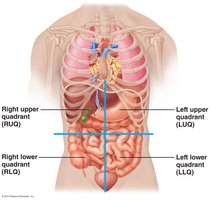
Abdominopelvic Quadrants and Regions
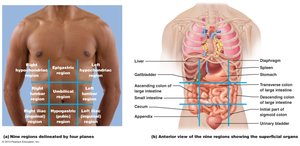
The abdominopelvic cavity is divided for clinical and anatomical reference:
Quadrants: Right upper (RUQ), left upper (LUQ), right lower (RLQ), left lower (LLQ).
Nine Regions: Used primarily by anatomists for more precise localization (e.g., epigastric, umbilical, hypogastric regions).
Homeostasis: The Body's Internal Balance
Definition and Importance
Homeostasis is the body's ability to maintain relatively stable internal conditions despite changes in the external environment. It is a dynamic equilibrium involving multiple organ systems.
Examples of regulated variables: blood nutrient levels, blood pressure, waste removal, core body temperature.
Homeostatic Control Mechanisms
Homeostasis is maintained through a series of steps involving three main components:
Receptor: Detects changes (stimuli) and sends information to the control center.
Control Center: Determines the set point, analyzes input, and determines the appropriate response.
Effector: Carries out the response to restore balance.
Feedback mechanisms regulate the response:
Negative Feedback: Reduces or shuts off the original stimulus (e.g., regulation of blood glucose by insulin and glucagon).
Positive Feedback: Enhances the original stimulus (e.g., blood clotting).
Regulation of Homeostasis: Autonomic Nervous System and Endocrine System
The Autonomic Nervous System (ANS)
The ANS is a division of the nervous system that controls involuntary functions by regulating smooth muscle, cardiac muscle, and glands. It is divided into the sympathetic and parasympathetic divisions, which usually have opposite effects.
Key regulatory effects: Shunting blood, adjusting heart and respiratory rates, regulating blood pressure and temperature, and modifying digestive secretions.
Hypothalamus: The main integration center for the ANS, coordinating many homeostatic processes.
The Endocrine System
The endocrine system consists of glands that secrete hormones directly into the extracellular fluid. Hormones regulate the function of target cells throughout the body.
Hormone action depends on: Hormone concentration, receptor content on target cells, and hormone-receptor affinity.
Example: Insulin and glucagon from the pancreas regulate blood glucose levels through negative feedback.
Summary Table: Levels of Structural Organization
Level | Description | Example |
|---|---|---|
Atom | Smallest unit of an element | Oxygen atom |
Molecule | Combination of atoms | Water (H2O) |
Organelle | Specialized structure within a cell | Mitochondrion |
Cell | Basic unit of life | Muscle cell |
Tissue | Group of similar cells | Muscle tissue |
Organ | Structure with at least two tissue types | Stomach |
Organ System | Group of organs working together | Digestive system |
Organism | All organ systems combined | Human body |
Key Equations and Concepts
Homeostatic Regulation (Negative Feedback):
Blood Glucose Regulation:
Additional info: The notes above integrate textbook content, lecture prompts, and academic context to provide a comprehensive overview suitable for college-level Anatomy & Physiology students.
