 Indietro
Chapter 1: The Human Body – An Orientation (Anatomy & Physiology Study Notes)
Guida di studio - Note intelligenti
 Appunti personalizzati basati sui tuoi materiali, ampliati con definizioni chiave, esempi e contesto.
Introduction to Anatomy & Physiology
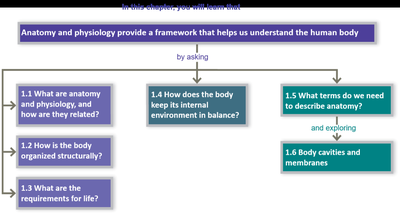
Overview of Anatomy and Physiology
Anatomy and physiology are foundational sciences that provide a framework for understanding the structure and function of the human body. Mastery of these subjects is essential for students in health sciences and related fields.
Anatomy is the study of the structure of body parts and their relationships to one another. It includes both macroscopic (gross) and microscopic levels.
Physiology is the study of the function of the body’s structural machinery—how the body parts work and carry out their life-sustaining activities.
Gross anatomy includes regional, system, and surface anatomy, while microscopic anatomy includes cytology and histology.
Developmental anatomy studies anatomical and physiological development throughout life.
Physiology is dynamic, focusing on processes such as renal physiology (kidney function) and neurophysiology (nervous system function).
Characteristics of Life
Essential Life Functions
All living organisms share certain characteristics that distinguish them from non-living matter. These characteristics are necessary for maintaining life and homeostasis.
Maintaining boundaries: Separation between internal and external environments (e.g., skin, cell membranes).
Movement: Includes movement of the body and substances within the body.
Responsiveness: Ability to sense and respond to stimuli.
Digestion: Breakdown of ingested foodstuffs to simple molecules.
Metabolism: All chemical reactions that occur within body cells.
Excretion: Removal of wastes from metabolism and digestion.
Reproduction: Cellular division for growth or repair, and production of offspring.
Growth: Increase in size of a body part or organism.
Levels of Structural Organization
Hierarchy of Body Organization
The human body is organized in a hierarchical structure, from the simplest chemical level to the complex organismal level.
Chemical level: Atoms combine to form molecules.
Cellular level: Cells are made up of molecules.
Tissue level: Tissues consist of similar types of cells.
Organ level: Organs are made up of different types of tissues.
Organ system level: Organ systems consist of different organs that work together closely.
Organismal level: The human organism is made up of many organ systems.
Survival Needs
Basic Requirements for Human Life
To survive, humans require several factors in appropriate amounts. These needs are essential for maintaining homeostasis and proper body function.
Nutrients: Chemical substances used for energy and cell building.
Oxygen: Required for metabolic reactions that release energy from food.
Water: The most abundant chemical in the body, providing a medium for chemical reactions.
Normal body temperature: Necessary for chemical reactions to occur at life-sustaining rates.
Atmospheric pressure: Must be appropriate for proper gas exchange in the lungs.
Organ Systems of the Human Body
Overview of the 11 Organ Systems
The human body is composed of 11 organ systems that work together to maintain homeostasis and support life.
Integumentary system: Protects the body, regulates temperature, and provides sensory information.
Skeletal system: Supports and protects body organs, provides a framework for muscles.
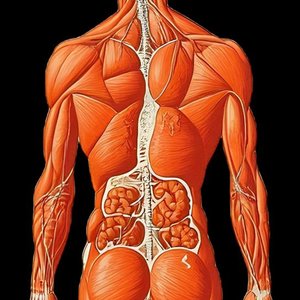
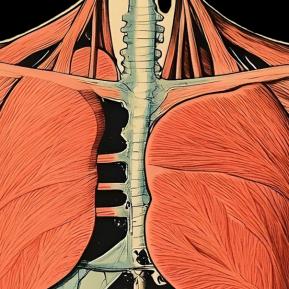
Muscular system: Allows manipulation of the environment, locomotion, and facial expression.
Nervous system: Fast-acting control system, responds to internal and external changes.
Endocrine system: Glands secrete hormones that regulate processes such as growth and metabolism.
Cardiovascular system: Blood vessels transport blood, which carries oxygen, nutrients, and wastes.
Lymphatic system: Picks up fluid leaked from blood vessels and returns it to blood; involved in immunity.
Respiratory system: Keeps blood supplied with oxygen and removes carbon dioxide.
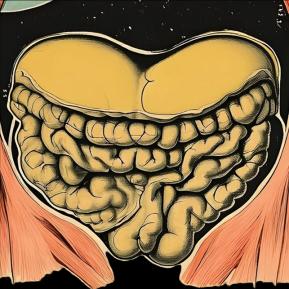
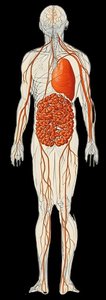
Digestive system: Breaks down food into absorbable units and eliminates indigestible foodstuffs.
Urinary system: Eliminates nitrogenous wastes and regulates water, electrolyte, and acid-base balance.
Reproductive system: Production of offspring.
Homeostasis
Maintaining Internal Balance
Homeostasis is the maintenance of a stable internal environment despite changes in the external environment. It is a dynamic state of equilibrium, essential for survival.
Homeostasis is maintained by the contributions of all organ systems, especially the nervous and endocrine systems.
Variables such as body temperature, blood glucose, and blood pressure are regulated.
Homeostatic control involves three components: receptor (detects change), control center (processes information), and effector (carries out response).
Feedback Mechanisms
Negative feedback: Most common; response reduces or shuts off the original stimulus (e.g., regulation of body temperature, blood glucose by insulin).
Positive feedback: Response enhances the original stimulus (e.g., labor contractions by oxytocin, blood clotting).
Disturbance of homeostasis increases risk of disease and contributes to aging. If negative feedback mechanisms are overwhelmed, destructive positive feedback may occur.
Anatomical Terminology
Language of Anatomy
Precise anatomical terminology is essential for clear communication in health sciences. Terms are derived from Greek and Latin roots, prefixes, and suffixes.
Lingual (root): Pertaining to the tongue. Sublingual means beneath the tongue.
Card (root) + itis (suffix): Pericarditis means inflammation of the pericardium (membrane around the heart).
Cyte (root): Osteocyte means a bone cell.
Anatomical Position and Directional Terms
The standard anatomical position is the reference point for describing body parts and positions. The body stands erect, feet slightly apart, palms facing forward, and thumbs pointing away from the body.
Directional terms describe the location of one body part relative to another (e.g., superior, inferior, anterior, posterior, medial, lateral, proximal, distal).
Right and left always refer to the body being viewed, not the observer.
Body Planes and Sections
Body planes are imaginary lines used to divide the body for anatomical study.
Sagittal plane: Divides the body into right and left parts.
Parasagittal plane: Off-centered sagittal cut.
Frontal (coronal) plane: Divides the body into anterior (front) and posterior (back) parts.
Body Cavities and Membranes
The body contains internal cavities that protect organs and allow for organ movement and expansion.
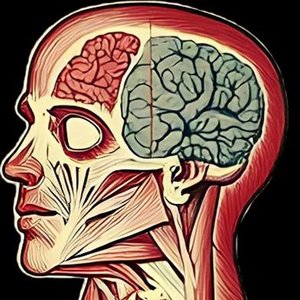
Dorsal body cavity: Protects the nervous system; includes cranial (brain) and vertebral (spinal cord) cavities, both covered by meninges.
Ventral body cavity: Houses internal organs (viscera); includes thoracic and abdominopelvic cavities, separated by the diaphragm.
Thoracic cavity: Contains pleural cavities (lungs), mediastinum (other thoracic organs), and pericardial cavity (heart).
Abdominopelvic cavity: Contains abdominal (digestive organs) and pelvic (urinary bladder, reproductive organs, rectum) cavities.
Serous membranes (serosa): Thin, double-layered membranes lining ventral body cavities and covering organs. Parietal serosa lines cavity walls; visceral serosa covers organs. Fluid between layers reduces friction.
Examples: Pericardium (heart), Pleurae (lungs), Peritoneum (abdominopelvic cavity).
Abdominopelvic Quadrants and Regions
Medical personnel use quadrants to describe locations in the abdominopelvic region:
Right upper quadrant (RUQ)
Left upper quadrant (LUQ)
Right lower quadrant (RLQ)
Left lower quadrant (LLQ)
Table: Comparison of Body Cavities
Cavity | Location | Main Organs | Membrane |
|---|---|---|---|
Cranial | Head | Brain | Meninges |
Vertebral | Spinal column | Spinal cord | Meninges |
Thoracic | Chest | Lungs, heart | Pleura, pericardium |
Abdominal | Abdomen | Stomach, intestines, liver, spleen | Peritoneum |
Pelvic | Pelvis | Bladder, reproductive organs, rectum | Peritoneum |
Example: Clinical Application of Anatomical Language
Accurate anatomical terminology is crucial for communication in healthcare. For example, a patient with a laceration to the subscapular region (below the scapula) and fractures to the lumbar and sacral spine requires precise documentation and treatment. Understanding anatomical regions and directional terms ensures effective care and education for patients and families.
