 Indietro
Major Themes of Anatomy & Physiology: Structure, Function, and Chemistry of Life
Guida di studio - Note intelligenti
 Appunti personalizzati basati sui tuoi materiali, ampliati con definizioni chiave, esempi e contesto.
Major Themes of Anatomy & Physiology
Disciplines of Anatomy and Physiology
Anatomy and physiology are foundational sciences for understanding the human body. Anatomy is the study of the structure of the body, while physiology focuses on the dynamic processes that occur within living organisms. Both disciplines are intertwined, as structure determines function and vice versa.
Gross Anatomy: Study of structures visible to the naked eye.
Regional Anatomy: Examines all structures in a specific area.
System Anatomy: Focuses on one organ system at a time.
Surface Anatomy: Studies internal structures as they relate to the skin surface.
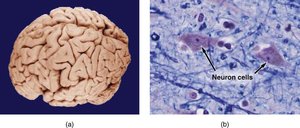
Microscopic Anatomy: Includes histology (study of tissues) and cytology (study of cells).
Developmental Anatomy: Traces structural changes throughout the lifespan.
Methods of Studying Anatomy
Several methods are used to learn about anatomy, ranging from direct examination to advanced imaging techniques.
Dissection: Direct examination of body structures.
Palpation: Feeling structures with hands.
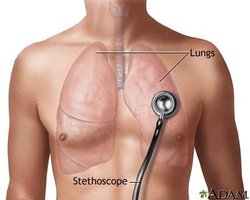
Auscultation: Listening to internal sounds (e.g., heart, lungs).
Percussion: Tapping and listening for sounds indicating underlying structures.
Medical Imaging: Non-invasive visualization of internal anatomy.
Medical Imaging Techniques
Modern imaging techniques allow visualization of internal structures without surgery.
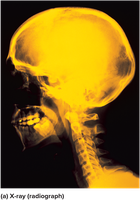
Radiography (X-rays): Uses high-energy radiation; dense structures absorb more X-rays.
Computed Tomography (CT): Low-intensity X-rays for thin-section images.
Magnetic Resonance Imaging (MRI): Uses electromagnets for soft tissue visualization.
Positron Emission Tomography (PET): Assesses metabolic activity using radioactively labeled glucose.
Sonography: Uses ultrasound for imaging motion and internal organs.
Anatomical Variation
Not all anatomical structures are identical in every individual. Variations are common and clinically significant.
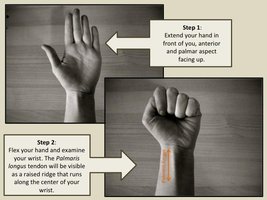
Example: Palmaris longus muscle is absent in about 26% of people.
Subdisciplines of Physiology
Physiology encompasses various subdisciplines, each focusing on specific body functions.
Neurophysiology: Nervous system functions.
Renal Physiology: Kidney functions.
Cardiovascular Physiology: Heart and blood vessel functions.
Body Organization
Levels of Structural Organization
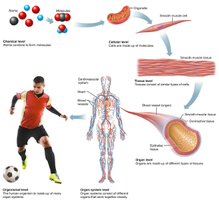
The human body is organized hierarchically, from the simplest chemical level to the complex organismal level.
Chemical Level: Atoms and molecules.
Cellular Level: Cells and their organelles.
Tissue Level: Groups of similar cells.
Organ Level: Two or more types of tissues.
Organ System Level: Organs working together.
Organismal Level: All organ systems combined.
Body’s Organ Systems
The human body consists of eleven major organ systems, each with specific functions.
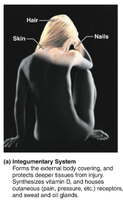
Integumentary System: Protects body, synthesizes vitamin D, houses receptors and glands.
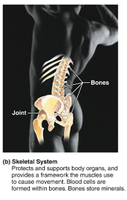
Skeletal System: Supports and protects organs, stores minerals, forms blood cells.
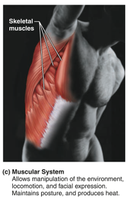
Muscular System: Enables movement, maintains posture, produces heat.
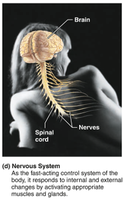
Nervous System: Fast-acting control system, responds to internal/external changes.
Endocrine System: Hormone production and regulation.
Cardiovascular System: Circulates blood, delivers oxygen/nutrients.
Lymphatic System: Immune response, fluid balance.
Respiratory System: Gas exchange (oxygen and carbon dioxide).
Digestive System: Breaks down food, absorbs nutrients.
Urinary System: Eliminates waste, regulates water/electrolytes.
Reproductive System: Produces offspring.
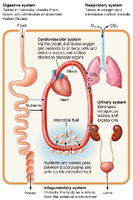
Interrelationships Among Body Organ Systems
Organ systems work cooperatively to maintain life. Each system serves the needs of cells, and all cells depend on organ systems for survival.
Homeostasis
Definition and Importance
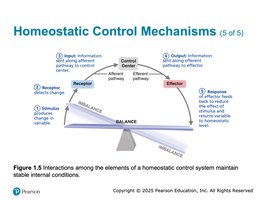
Homeostasis is the maintenance of stable internal conditions despite external changes. It is a dynamic equilibrium, with internal conditions kept within narrow limits. The law of mass balance states that the total amount of a substance taken in must equal the amount lost.
Negative Feedback Mechanisms
Negative feedback loops are the primary means of maintaining homeostasis. They involve three main components:
Receptor: Senses changes in the body.
Control Center: Decides how to respond.
Effector: Carries out corrective actions.
Positive Feedback Mechanisms
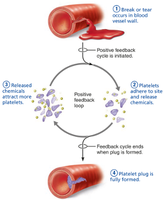
Positive feedback amplifies the original stimulus, leading to a cascade effect. It is less common and usually controls infrequent events.
Examples: Labor contractions (oxytocin), blood clotting.
Anatomical Terms
Anatomical Terminology and Position
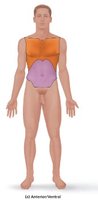
Standardized anatomical terms describe areas, movements, and relationships of body parts. The anatomical position is the reference point: body erect, feet apart, palms forward, thumbs away from body.
Chemistry of Life
Atoms and Elements
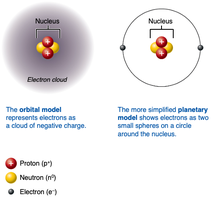
All elements are made of atoms, the smallest units with unique properties. Atomic symbols are shorthand for elements (e.g., O for oxygen, Na for sodium).
Acids, Bases, and pH
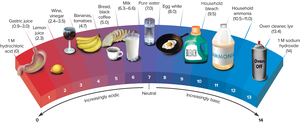
Acids and bases are electrolytes that ionize in water. Acids donate protons (H+), while bases accept protons and release OH-. The pH scale (0-14) measures acidity; below 7 is acidic, 7 is neutral, above 7 is basic.
Clinical Homeostatic Imbalance
Enzymes function within a narrow pH range. Severe deviations in blood pH can be life-threatening.
Organic Compounds: Synthesis and Hydrolysis
Organic molecules contain carbon and are unique to living systems. Major types include carbohydrates, lipids, proteins, and nucleic acids.
Carbohydrates
Carbohydrates are sugars, starches, and glycogen, composed of carbon, hydrogen, and oxygen in a 2:1 ratio. They serve as a primary energy source and have structural and functional roles.
Monosaccharides: Simple sugars (glucose, fructose).
Disaccharides: Two monosaccharides bonded (sucrose, lactose).
Polysaccharides: Polymers of glucose (glycogen, starch, cellulose).
Lipids
Lipids are hydrophobic molecules with a high ratio of hydrogen to oxygen. Types include triglycerides, phospholipids, and steroids.
Triglycerides: Energy storage, insulation, cushioning.
Fatty Acids: Saturated (max hydrogen), unsaturated (double bonds).
Trans Fats: Artificially altered unsaturated fats, increase risk of heart disease.
Phospholipids: Structural foundation of cell membranes, amphipathic.
Steroids: Four-ring structure, includes cholesterol and hormones.
Proteins
Proteins are polymers of amino acids, joined by peptide bonds. Their shape determines function, and they can be denatured by extreme conditions.
Enzymes: Biological catalysts, specific to substrates, optimal pH and temperature.
Protein Functions: Structure, transport, signaling, defense, movement.
Nucleic Acids
Nucleic acids (DNA and RNA) are polymers of nucleotides and serve as the cell’s genetic machinery. DNA is transcribed into RNA, which is translated into proteins.
Nucleotides: Monosaccharide, phosphate group, nitrogenous base.
DNA: Double helix, complementary base pairing (A-T, G-C).
RNA: Single chain, uses ribose and uracil.
ATP: Energy currency, stores and releases energy for cellular work.
