
Ch. 1 Introduction to Anatomy and Physiology
Amerman - Human Anatomy & Physiology 2nd Edition
Amerman2nd EditionHuman Anatomy & PhysiologyISBN: 9780136873822Non è quello che usi tu?Cambia libro di testo
Capitolo 1, Problema 4

Groups of many cells working together to perform a common function are known as a(n):
a. Cell
b. Organ
c. Organ system
d. Tissue

Guida verificata passo dopo passo
1
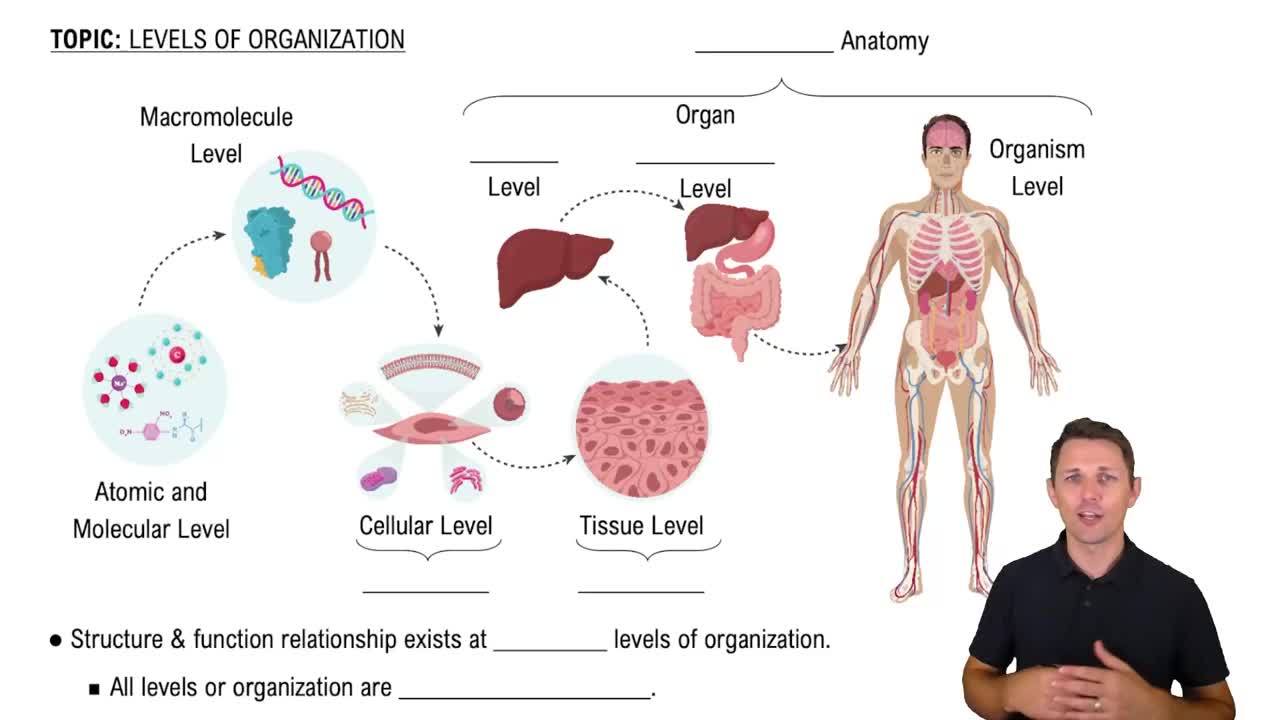
Step 1: Understand the hierarchy of biological organization in the human body. The levels of organization include cells, tissues, organs, organ systems, and the organism as a whole.
Step 2: Recall the definition of a tissue. A tissue is a group of similar cells that work together to perform a specific function. Examples include muscle tissue, nervous tissue, and epithelial tissue.
Step 3: Differentiate between the other options: a cell is the basic unit of life, an organ is a structure made up of multiple tissues working together, and an organ system is a group of organs that perform a collective function.
Step 4: Match the definition provided in the question ('groups of many cells working together to perform a common function') with the correct term from the options.
Step 5: Conclude that the correct answer is the term that aligns with the definition of a tissue, as it fits the description provided in the question.

Risposta video verificata per un problema simile:

Questa soluzione video è stata consigliata dai nostri tutor come utile per risolvere questo problema.

Concetti chiave

Ecco i concetti essenziali che devi comprendere per rispondere correttamente alla domanda.

Cell

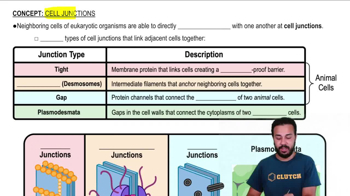
A cell is the basic structural and functional unit of all living organisms. Cells can exist as independent entities, such as bacteria, or as part of multicellular organisms, where they perform specialized functions. Understanding cells is fundamental to biology, as they are the building blocks of life.
Video consigliato:

Tissue

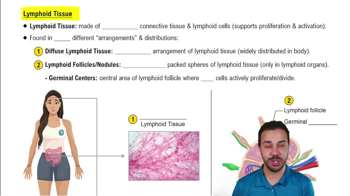
Tissue is a group of similar cells that work together to perform a specific function. In multicellular organisms, tissues are organized into four main types: epithelial, connective, muscle, and nervous tissue. Each type has distinct roles, such as protection, support, movement, and communication.
Video consigliato:
Percorso guidato
4:55
Lymphoid Tissue

Organ

An organ is a structure composed of two or more types of tissues that work together to perform specific functions within an organism. Examples include the heart, lungs, and liver. Organs are part of organ systems, which coordinate complex functions necessary for survival.
Video consigliato:
05:04
The Levels of Organization