
Ch. 10 Muscle Tissue and Physiology
Amerman - Human Anatomy & Physiology 2nd Edition
Amerman2nd EditionHuman Anatomy & PhysiologyISBN: 9780136873822Non è quello che usi tu?Cambia libro di testo
Capitolo 10, Problema 15

Resistance-type activities will likely rely on _______ energy sources, whereas endurance activities will probably rely on _____ energy sources.

Guida verificata passo dopo passo
1
Understand the difference between resistance-type activities and endurance activities. Resistance-type activities, such as weightlifting, involve short bursts of high-intensity effort, while endurance activities, such as running or cycling, involve sustained, lower-intensity effort over a longer period.
Recall the primary energy systems used by the body: the phosphagen system (immediate energy), glycolysis (short-term energy), and oxidative phosphorylation (long-term energy). Resistance-type activities typically rely on the phosphagen system and anaerobic glycolysis, which provide quick energy without requiring oxygen.
For endurance activities, the body primarily relies on oxidative phosphorylation, which uses oxygen to break down carbohydrates and fats for sustained energy production over time.
Consider the role of oxygen availability. Resistance-type activities are anaerobic (do not require oxygen), while endurance activities are aerobic (require oxygen). This distinction determines the energy sources utilized.
Summarize the energy sources: Resistance-type activities rely on anaerobic energy sources like ATP and creatine phosphate, while endurance activities rely on aerobic energy sources like carbohydrates and fats metabolized through oxidative phosphorylation.

Risposta video verificata per un problema simile:

Questa soluzione video è stata consigliata dai nostri tutor come utile per risolvere questo problema.

Concetti chiave

Ecco i concetti essenziali che devi comprendere per rispondere correttamente alla domanda.

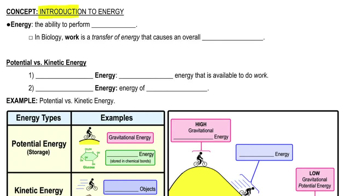
Energy Systems

The body utilizes different energy systems to fuel various types of physical activity. The three primary energy systems are the phosphagen system, anaerobic glycolysis, and aerobic metabolism. Resistance-type activities, which are typically short and intense, primarily rely on the phosphagen system for immediate energy, while endurance activities, which are prolonged and less intense, predominantly utilize aerobic metabolism for sustained energy production.
Video consigliato:
Percorso guidato
4:58
Introduction to Energy

Phosphagen System

The phosphagen system, also known as the ATP-CP system, provides immediate energy for high-intensity, short-duration activities, such as weightlifting or sprinting. It relies on stored adenosine triphosphate (ATP) and creatine phosphate (CP) in the muscles, allowing for quick bursts of energy without the need for oxygen. This system is crucial for resistance-type activities that require rapid and powerful muscle contractions.
Video consigliato:
Percorso guidato
4:25
Complement System

Aerobic Metabolism

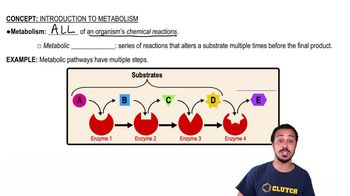
Aerobic metabolism is the process by which the body generates energy through the oxidation of carbohydrates and fats in the presence of oxygen. This energy system is essential for endurance activities, such as long-distance running or cycling, where sustained energy output is required over extended periods. It allows for efficient energy production, supporting prolonged physical exertion and recovery.
Video consigliato:
Percorso guidato
02:17
Introduction to Metabolism
Pratica correlata
Domanda del libro di testo

Which of the following factors is/are responsible for muscular fatigue?

a. Accumulation of chemicals, including calcium and phosphate ions & increased blood flow to the muscle

b. Decreased availability of oxygen

c. Psychological and environmental factors

d. Depletion of key metabolic fuels, such as creatine phosphate

743
views
Domanda del libro di testo

Mark the following statements as true or false. If a statement is false, correct it to make a true statement.

A muscle fiber changes length during isotonic concentric and isotonic eccentric contractions.

803
views
1
rank
Domanda del libro di testo

Which of the following types of muscle fibers have low myosin ATPase activity and are classified as slow-twitch?

a. Type I fibers

b. Type IIa fibers

c. Type IIx fibers

d. Type III fibers

831
views
Domanda del libro di testo

Which of the following is not likely to result from endurance training alone?

a. Increase in oxidative enzymes in the muscle fiber

b. Increased numbers of mitochondria

c. Hypertrophy of the muscle fibers

d. Increase in blood supply to the muscle fibers

816
views
Domanda del libro di testo

What is thought to cause excess postexercise oxygen consumption?

763
views
Domanda del libro di testo

Muscle tone is:

a. The result of voluntary shortening of the muscle.

b. The result of a small amount of involuntary activation of motor units by the nervous system.

c. Abnormal—a person's muscles should be relaxed normally.

d. Present only where there is damage to the nervous system.

926
views