
Ch. 12 The Central Nervous System
Amerman - Human Anatomy & Physiology 2nd Edition
Amerman2nd EditionHuman Anatomy & PhysiologyISBN: 9780136873822Non è quello che usi tu?Cambia libro di testo
Capitolo 12, Problema 23

Declarative memories are formed by the process of ________ that takes place in the ________, and are stored in the ________. 

Guida verificata passo dopo passo
1
Step 1: Understand the concept of declarative memory. Declarative memory refers to memories that can be consciously recalled, such as facts and events. It is a type of long-term memory.
Step 2: Learn about the process of memory formation. Declarative memories are formed through a process called consolidation, which involves stabilizing a memory after it is initially acquired.
Step 3: Identify the brain region responsible for memory formation. The hippocampus plays a critical role in the consolidation of declarative memories.
Step 4: Determine where declarative memories are stored. Once consolidated, declarative memories are stored in the cerebral cortex, particularly in areas associated with the type of memory (e.g., temporal lobes for factual information).
Step 5: Combine the information to answer the question. Declarative memories are formed by the process of consolidation that takes place in the hippocampus and are stored in the cerebral cortex.

Risposta video verificata per un problema simile:

Questa soluzione video è stata consigliata dai nostri tutor come utile per risolvere questo problema.

Concetti chiave

Ecco i concetti essenziali che devi comprendere per rispondere correttamente alla domanda.

Declarative Memory

Declarative memory refers to the type of long-term memory that involves the conscious recollection of facts and events. It is divided into two categories: episodic memory, which pertains to personal experiences, and semantic memory, which involves general knowledge about the world. Understanding declarative memory is crucial for recognizing how we learn and recall information.
Video consigliato:
Percorso guidato
7:56
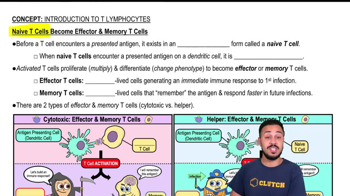
Naive T Cells Become Effector & Memory T Cells

Encoding Process

The encoding process is the initial stage of memory formation, where information is transformed into a format that can be stored in the brain. This process involves attention and perception, allowing experiences to be converted into neural codes. Effective encoding is essential for the successful retrieval of memories later on.
Video consigliato:
Percorso guidato
04:19
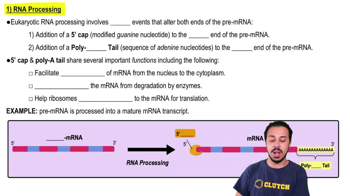
1) RNA Processing

Hippocampus

The hippocampus is a critical brain structure located in the medial temporal lobe, playing a vital role in the formation of new declarative memories. It is involved in the consolidation of information from short-term to long-term memory. Damage to the hippocampus can lead to difficulties in forming new memories, highlighting its importance in memory processing.
Video consigliato:
3:35
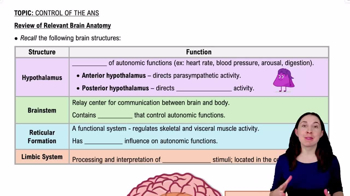
Review of Relevant Brain Anatomy
Pratica correlata
Domanda del libro di testo

Which of the following statements is false? 

a. The suprachiasmatic nucleus is often called the body's 'master clock.' 

b. Melatonin and the ventrolateral preoptic nucleus increase the activity of the reticular formation. 

c. A decrease in the activity of the reticular formation disconnects the thalamus from the cerebral cortex and decreases the level of consciousness. 

d. Orexins are neurotransmitters that stimulate the reticular formation.

811
views
1
rank
Domanda del libro di testo

Which of the following is not a component of emotion?

a. Visceral motor responses mediated by the hypothalamus

b. Somatic motor responses mediated by the limbic system and the hypothalamus

c. Somatic motor responses mediated by the upper motor neurons of the corticospinal tracts

d. Subjective feelings mediated by the amygdala and the cerebral cortex

811
views
Domanda del libro di testo

Match the term on the left with its correct description from the column on the right.     


____ REM sleep     

____ Stage I sleep     

____ Delta waves     

____ Beta waves     

____ Theta waves     

____ Stage IV sleep


a. The EEG pattern seen in the deepest stage of sleep

b. The deepest stage of sleep

c. The EEG pattern seen in an alert, awake adult

d. Drowsiness or the lightest stage of sleep

e. The EEG pattern seen in lighter stages of sleep

f. The stage of sleep during which most dreaming takes place

811
views
1
rank
Domanda del libro di testo

The part of the brain responsible for the production of language is known as:

a. Wernicke's area

b. The prefrontal cortex

c. The auditory association area

d. Broca's area

1085
views