Ch. 15 The Special Senses
Amerman - Human Anatomy & Physiology 2nd Edition
Amerman2nd EditionHuman Anatomy & PhysiologyISBN: 9780136873822Non è quello che usi tu?Cambia libro di testo
Capitolo 15, Problema L2.2

In which direction would you be unable to move your right eye if your right abducens nerve were damaged?

Guida verificata passo dopo passo
1
Understand the function of the abducens nerve (cranial nerve VI): It innervates the lateral rectus muscle of the eye, which is responsible for moving the eye laterally (away from the midline). Damage to this nerve impairs lateral movement of the affected eye.
Identify the specific movement controlled by the lateral rectus muscle: The lateral rectus muscle pulls the eye outward, enabling abduction (movement away from the nose). Without proper function of this muscle, the eye cannot move laterally.
Consider the consequences of abducens nerve damage: If the right abducens nerve is damaged, the right lateral rectus muscle will be paralyzed, preventing the right eye from moving outward (laterally).
Relate the impaired movement to the anatomical direction: The inability to move the right eye laterally means the eye will remain closer to the midline and may even drift medially due to unopposed action of the medial rectus muscle.
Summarize the directional limitation: Damage to the right abducens nerve results in the inability to move the right eye outward (laterally), which is essential for proper binocular vision and coordination.

Risposta video verificata per un problema simile:

Questa soluzione video è stata consigliata dai nostri tutor come utile per risolvere questo problema.

Concetti chiave

Ecco i concetti essenziali che devi comprendere per rispondere correttamente alla domanda.

Abducens Nerve Function

The abducens nerve, also known as cranial nerve VI, is primarily responsible for controlling the lateral rectus muscle, which allows for the abduction of the eye. Damage to this nerve results in an inability to move the eye outward, leading to issues with lateral gaze.
Video consigliato:
Percorso guidato
06:04
Functional Groups

Eye Movement Muscles

Eye movements are coordinated by six extraocular muscles, which include the lateral rectus, medial rectus, superior and inferior rectus, and superior and inferior oblique muscles. Each muscle has a specific role in moving the eye in different directions, and understanding their functions is crucial for diagnosing eye movement disorders.
Video consigliato:
5:41
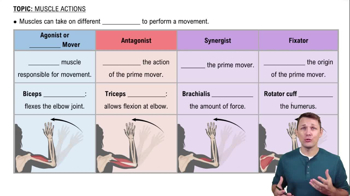
Muscle Actions

Neurological Implications of Nerve Damage

Damage to cranial nerves can lead to various neurological symptoms, including impaired movement and coordination. In the case of the abducens nerve, the resulting condition, known as lateral gaze palsy, can significantly affect a person's ability to track objects or maintain proper visual alignment.
Video consigliato:
2:25
Nerves and Blood Supply