Ch. 18 The Cardiovascular System II: The Blood Vessels
Amerman - Human Anatomy & Physiology 2nd Edition
Amerman2nd EditionHuman Anatomy & PhysiologyISBN: 9780136873822Non è quello che usi tu?Cambia libro di testo
Capitolo 18, Problema L2.1b

A birth defect called transposition of great vessels results in the pulmonary trunk emanating from the left ventricle and the aorta stemming from the right ventricle.
Predict the potential effects of this birth defect.

Guida verificata passo dopo passo
1
Understand the normal anatomy and physiology of the heart: In a healthy heart, the pulmonary trunk arises from the right ventricle and carries deoxygenated blood to the lungs for oxygenation, while the aorta arises from the left ventricle and carries oxygenated blood to the rest of the body.
Analyze the defect described: In transposition of the great vessels, the pulmonary trunk is connected to the left ventricle, and the aorta is connected to the right ventricle. This results in a reversal of the normal blood flow pathways.
Predict the consequences for oxygenation: Deoxygenated blood from the body would be pumped into the aorta by the right ventricle, bypassing the lungs entirely. Similarly, oxygenated blood from the lungs would be pumped into the pulmonary trunk by the left ventricle, returning to the lungs instead of being distributed to the body.
Consider the systemic effects: The body would receive insufficient oxygen, leading to hypoxia (low oxygen levels in tissues). This can result in symptoms such as cyanosis (bluish discoloration of the skin), difficulty breathing, and impaired organ function.
Discuss potential medical interventions: This condition typically requires surgical correction shortly after birth to restore normal blood flow pathways. Procedures such as the arterial switch operation are performed to connect the pulmonary trunk to the right ventricle and the aorta to the left ventricle.

Risposta video verificata per un problema simile:

Questa soluzione video è stata consigliata dai nostri tutor come utile per risolvere questo problema.

Concetti chiave

Ecco i concetti essenziali che devi comprendere per rispondere correttamente alla domanda.

Transposition of Great Vessels

Transposition of great vessels (TGV) is a congenital heart defect where the positions of the pulmonary artery and aorta are switched. This results in two separate circulatory systems: one that circulates oxygen-poor blood and another that circulates oxygen-rich blood, leading to inadequate oxygenation of the body. Understanding TGV is crucial for predicting its physiological effects and potential complications.
Video consigliato:

Circulatory System Function

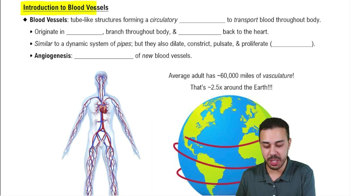
The circulatory system is responsible for transporting oxygen, nutrients, and waste products throughout the body. In a normal heart, oxygen-rich blood is delivered to the body while oxygen-poor blood is sent to the lungs for reoxygenation. In TGV, the disruption of this process can lead to severe hypoxia and organ dysfunction, making it essential to understand how blood flow is altered in this condition.
Video consigliato:
Percorso guidato
06:04
Functional Groups

Clinical Implications and Management

The clinical implications of transposition of great vessels include potential heart failure, cyanosis, and the need for surgical intervention. Management often involves procedures like balloon atrial septostomy or arterial switch surgery to correct the defect. Recognizing these implications is vital for predicting outcomes and planning appropriate treatment strategies for affected individuals.
Video consigliato:
2:16
Bone of the Lower Limb Example 1