Ch. 18 The Cardiovascular System II: The Blood Vessels
Amerman - Human Anatomy & Physiology 2nd Edition
Amerman2nd EditionHuman Anatomy & PhysiologyISBN: 9780136873822Non è quello che usi tu?Cambia libro di testo
Capitolo 18, Problema 11

Capillaries consist of:
a. Three thin tunics
b. Only a thin tunica intima with a well-developed internal elastic lamina
c. A thin sheet of endothelium with a basal lamina
d. Stratified epithelium

Guida verificata passo dopo passo
1
Step 1: Understand the structure of capillaries. Capillaries are the smallest blood vessels in the body and are specialized for the exchange of gases, nutrients, and waste products between blood and tissues.
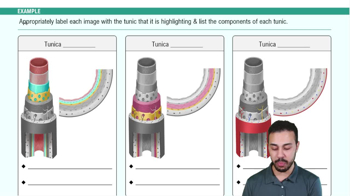
Step 2: Recall the layers of blood vessel walls. Larger blood vessels typically consist of three layers: tunica intima (inner layer), tunica media (middle layer), and tunica externa (outer layer). However, capillaries are unique in their structure.
Step 3: Focus on the composition of capillaries. Capillaries lack the tunica media and tunica externa layers found in larger vessels. Instead, they are composed of a single layer of endothelial cells supported by a basal lamina.
Step 4: Eliminate incorrect options. For example, capillaries do not have three tunics (option a), nor do they have a well-developed internal elastic lamina (option b). Additionally, capillaries are not made of stratified epithelium (option d).
Step 5: Identify the correct answer. Capillaries consist of a thin sheet of endothelium with a basal lamina, which matches option c.

Risposta video verificata per un problema simile:

Questa soluzione video è stata consigliata dai nostri tutor come utile per risolvere questo problema.

Concetti chiave

Ecco i concetti essenziali che devi comprendere per rispondere correttamente alla domanda.

Capillary Structure

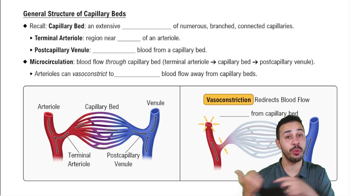
Capillaries are the smallest blood vessels in the body, primarily composed of a single layer of endothelial cells. This thin structure allows for efficient exchange of gases, nutrients, and waste products between blood and surrounding tissues. Unlike larger blood vessels, capillaries lack a tunica media and tunica externa, making them uniquely suited for their role in microcirculation.
Video consigliato:
Percorso guidato
5:59
General Structure of Capillary Beds

Tunica Intima

The tunica intima is the innermost layer of blood vessels, including capillaries. In capillaries, this layer consists solely of endothelial cells and a basal lamina, which provides structural support. This simplicity is crucial for facilitating the rapid exchange of substances, as it minimizes the distance that molecules must travel.
Video consigliato:
Percorso guidato
4:24
General Blood Vessel Structure Example 1

Endothelial Cells

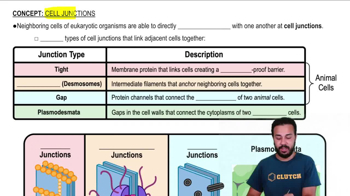
Endothelial cells line the interior surface of blood vessels, including capillaries. They play a vital role in maintaining vascular health, regulating blood flow, and controlling the permeability of the vessel wall. In capillaries, the thinness of these cells is essential for allowing the diffusion of oxygen, carbon dioxide, and other small molecules between blood and tissues.
Video consigliato: