Ch. 18 The Cardiovascular System II: The Blood Vessels
Amerman - Human Anatomy & Physiology 2nd Edition
Amerman2nd EditionHuman Anatomy & PhysiologyISBN: 9780136873822Non è quello che usi tu?Cambia libro di testo
Capitolo 18, Problema 20

Match the following veins with the correct description. 
__Cephalic vein      
__Great saphenous vein      
__Dural sinus      
__Azygos vein      
__Hepatic portal vein      
__Splenic vein      
__Internal jugular vein      
__Brachiocephalic veins       
__Brachial vein      
__Inferior mesenteric vein
a. Drains the posterior abdominal and thoracic walls
b. Two veins merge to form the superior vena cava
c. Receives blood from the spleen and digestive organs
d. Superficial vein in the medial leg
e. Drains the brain and face
f. Drains part of the large intestine
g. Superficial vein in the lateral upper limb
h. Deep vein of the arm
i. Drains the spleen
j. Drain the brain capillaries and cerebrospinal fluid

Guida verificata passo dopo passo
1
Step 1: Understand the descriptions provided and match them with the correct vein based on their anatomical location and function. For example, veins that drain specific organs or regions of the body will correspond to their respective descriptions.
Step 2: Match 'Cephalic vein' with its description. The cephalic vein is a superficial vein located in the lateral upper limb, so it corresponds to description (g).
Step 3: Match 'Great saphenous vein' with its description. The great saphenous vein is a superficial vein in the medial leg, so it corresponds to description (d).
Step 4: Match 'Dural sinus' with its description. Dural sinuses drain brain capillaries and cerebrospinal fluid, so they correspond to description (j).
Step 5: Continue matching the remaining veins (e.g., azygos vein, hepatic portal vein, splenic vein, internal jugular vein, brachiocephalic veins, brachial vein, inferior mesenteric vein) with their respective descriptions based on their anatomical roles and drainage areas.

Risposta video verificata per un problema simile:

Questa soluzione video è stata consigliata dai nostri tutor come utile per risolvere questo problema.

Concetti chiave

Ecco i concetti essenziali che devi comprendere per rispondere correttamente alla domanda.

Venous Anatomy

Understanding venous anatomy is crucial for identifying the various veins in the human body and their specific functions. Each vein has a unique role in draining blood from different regions, such as the limbs, organs, and brain. Familiarity with the anatomy helps in matching veins to their descriptions accurately.
Video consigliato:
4:14
Clitoral Anatomy

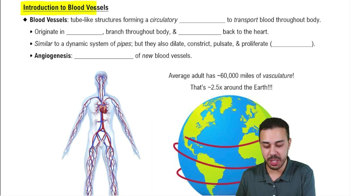
Blood Circulation

Blood circulation refers to the movement of blood through the heart and blood vessels, including arteries and veins. It is essential to comprehend how blood returns to the heart via veins after delivering oxygen and nutrients to tissues. This knowledge aids in understanding the significance of each vein's role in the circulatory system.
Video consigliato:

Vein Functions

Each vein serves a specific function in the circulatory system, such as draining blood from particular organs or regions. For instance, the hepatic portal vein carries blood from the digestive organs to the liver, while the internal jugular vein drains blood from the brain. Recognizing these functions is vital for accurately matching veins to their descriptions.
Video consigliato:
Percorso guidato
6:24
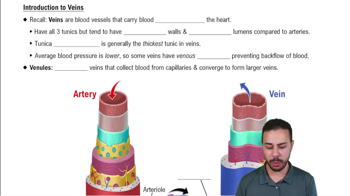
Introduction to Veins