Ch. 19 Blood
Amerman - Human Anatomy & Physiology 2nd Edition
Amerman2nd EditionHuman Anatomy & PhysiologyISBN: 9780136873822Non è quello che usi tu?Cambia libro di testo
Capitolo 19, Problema L2.1

Explain how blood, being a liquid, enables all its components (formed elements and plasma) to perform their functions.

Guida verificata passo dopo passo
1
Understand that blood is a connective tissue composed of two main components: plasma (the liquid portion) and formed elements (cells and cell fragments such as red blood cells, white blood cells, and platelets). Plasma serves as the medium for transporting substances.
Recognize that the liquid nature of plasma allows it to flow through blood vessels, enabling the efficient transport of nutrients, gases (like oxygen and carbon dioxide), hormones, and waste products to and from tissues throughout the body.
Learn that red blood cells (erythrocytes) are suspended in plasma, and their biconcave shape maximizes surface area for gas exchange. Hemoglobin within red blood cells binds oxygen and carbon dioxide, facilitating their transport.
Understand that white blood cells (leukocytes) use the liquid medium to travel to sites of infection or injury, where they perform immune functions such as engulfing pathogens or producing antibodies.
Recognize that platelets, also suspended in plasma, are essential for blood clotting. When a vessel is damaged, platelets aggregate at the site and interact with clotting factors in the plasma to form a clot, preventing blood loss.

Risposta video verificata per un problema simile:

Questa soluzione video è stata consigliata dai nostri tutor come utile per risolvere questo problema.

Concetti chiave

Ecco i concetti essenziali che devi comprendere per rispondere correttamente alla domanda.

Blood Composition

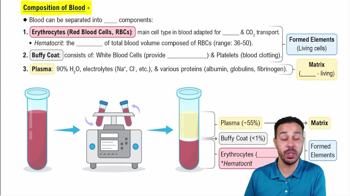
Blood is composed of two main components: formed elements (red blood cells, white blood cells, and platelets) and plasma. The formed elements are responsible for various functions such as oxygen transport, immune response, and clotting, while plasma serves as the liquid medium that carries these cells along with nutrients, hormones, and waste products throughout the body.
Video consigliato:
Percorso guidato
7:49
Composition of Blood

Fluid Dynamics

As a liquid, blood exhibits fluid dynamics that allow it to flow easily through the circulatory system. This property enables the efficient transport of oxygen and nutrients to tissues and the removal of carbon dioxide and waste products. The viscosity and flow characteristics of blood are crucial for maintaining proper circulation and ensuring that all components can reach their target areas effectively.
Video consigliato:
3:33
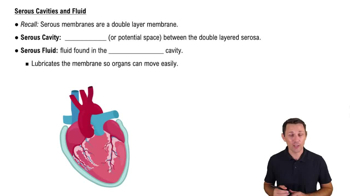
Serous Cavity and Fluid

Functionality of Plasma

Plasma, the liquid portion of blood, plays a vital role in maintaining homeostasis and facilitating the functions of formed elements. It contains proteins, electrolytes, and other substances that help regulate blood pressure, volume, and pH. Additionally, plasma acts as a transport medium, allowing for the distribution of hormones and nutrients, which is essential for the overall functioning of the body's systems.
Video consigliato:
Percorso guidato
06:04
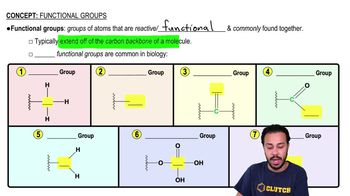
Functional Groups
Pratica correlata
Domanda del libro di testo

Predict how abnormal hemoglobin proteins that contain only two iron ions, instead of four, would affect homeostasis.

707
views

Domanda del libro di testo

The anticoagulant drug warfarin primarily disrupts the extrinsic/tissue factor coagulation pathway. Explain why disrupting only this pathway disrupts the entire coagulation cascade.

698
views
Domanda del libro di testo

Elise is a 36-year-old woman who has volunteered to donate red bone marrow to a patient in need of a bone marrow transplant for aplastic anemia. The physician performing the bone marrow extraction is an intern, and it is her first time doing the procedure. She asks that you prepare a site on Elise's tibia for the procedure. Is this a good place for red bone marrow to be extracted, considering Elise's age? Why or why not? Can you suggest an alternative location? Explain.

467
views
Domanda del libro di testo

Cirrhosis of the liver often reduces production of many types of plasma proteins, including albumin and clotting factors. Predict the effects on the body of decreased numbers of these proteins in the plasma. Would this also affect the number of γ-globulins in the plasma? Why or why not?

659
views
Domanda del libro di testo

Which of the following plasma proteins is responsible for osmotic pressure?

a. γ-Globulins

b. Albumin

c. α-Globulins

d. Clotting proteins

1113
views
Domanda del libro di testo

Which of the following is not a formed element of blood?

a. Erythrocyte

b. Leukocyte

c. Mast cell

d. Platelet

1416
views