
Ch. 19 Blood
Amerman - Human Anatomy & Physiology 2nd Edition
Amerman2nd EditionHuman Anatomy & PhysiologyISBN: 9780136873822Non è quello che usi tu?Cambia libro di testo
Capitolo 19, Problema 14

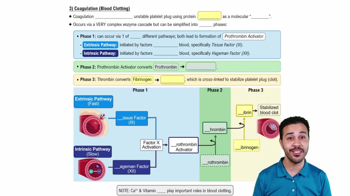
What are the overall goals of the common pathway of coagulation?

Guida verificata passo dopo passo
1
Understand that the common pathway of coagulation is the final phase of the blood clotting process, which is essential for stopping bleeding and stabilizing the clot.
Recognize that the primary goal of the common pathway is to convert prothrombin (a plasma protein) into thrombin, an enzyme that plays a critical role in clot formation.
Learn that thrombin then converts fibrinogen (a soluble plasma protein) into fibrin, which forms insoluble threads that create a stable meshwork to reinforce the clot.
Understand that the fibrin meshwork traps blood cells and platelets, forming a solid clot that seals the damaged blood vessel and prevents further blood loss.
Appreciate that the ultimate goal of the common pathway is to ensure hemostasis, which is the process of stopping bleeding while maintaining blood flow in undamaged vessels.

Risposta video verificata per un problema simile:

Questa soluzione video è stata consigliata dai nostri tutor come utile per risolvere questo problema.

Concetti chiave

Ecco i concetti essenziali che devi comprendere per rispondere correttamente alla domanda.

Coagulation Cascade

The coagulation cascade is a series of complex biochemical reactions that lead to blood clot formation. It involves two main pathways: the intrinsic and extrinsic pathways, which converge into a common pathway. Understanding this cascade is essential for grasping how the body responds to vascular injury and prevents excessive bleeding.
Video consigliato:
Percorso guidato
10:05
Coagulation (Blood Clotting)

Common Pathway

The common pathway of coagulation is the final series of steps in the coagulation cascade, where prothrombin is converted to thrombin, and fibrinogen is transformed into fibrin. This pathway is crucial for the stabilization of the blood clot, ensuring that it effectively seals wounds and prevents blood loss. It highlights the integration of various coagulation factors to achieve hemostasis.
Video consigliato:
Percorso guidato
4:40
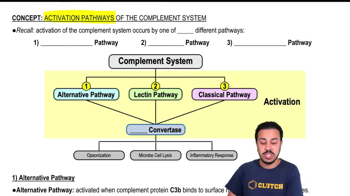
Alternative Pathway

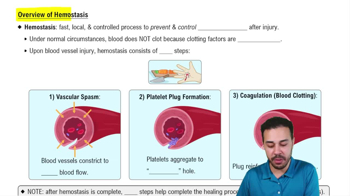
Hemostasis

Hemostasis is the physiological process that prevents and stops bleeding, involving vascular constriction, platelet plug formation, and coagulation. The overall goals of hemostasis include maintaining blood fluidity while ensuring rapid response to injury. Understanding hemostasis is vital for recognizing how the body protects itself from blood loss and the implications of coagulation disorders.
Video consigliato:
Percorso guidato
4:28
Overview of Hemostasis