Ch. 22 The Digestive System
Amerman - Human Anatomy & Physiology 2nd Edition
Amerman2nd EditionHuman Anatomy & PhysiologyISBN: 9780136873822Non è quello che usi tu?Cambia libro di testo
Capitolo 22, Problema L2.3

Drugs with anticholinergic side effects block ACh receptors in the peripheral nervous system, including those on digestive organs. Predict the effects such drugs would have on motility and secretion on the specific organs of the digestive system.

Guida verificata passo dopo passo
1
Understand the role of acetylcholine (ACh) in the peripheral nervous system: ACh is a neurotransmitter that activates the parasympathetic nervous system, which promotes 'rest and digest' functions, including increasing motility and secretion in the digestive organs.
Recognize the effect of anticholinergic drugs: These drugs block ACh receptors, preventing ACh from binding and activating its target cells. This inhibition reduces parasympathetic activity in the digestive system.
Predict the effect on motility: Blocking ACh receptors would decrease the smooth muscle contractions in the digestive tract, leading to reduced motility (peristalsis). This could result in slower movement of food through the digestive system, potentially causing constipation.
Predict the effect on secretion: ACh also stimulates the secretion of digestive enzymes and mucus. Blocking ACh receptors would reduce these secretions, potentially impairing digestion and absorption of nutrients.
Apply this understanding to specific organs: For example, in the stomach, reduced motility and secretion could lead to slower gastric emptying and decreased production of gastric acid. In the intestines, reduced motility could slow down the passage of chyme, and reduced secretion could impair nutrient absorption.

Risposta video verificata per un problema simile:

Questa soluzione video è stata consigliata dai nostri tutor come utile per risolvere questo problema.

Concetti chiave

Ecco i concetti essenziali che devi comprendere per rispondere correttamente alla domanda.

Anticholinergic Drugs

Anticholinergic drugs are medications that inhibit the action of acetylcholine (ACh) at muscarinic receptors in the nervous system. These drugs are commonly used to treat various conditions, including gastrointestinal disorders, by blocking the parasympathetic nervous system's effects, which can lead to decreased motility and secretion in the digestive tract.
Video consigliato:
Percorso guidato
06:07
Endoplasmic Reticulum

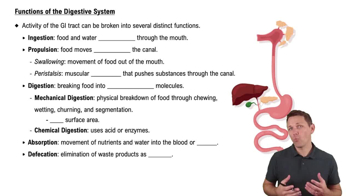
Motility in the Digestive System

Motility refers to the contractions of the smooth muscles in the digestive tract that facilitate the movement of food and waste. Anticholinergic drugs can reduce motility by inhibiting the contractions of these muscles, leading to slower transit times and potential constipation in the digestive system.
Video consigliato:
5:08
Functions of the Digestive System

Secretion in the Digestive System

Secretion in the digestive system involves the release of digestive enzymes, acids, and other fluids that aid in digestion. Anticholinergic drugs can decrease the secretion of these substances by blocking ACh receptors, which may result in reduced digestive efficiency and symptoms such as dry mouth and decreased gastric acid production.
Video consigliato:
Percorso guidato
04:13
Endomembrane System: Protein Secretion