Ch. 3 The Cell
Amerman - Human Anatomy & Physiology 2nd Edition
Amerman2nd EditionHuman Anatomy & PhysiologyISBN: 9780136873822Non è quello che usi tu?Cambia libro di testo
Capitolo 3, Problema L2.3c

Explain how the form of each of the following structures is related to its function:
Intermediate filaments

Guida verificata passo dopo passo
1
Intermediate filaments are a type of cytoskeletal protein structure found within cells. Their form is characterized by a rope-like, durable structure made of fibrous proteins, which provides mechanical strength to the cell. This form is essential for their function of maintaining cell integrity under mechanical stress.
The intermediate filaments are composed of various proteins, such as keratin, vimentin, and lamins, depending on the cell type. Their specific composition allows them to adapt to the needs of different tissues, such as providing resilience in epithelial cells or structural support in the nuclear envelope.
Intermediate filaments are distributed throughout the cytoplasm and often anchor to desmosomes and hemidesmosomes, which are cell junctions. This anchoring function helps maintain tissue cohesion and prevents cells from tearing apart under mechanical stress.
In the nucleus, intermediate filaments form the nuclear lamina, a mesh-like structure that supports the nuclear envelope. This structural role is crucial for maintaining the shape of the nucleus and organizing chromatin within the cell.
The form of intermediate filaments, being flexible yet strong, allows them to act as a scaffold for the cell, providing support and enabling the cell to withstand external forces. This relationship between form and function is vital for the stability and resilience of cells in various tissues.

Risposta video verificata per un problema simile:

Questa soluzione video è stata consigliata dai nostri tutor come utile per risolvere questo problema.

Concetti chiave

Ecco i concetti essenziali che devi comprendere per rispondere correttamente alla domanda.

Intermediate Filaments

Intermediate filaments are a type of cytoskeletal component found in eukaryotic cells, providing structural support and stability. They are composed of various proteins, such as keratins and vimentin, which allow them to withstand mechanical stress. Their diameter is between microfilaments and microtubules, making them crucial for maintaining cell shape and integrity.
Video consigliato:
6:26
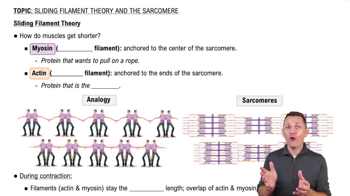
Sliding Filament Theory

Structure-Function Relationship

The structure-function relationship is a fundamental principle in biology that explains how the physical characteristics of a biological structure influence its role and efficiency. In the case of intermediate filaments, their fibrous and rope-like structure allows them to distribute tensile forces across cells, thereby enhancing resilience against deformation and damage.
Video consigliato:
Percorso guidato
06:04
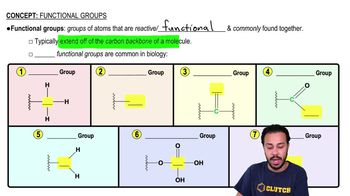
Functional Groups

Cellular Mechanics

Cellular mechanics refers to the study of the mechanical properties and behaviors of cells, including how they respond to forces and maintain their shape. Intermediate filaments play a vital role in cellular mechanics by providing a scaffold that supports organelles and helps cells resist external stresses, contributing to overall tissue integrity and function.
Video consigliato:
Percorso guidato
03:38
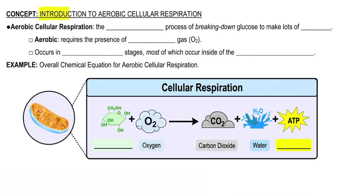
Introduction to Cellular Respiration