Ch. 4 Histology
Amerman - Human Anatomy & Physiology 2nd Edition
Amerman2nd EditionHuman Anatomy & PhysiologyISBN: 9780136873822Non è quello che usi tu?Cambia libro di testo
Capitolo 4, Problema L2.5

Why do you think the rate of cell division is different for different tissues? Where in the body would you expect to find cells that have a rapid rate of division? Where might you find cells that have a slow rate of division? Explain.

Guida verificata passo dopo passo
1
Understand the concept of cell division: Cell division is the process by which cells replicate to produce new cells. It is essential for growth, repair, and maintenance of tissues. Different tissues have varying rates of cell division based on their function and the need for renewal.
Identify tissues with rapid cell division: Tissues that experience frequent wear and tear or need constant renewal typically have a high rate of cell division. Examples include epithelial cells in the skin, the lining of the gastrointestinal tract, and bone marrow cells responsible for producing blood cells.
Identify tissues with slow cell division: Tissues that are more stable and do not require frequent renewal tend to have a slower rate of cell division. Examples include neurons in the brain, cardiac muscle cells, and skeletal muscle cells, which are specialized and have limited regenerative capacity.
Explain the biological reasoning: Rapidly dividing cells are often found in areas exposed to environmental stress or damage, such as the skin or digestive tract, to maintain tissue integrity. Conversely, tissues with specialized functions, like neurons, prioritize maintaining their structure and function over frequent division.
Relate the concept to physiology: The rate of cell division is influenced by factors such as the tissue's role in the body, exposure to damage, and the need for repair or replacement. This ensures that the body allocates resources efficiently to maintain homeostasis and functionality.

Risposta video verificata per un problema simile:

Questa soluzione video è stata consigliata dai nostri tutor come utile per risolvere questo problema.

Concetti chiave

Ecco i concetti essenziali che devi comprendere per rispondere correttamente alla domanda.

Cell Division Rates

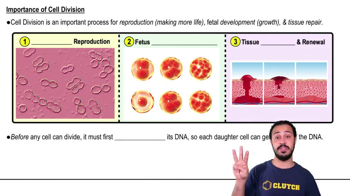
Cell division rates vary significantly among different tissues due to the specific functions and demands of those tissues. Rapidly dividing cells are often found in tissues that require constant renewal, such as skin and intestinal lining, while slower division rates are typical in tissues like muscle and nerve cells, which are more specialized and have longer lifespans.
Video consigliato:
Percorso guidato
03:18
Importance of Cell Division

Tissue Types

The body is composed of four primary tissue types: epithelial, connective, muscle, and nervous tissue. Each type has distinct characteristics and roles, influencing their cell division rates. For instance, epithelial tissues, which cover surfaces and line cavities, tend to have high turnover rates, while connective tissues may have slower rates due to their structural roles.
Video consigliato:
00:36
3 Types of Muscle Tissue

Regulatory Mechanisms

Cell division is tightly regulated by various mechanisms, including growth factors, hormones, and the cell cycle checkpoints. These regulatory factors ensure that cells divide only when necessary, which explains the differences in division rates across tissues. For example, stem cells in bone marrow divide rapidly to produce new blood cells, while differentiated cells in the brain divide infrequently.
Video consigliato:
Percorso guidato
3:53
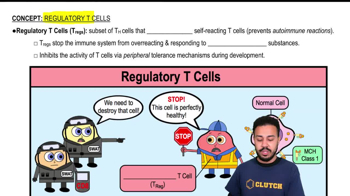
Regulatory T Cells
Pratica correlata