Ch. 6 Bones and Bone Tissue
Amerman - Human Anatomy & Physiology 2nd Edition
Amerman2nd EditionHuman Anatomy & PhysiologyISBN: 9780136873822Non è quello che usi tu?Cambia libro di testo
Capitolo 6, Problema 2

Match the following terms with the correct definition.
____Long bone    
____Epiphysis    
____Nutrient artery    
____Flat bone    
____Short bone    
____Periosteum    
____Diaphysis    
____Medullary cavitya.
a. Main source of blood to the medullary cavity
b. Membrane surrounding the bone
c. Bone that is about as wide as it is long
d. Shaft of a long bone
e. Bone that is longer than it is wide
f. Canal running down the center of the diaphysis
g. End of a long bone
h. Bone that is broad and thin

Guida verificata passo dopo passo
1
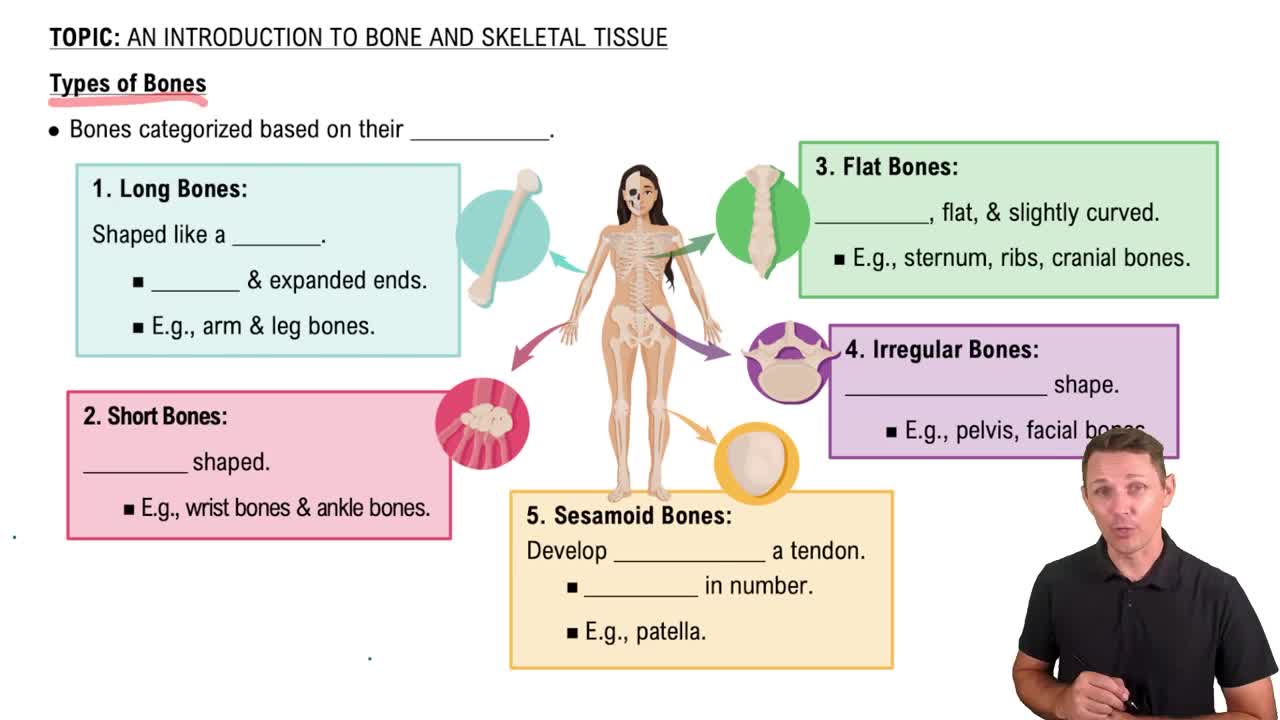
Step 1: Understand the definitions of the terms provided. For example: a long bone is a bone that is longer than it is wide, the epiphysis is the end of a long bone, and the diaphysis is the shaft of a long bone.
Step 2: Match the term 'Long bone' with its definition. Based on the description, a long bone is defined as 'Bone that is longer than it is wide.'
Step 3: Match the term 'Epiphysis' with its definition. The epiphysis is the 'End of a long bone.'
Step 4: Match the term 'Nutrient artery' with its definition. The nutrient artery is the 'Main source of blood to the medullary cavity.'
Step 5: Continue matching the remaining terms (Flat bone, Short bone, Periosteum, Diaphysis, Medullary cavity) with their respective definitions by carefully analyzing their descriptions. For example, the periosteum is the 'Membrane surrounding the bone,' and the medullary cavity is the 'Canal running down the center of the diaphysis.'

Risposta video verificata per un problema simile:

Questa soluzione video è stata consigliata dai nostri tutor come utile per risolvere questo problema.

Concetti chiave

Ecco i concetti essenziali che devi comprendere per rispondere correttamente alla domanda.

Types of Bones

Bones are classified into several types based on their shapes and functions. Long bones, such as the femur, are longer than they are wide and primarily function in movement. Short bones, like the carpals, are roughly equal in length and width, providing stability. Flat bones, such as the skull, are thin and broad, serving protective roles. Understanding these classifications is essential for matching terms with their definitions.
Video consigliato:
4:14
Types of Bones

Bone Structure

The structure of bones includes various components that contribute to their function and health. The diaphysis is the shaft of a long bone, while the epiphysis refers to the ends of the bone. The periosteum is a membrane that covers the outer surface of bones, providing nourishment and protection. The medullary cavity is the central cavity within the diaphysis that contains bone marrow. Familiarity with these structures aids in accurately defining bone-related terms.
Video consigliato:
3:22
Gross Anatomy of Bones - Structure of a Long Bone Example 1

Blood Supply to Bones

Bones require a rich blood supply for nourishment and maintenance, primarily provided by the nutrient artery. This artery is the main source of blood to the medullary cavity, ensuring that the bone tissue receives essential nutrients and oxygen. Understanding the role of blood supply in bone health is crucial for recognizing the importance of the nutrient artery in the context of bone anatomy and physiology.
Video consigliato:
6:37
Blood Supply to the Kidneys