
Ch. 6 Bones and Bone Tissue
Amerman - Human Anatomy & Physiology 2nd Edition
Amerman2nd EditionHuman Anatomy & PhysiologyISBN: 9780136873822Non è quello che usi tu?Cambia libro di testo
Capitolo 6, Problema 10

The part of the epiphysis that does not ossify during a person's lifetime is the:
a. Articular surface
b. Secondary ossification center
c. Diaphyseal notch
d. Nutrient foramen

Guida verificata passo dopo passo
1
Understand the anatomy of a long bone: The epiphysis is the rounded end of a long bone, which is involved in joint articulation and growth during development. It contains regions such as the articular cartilage, secondary ossification center, and other structures.
Recall the process of ossification: Ossification is the process by which bone tissue forms. Most parts of the epiphysis ossify during development, except for specific regions that remain as cartilage for functional purposes.
Identify the role of the articular surface: The articular surface is covered by articular cartilage, which does not ossify. This cartilage remains throughout a person's lifetime to provide a smooth, low-friction surface for joint movement.
Eliminate incorrect options: The secondary ossification center ossifies during development, the diaphyseal notch is not a standard anatomical term, and the nutrient foramen is a passage for blood vessels and does not involve ossification.
Conclude that the correct answer is the articular surface, as it remains as cartilage and does not ossify during a person's lifetime.

Risposta video verificata per un problema simile:

Questa soluzione video è stata consigliata dai nostri tutor come utile per risolvere questo problema.

Concetti chiave

Ecco i concetti essenziali che devi comprendere per rispondere correttamente alla domanda.

Epiphysis

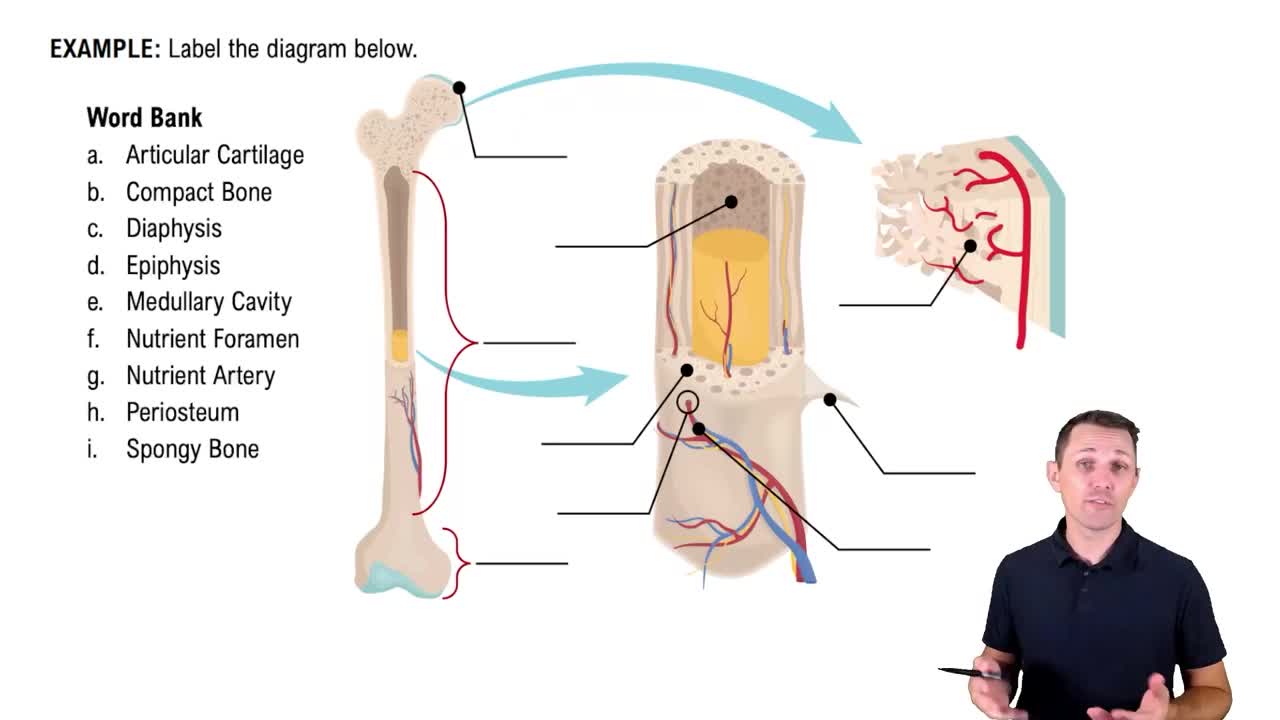
The epiphysis is the rounded end of a long bone, which is involved in joint formation and is typically covered by articular cartilage. It plays a crucial role in bone growth and development, particularly during childhood and adolescence. Understanding the structure and function of the epiphysis is essential for identifying which parts remain unossified throughout life.
Video consigliato:
2:37
Gross Anatomy of Bones - Structure of a Long Bone Example 2

Ossification

Ossification is the process by which bone tissue is formed, involving the transformation of cartilage or other tissues into bone. There are two main types: intramembranous ossification, which occurs in flat bones, and endochondral ossification, which is responsible for the formation of long bones. Recognizing the stages and types of ossification helps in understanding which parts of the epiphysis remain unossified.
Video consigliato:
Percorso guidato
02:23
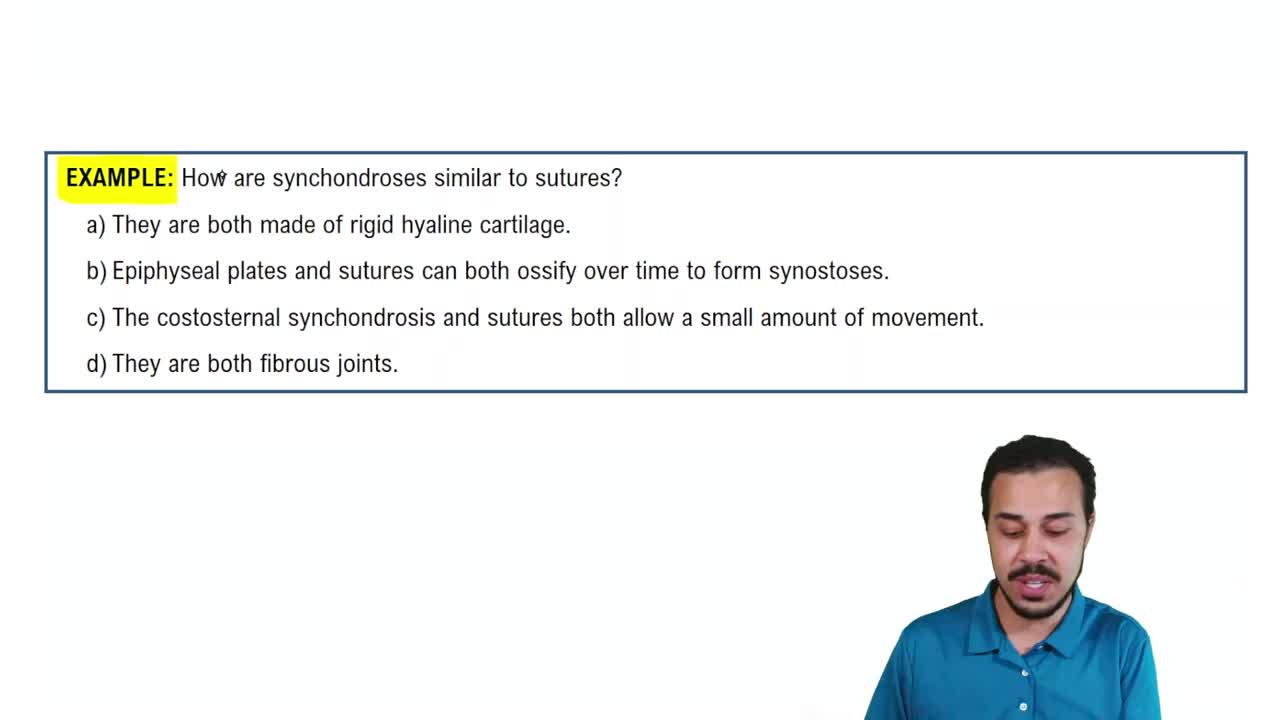
Structural Class: Cartilaginous Joints Example 1

Articular Cartilage

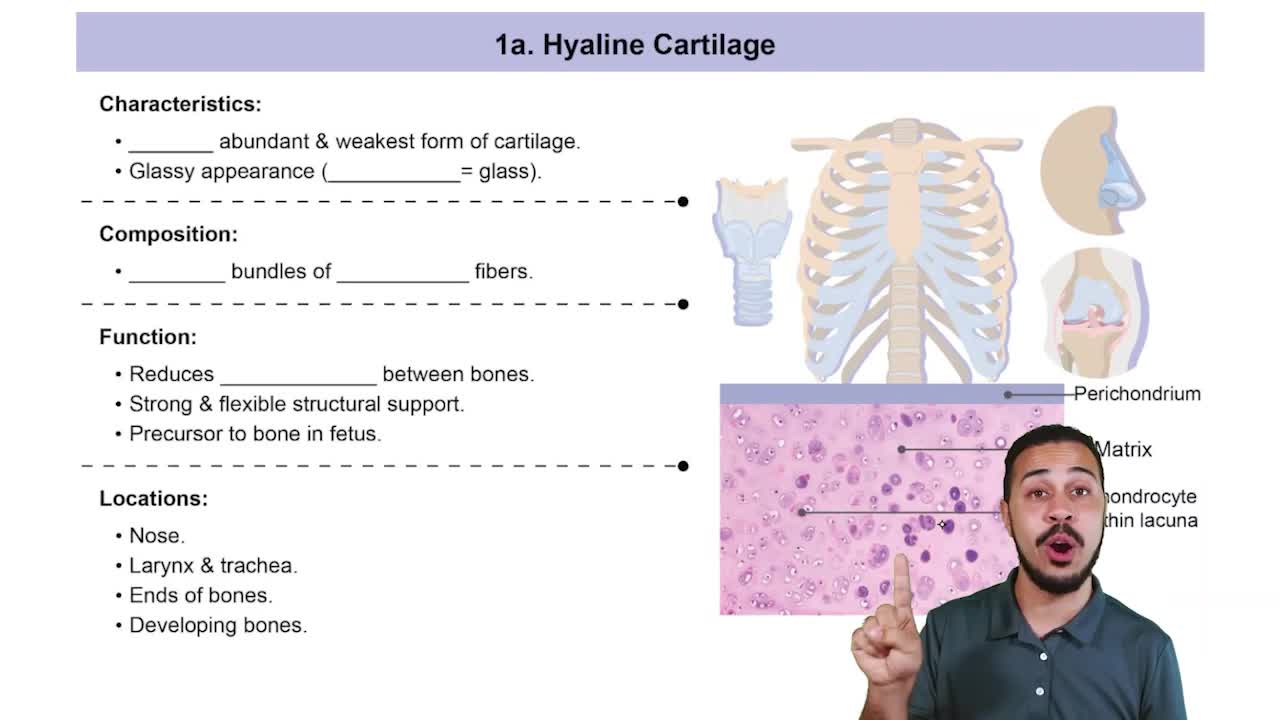
Articular cartilage is a smooth, white tissue that covers the ends of bones in joints, providing a cushion and reducing friction during movement. It is crucial for joint function and health, and unlike other bone tissues, it does not ossify. This characteristic is important for answering the question regarding which part of the epiphysis remains unossified throughout a person's life.
Video consigliato:
05:36
Hyaline Cartilage
Pratica correlata
Domanda del libro di testo

Correctly order the following steps of bone growth in length by placing a 1 by the first step, a 2 by the second step, and so on.

Calcified cartilage is replaced with bone in the zone of ossification.

Chondrocytes in the zone of proliferation divide by mitosis.

Chondrocytes enter the zone of calcification and die as their matrix calcifies.

Chondrocytes enlarge and cease dividing.

891
views
2
rank
Domanda del libro di testo

What is the difference between a primary and secondary ossification center in a long bone?

1487
views
1
rank
Domanda del libro di testo

Which bones form via intramembranous ossification?


a. Irregular bones

b. Certain flat bones

c. Long bones

d. Short bones

e. More than one of the above

918
views
Domanda del libro di testo

Explain the effect that the following hormones have on the growth of bone tissue:

a. Growth hormone

860
views
Domanda del libro di testo

Of the following statements, identify those that are properties of intramembranous ossification, endochondral ossification, or both.

a. The bone is formed via a hyaline cartilage model.

b. Bone tissue forms from ossification centers.

c. Bone forms from within a mesenchyme membrane.

d. The early spongy bone is formed, after which the early compact bone develops.

e. The original primary bone is replaced with secondary bone.

f. A bone collar forms, followed by the early spongy bone.

793
views
Domanda del libro di testo

Long bones grow in length from the:

a. Diaphyseal line

b. Epiphyseal line

c. Epiphyseal plate

d. Medullary cavity

944
views