Ch. 10 The Muscular System
Marieb - Human Anatomy & Physiology 11th Edition
Marieb, Hoehn11th EditionHuman Anatomy & PhysiologyISBN: 9780136874034Non è quello che usi tu?Cambia libro di testo
Capitolo 10, Problema 19

a. Name the four muscle pairs that act in unison to compress the abdominal contents.
b. How does their arrangement (fiber direction) contribute to the strength of the abdominal wall?
c. Which of these muscles can effect lateral rotation of the spine?
d. Which can act alone to flex the spine?

Guida verificata passo dopo passo
1
Step 1: Identify the four muscle pairs that compress the abdominal contents. These are the external oblique, internal oblique, transversus abdominis, and rectus abdominis muscles. Each pair is located on either side of the midline, working together to increase intra-abdominal pressure and stabilize the trunk.
Step 2: Understand the fiber direction of each muscle and how it contributes to abdominal wall strength. The external oblique fibers run diagonally downward and medially, the internal oblique fibers run perpendicular to the external oblique (upward and medially), the transversus abdominis fibers run horizontally, and the rectus abdominis fibers run vertically. This multi-directional arrangement provides a strong, supportive, and flexible abdominal wall capable of resisting forces from various directions.
Step 3: Determine which muscles contribute to lateral rotation of the spine. The external oblique and internal oblique muscles, due to their diagonal fiber orientation, can contract on one side to rotate the spine laterally (twisting the torso).
Step 4: Identify which muscle can act alone to flex the spine. The rectus abdominis, with its vertical fibers running along the midline, is primarily responsible for flexing the spine when it contracts bilaterally.
Step 5: Summarize the functional roles: the four muscle pairs work together to compress and stabilize the abdomen; the obliques contribute to lateral rotation; and the rectus abdominis is the main muscle for spinal flexion when acting alone.

Risposta video verificata per un problema simile:

Questa soluzione video è stata consigliata dai nostri tutor come utile per risolvere questo problema.
Durata del video:
1m

Concetti chiave

Ecco i concetti essenziali che devi comprendere per rispondere correttamente alla domanda.

Muscle Pairs of the Abdominal Wall

The four main muscle pairs that compress the abdominal contents are the external oblique, internal oblique, transversus abdominis, and rectus abdominis. These muscles work together to provide support, protect internal organs, and assist in movements like flexion and rotation of the trunk.
Video consigliato:
3:30
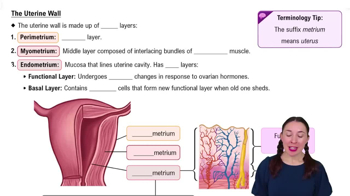
The Uterine Wall

Fiber Direction and Abdominal Wall Strength

The different fiber directions of the abdominal muscles—external oblique fibers run downward and medially, internal oblique fibers run upward and medially, and transversus abdominis fibers run horizontally—create a crisscross pattern. This arrangement enhances the strength and stability of the abdominal wall by distributing forces evenly and resisting pressure from multiple directions.
Video consigliato:
03:47
Anatomical Terms Review

Muscle Actions: Lateral Rotation and Flexion of the Spine

The internal and external oblique muscles contribute to lateral rotation of the spine by contracting on one side, twisting the trunk. The rectus abdominis primarily acts alone to flex the spine forward, such as during a sit-up, by pulling the rib cage toward the pelvis.
Video consigliato:
5:41
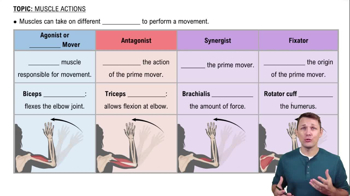
Muscle Actions