Ch. 21 The Immune System: Innate and Adaptive Body Defenses
Marieb - Human Anatomy & Physiology 11th Edition
Marieb, Hoehn11th EditionHuman Anatomy & PhysiologyISBN: 9780136874034Non è quello che usi tu?Cambia libro di testo
Capitolo 21, Problema 10

Using the letters from column B, match the cell description in column A.
(Note that all require more than a single choice.)
Column A
_____ (1) Phagocytic “cleanup crew”
_____ (2) Releases histamine
_____ (3) Releases perforins
_____ (4) Lymphocyte
_____ (5) Effector cells of adaptive immunity
_____ (6) Antigen-presenting cell
Column B
a. Natural killer cell
b. Neutrophil
c. Dendritic cell
d. Mast cell
e. Cytotoxic T cell
f. B cell
g. Macrophage
h. Helper T cell
i. Basophil

Guida verificata passo dopo passo
1
Step 1: Understand the descriptions in Column A. Each description refers to a specific function or characteristic of a cell type. For example, 'Phagocytic cleanup crew' refers to cells involved in engulfing and digesting debris or pathogens.
Step 2: Review the cell types listed in Column B. Each cell type has distinct roles in the immune system. For instance, macrophages are phagocytic cells, while mast cells release histamine.
Step 3: Match each description in Column A to the appropriate cell types in Column B. Note that some descriptions may require more than one cell type. For example, 'Phagocytic cleanup crew' could match both neutrophils and macrophages.
Step 4: Consider the specific functions of each cell type. For example, dendritic cells are antigen-presenting cells, cytotoxic T cells release perforins, and helper T cells are lymphocytes involved in adaptive immunity.
Step 5: Double-check your matches to ensure accuracy. Verify that each cell type aligns with the description provided in Column A based on its known function in the immune system.

Risposta video verificata per un problema simile:

Questa soluzione video è stata consigliata dai nostri tutor come utile per risolvere questo problema.
Durata del video:
2m

Concetti chiave

Ecco i concetti essenziali che devi comprendere per rispondere correttamente alla domanda.

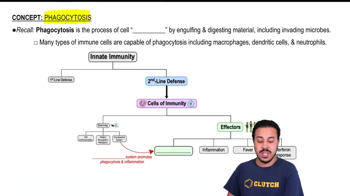
Phagocytosis

Phagocytosis is a cellular process where certain immune cells, such as neutrophils and macrophages, engulf and digest pathogens and debris. This 'cleanup crew' function is crucial for maintaining tissue health and initiating the immune response. By removing dead cells and pathogens, phagocytes help prevent infection and promote healing.
Video consigliato:

Histamine Release

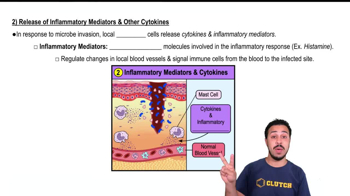
Histamine is a chemical released by mast cells and basophils during allergic reactions and immune responses. It plays a key role in inflammation by increasing blood vessel permeability, allowing immune cells to access affected tissues more easily. This process is essential for the body's defense against pathogens but can also contribute to allergic symptoms.
Video consigliato:
Percorso guidato
2:15
Step 2: Release of Inflammatory Mediators & Other Cytokines

Adaptive Immunity

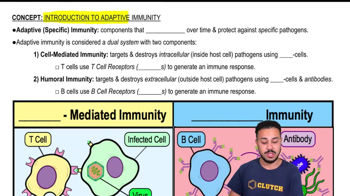
Adaptive immunity refers to the specific immune response that develops over time, involving lymphocytes such as B cells and T cells. B cells produce antibodies, while T cells can directly kill infected cells or help other immune cells. This system provides long-lasting protection and memory against previously encountered pathogens, distinguishing it from the innate immune response.
Video consigliato:
Percorso guidato
5:47
Adaptive Immunity