Ch. 23 The Digestive System
Marieb - Human Anatomy & Physiology 11th Edition
Marieb, Hoehn11th EditionHuman Anatomy & PhysiologyISBN: 9780136874034Non è quello che usi tu?Cambia libro di testo
Capitolo 23, Problema 18

Make a simple line drawing of the organs of the alimentary canal and label each organ. Then add three labels to your drawing—salivary glands, liver, and pancreas—and use arrows to show where each of these organs empties its secretions into the alimentary canal.

Guida verificata passo dopo passo
1
Begin by sketching a simple outline of the main organs of the alimentary canal in order: start with the mouth, then the pharynx, followed by the esophagus, stomach, small intestine (divided into duodenum, jejunum, and ileum), large intestine (including cecum, colon, rectum), and finally the anus.
Label each organ clearly on your drawing to identify the path food takes through the digestive system.
Next, add the salivary glands near the mouth. These include the parotid, submandibular, and sublingual glands. Draw arrows from these glands pointing to the mouth to indicate where saliva is secreted.
Add the liver above the stomach area and draw the gallbladder beneath it. Then, draw an arrow from the liver (via the bile duct) and gallbladder pointing to the duodenum, the first part of the small intestine, showing where bile enters the alimentary canal.
Finally, add the pancreas behind the stomach and draw an arrow from the pancreas to the duodenum as well, indicating where pancreatic secretions enter the alimentary canal to aid digestion.

Risposta video verificata per un problema simile:

Questa soluzione video è stata consigliata dai nostri tutor come utile per risolvere questo problema.
Durata del video:
2m

Concetti chiave

Ecco i concetti essenziali che devi comprendere per rispondere correttamente alla domanda.

Alimentary Canal Organs

The alimentary canal is a continuous tube through which food passes and digestion occurs. Key organs include the mouth, pharynx, esophagus, stomach, small intestine, large intestine, and anus. Understanding their order and function is essential for accurately drawing and labeling the digestive tract.
Video consigliato:
05:04
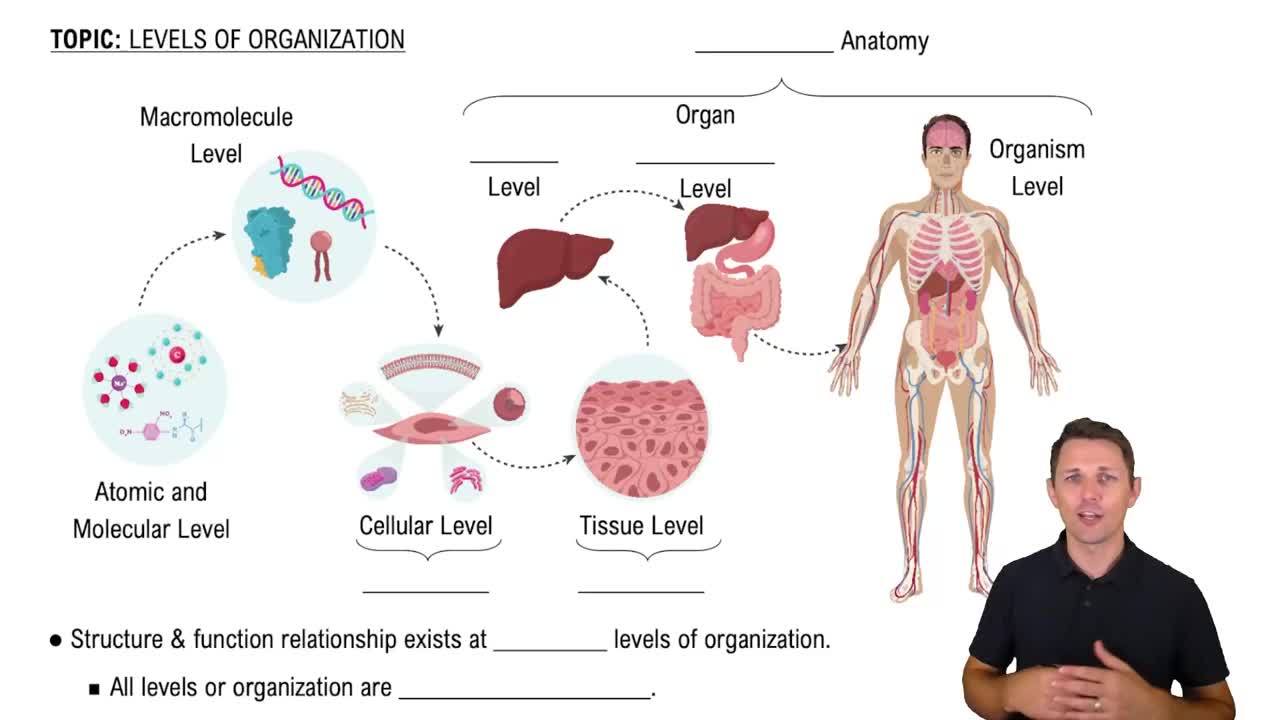
The Levels of Organization

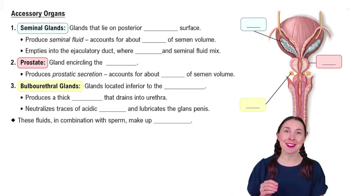
Accessory Digestive Organs

Salivary glands, liver, and pancreas are accessory organs that produce secretions aiding digestion but are not part of the alimentary canal itself. These organs release enzymes and other substances into specific points of the canal to facilitate breakdown and absorption of nutrients.
Video consigliato:
3:21
Accessory Organs

Sites of Secretion Entry

Each accessory organ empties its secretions into particular locations in the alimentary canal: salivary glands into the mouth, the liver via the bile duct into the small intestine, and the pancreas also into the small intestine. Knowing these entry points is crucial for correctly placing arrows in the drawing.
Video consigliato:
Percorso guidato
01:33
Protein Secretion
Pratica correlata
Domanda del libro di testo

Trace the path of a single protein molecule that has been ingested.

The protein molecule will be digested by enzymes made by

a. The mouth, stomach, and colon

b. The stomach, liver, and small intestine

c. The small intestine, mouth, and liver

d. The pancreas, stomach, and small intestine

818
views
Domanda del libro di testo

Lara was on a diet but she could not eat less and kept claiming her stomach had a mind of its own. She was joking, but indeed, there is a 'gut brain' called the enteric nervous system. Is it part of the parasympathetic and sympathetic nervous system? Explain.

772
views
Domanda del libro di testo

Trace the path of a single protein molecule that has been ingested.

The protein molecule must be digested before it can be transported to and utilized by the cells because

a. Protein is only useful directly

b. Protein has a low pH

c. Proteins in the circulating blood produce an adverse osmotic pressure

d. The protein is too large to be readily absorbed

775
views
Domanda del libro di testo

Describe the two phases of swallowing, noting the organs involved and the activities that occur.

73
views
Domanda del libro di testo

a. Describe the boundaries of the oral cavity.

b. Why do you suppose its mucosa is stratified squamous epithelium rather than the more typical simple columnar epithelium?

108
views
Domanda del libro di testo

Trace the path of a single protein molecule that has been ingested.

Before the blood carrying the products of protein digestion reaches the heart, it first passes through capillary networks in:

a. The spleen

b. The lungs

c. The liver

d. The brain

100
views