Ch. 24 Nutrition, Metabolism, and Energy Balance
Marieb - Human Anatomy & Physiology 11th Edition
Marieb, Hoehn11th EditionHuman Anatomy & PhysiologyISBN: 9780136874034Non è quello che usi tu?Cambia libro di testo
Capitolo 24, Problema 2

The formation of glucose from glycogen is:
a. gluconeogenesis
b. glycogenesis
c. glycogenolysis
d. glycolysis

Guida verificata passo dopo passo
1
Understand the key terms in the question: Glycogen is a stored form of glucose in the liver and muscles, and the question asks about the process of breaking it down to form glucose.
Review the definitions of the answer choices: (a) Gluconeogenesis refers to the formation of glucose from non-carbohydrate sources like amino acids or glycerol. (b) Glycogenesis is the process of forming glycogen from glucose. (c) Glycogenolysis is the breakdown of glycogen into glucose. (d) Glycolysis is the breakdown of glucose into pyruvate to produce energy.
Eliminate the incorrect options based on their definitions: Gluconeogenesis (a) and glycolysis (d) do not involve glycogen. Glycogenesis (b) is the opposite process of forming glycogen, not breaking it down.
Focus on the correct term: Glycogenolysis (c) is the process where glycogen is broken down into glucose-1-phosphate and then converted into glucose-6-phosphate, which can be used in metabolic pathways.
Conclude that the correct answer is the term describing the breakdown of glycogen to form glucose, which is glycogenolysis.

Risposta video verificata per un problema simile:

Questa soluzione video è stata consigliata dai nostri tutor come utile per risolvere questo problema.
Durata del video:
2m

Concetti chiave

Ecco i concetti essenziali che devi comprendere per rispondere correttamente alla domanda.

Glycogenolysis

Glycogenolysis is the biochemical process through which glycogen, a stored form of glucose in the liver and muscles, is broken down into glucose molecules. This process is crucial for maintaining blood glucose levels during fasting or intense exercise, providing energy when needed. It involves the enzymatic cleavage of glycogen, releasing glucose-1-phosphate, which can then be converted to glucose-6-phosphate for energy production.

Glycogenesis

Glycogenesis is the synthesis of glycogen from glucose, primarily occurring in the liver and muscle tissues. This process is essential for storing excess glucose, which can be mobilized later during periods of low blood sugar. Glycogenesis involves several enzymatic steps, including the conversion of glucose to glucose-6-phosphate and its subsequent polymerization into glycogen.

Gluconeogenesis

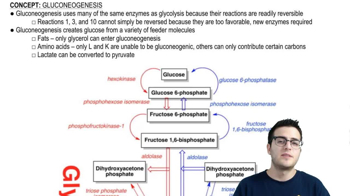
Gluconeogenesis is the metabolic pathway that generates glucose from non-carbohydrate precursors, such as amino acids and glycerol. This process is vital during prolonged fasting or intense exercise when glucose levels are low. Unlike glycogenolysis, which breaks down glycogen, gluconeogenesis synthesizes glucose, ensuring a continuous supply for vital functions, particularly in the brain and red blood cells.
Video consigliato:
Percorso guidato
08:55
Gluconeogenesis 1