Ch. 26 Fluid, Electrolyte, and Acid-Base Balance
Marieb - Human Anatomy & Physiology 11th Edition
Marieb, Hoehn11th EditionHuman Anatomy & PhysiologyISBN: 9780136874034Non è quello che usi tu?Cambia libro di testo
Capitolo 26, Problema 16

Explain why and how total body sodium content, ECF volume, and blood pressure are jointly regulated.

Guida verificata passo dopo passo
1
Step 1: Understand the relationship between total body sodium content and extracellular fluid (ECF) volume. Sodium is the primary cation in the ECF, and its concentration largely determines the osmolarity of this compartment. When total body sodium increases, water follows by osmosis to maintain osmotic balance, leading to an increase in ECF volume.
Step 2: Recognize that changes in ECF volume directly affect blood volume because plasma is part of the ECF. An increase in ECF volume raises blood volume, which in turn influences blood pressure by increasing the amount of fluid within the vascular system.
Step 3: Explore the physiological mechanisms that regulate sodium balance, ECF volume, and blood pressure jointly. Key systems include the renin-angiotensin-aldosterone system (RAAS), antidiuretic hormone (ADH), and atrial natriuretic peptide (ANP). These hormones adjust sodium reabsorption in the kidneys, water retention, and vascular tone to maintain homeostasis.
Step 4: Describe how the kidneys play a central role by adjusting sodium excretion. When blood pressure or ECF volume rises, the kidneys increase sodium and water excretion to reduce volume and pressure. Conversely, when volume or pressure falls, sodium and water retention is promoted to restore balance.
Step 5: Summarize that the joint regulation of total body sodium, ECF volume, and blood pressure is a dynamic feedback system. It ensures stable internal conditions by linking sodium content to fluid volume and vascular pressure through hormonal signals and renal function.

Risposta video verificata per un problema simile:

Questa soluzione video è stata consigliata dai nostri tutor come utile per risolvere questo problema.
Durata del video:
4m

Concetti chiave

Ecco i concetti essenziali che devi comprendere per rispondere correttamente alla domanda.

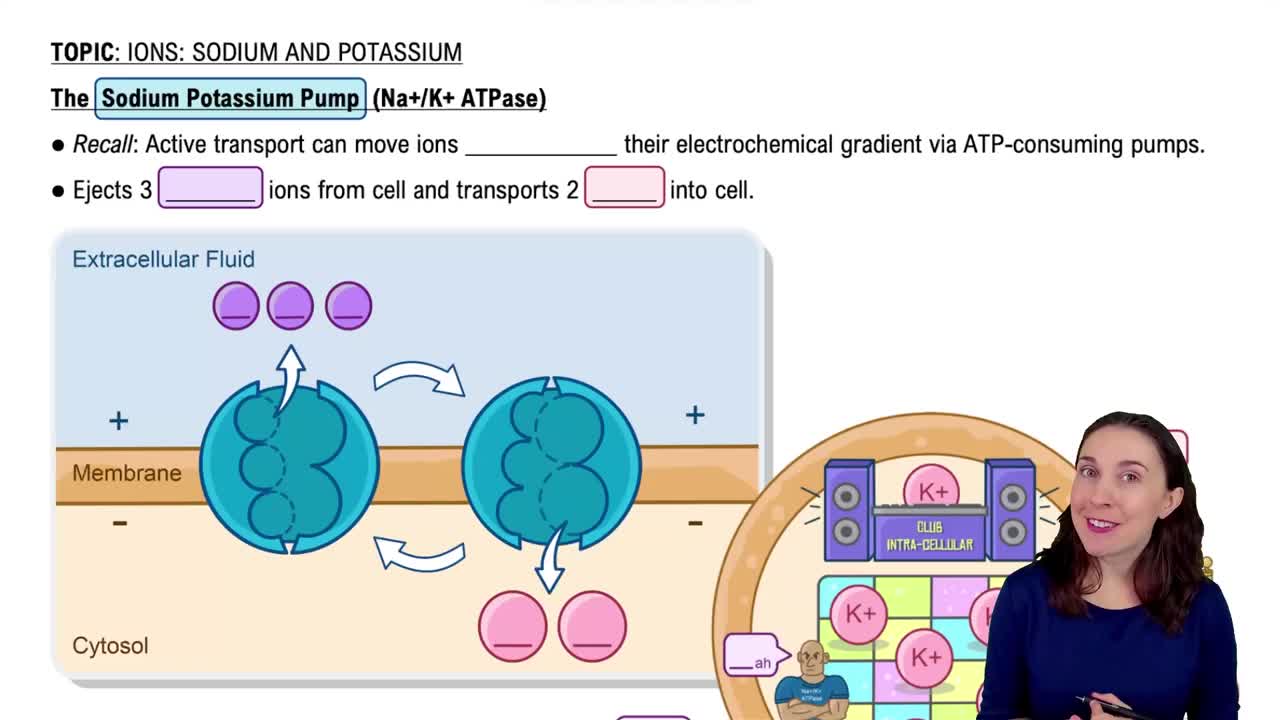
Total Body Sodium Content

Total body sodium content refers to the amount of sodium present in the body, primarily in the extracellular fluid. Sodium is a key determinant of fluid balance because it influences water retention and distribution. Changes in sodium levels directly affect extracellular fluid volume and thus impact blood pressure regulation.
Video consigliato:
03:40
The Sodium Potassium Pump

Extracellular Fluid (ECF) Volume

ECF volume is the amount of fluid outside cells, including plasma and interstitial fluid. It is closely linked to sodium content since sodium attracts water, maintaining fluid balance. Variations in ECF volume influence blood volume, which in turn affects cardiac output and blood pressure.
Video consigliato:
6:28
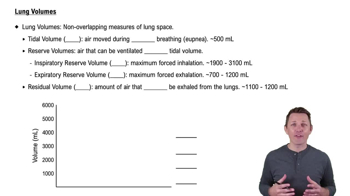
Lung Volumes

Blood Pressure Regulation

Blood pressure is the force exerted by circulating blood on vessel walls, regulated by cardiac output and vascular resistance. It is influenced by ECF volume and sodium levels through mechanisms like the renin-angiotensin-aldosterone system and kidney function, which adjust sodium and water retention to maintain stable blood pressure.
Video consigliato:
6:12
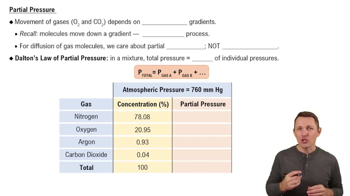
Partial Pressure