Ch. 10 Blood
Marieb - Essentials of Human Anatomy & Physiology 13th Edition
Marieb13th EditionEssentials of Human Anatomy & PhysiologyISBN: 9780135624340Non è quello che usi tu?Cambia libro di testo
Capitolo 10, Problema 25

Brittany, a healthy young woman, had a battery of tests during a physical for a new job. Her RBC count was at the higher end of the normal range at that time, but four weeks later it was substantially elevated beyond that. When asked if any circumstances had changed in her life, she admitted to taking up smoking. How might her new habit explain her higher RBC count?

Guida verificata passo dopo passo
1
Understand the role of red blood cells (RBCs): RBCs are responsible for transporting oxygen from the lungs to tissues and removing carbon dioxide from the body. Their production is regulated by the body's oxygen needs.
Recognize the impact of smoking on oxygen levels: Smoking introduces carbon monoxide (CO) into the bloodstream. CO binds to hemoglobin in RBCs with a much higher affinity than oxygen, reducing the oxygen-carrying capacity of the blood.
Explain the body's compensatory mechanism: To counteract the reduced oxygen delivery caused by CO binding, the body increases erythropoiesis (RBC production) to ensure adequate oxygen transport to tissues.
Connect Brittany's smoking habit to her elevated RBC count: Brittany's new smoking habit likely led to increased CO exposure, triggering her body to produce more RBCs to compensate for the reduced oxygen availability.
Conclude with the physiological adaptation: The elevated RBC count is a normal physiological response to chronic exposure to CO from smoking, as the body attempts to maintain oxygen homeostasis despite the interference caused by CO.

Risposta video verificata per un problema simile:

Questa soluzione video è stata consigliata dai nostri tutor come utile per risolvere questo problema.
Durata del video:
2m

Concetti chiave

Ecco i concetti essenziali che devi comprendere per rispondere correttamente alla domanda.

Red Blood Cell (RBC) Count

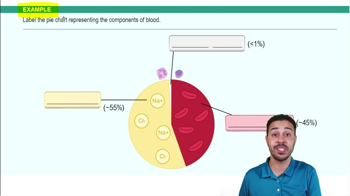
The red blood cell count measures the number of red blood cells in a volume of blood. RBCs are crucial for transporting oxygen from the lungs to the body's tissues and returning carbon dioxide for exhalation. A higher than normal RBC count, known as erythrocytosis, can indicate various physiological changes or health conditions, including increased oxygen demand or reduced oxygen availability.
Video consigliato:
Percorso guidato
1:55
Introduction to Blood Example 2

Effects of Smoking on Health

Smoking introduces harmful substances into the body, leading to various health issues, including respiratory problems and cardiovascular disease. It can also cause chronic hypoxia, where the body experiences lower oxygen levels. In response, the body may produce more red blood cells to compensate for the reduced oxygen availability, resulting in an elevated RBC count.
Video consigliato:
Percorso guidato
1:32
Effects of the Complement System

Compensatory Mechanisms

Compensatory mechanisms are physiological responses that the body employs to maintain homeostasis when faced with stressors or changes. In the context of smoking, the body may increase RBC production as a response to chronic low oxygen levels, thereby enhancing oxygen transport capacity. This adaptive response can lead to elevated RBC counts, reflecting the body's attempt to counteract the effects of reduced oxygenation.
Video consigliato:
3:02
Internal Regulation - The Myogenic Mechanism