Ch. 12 The Lymphatic System and Body Defenses
Marieb - Essentials of Human Anatomy & Physiology 13th Edition
Marieb13th EditionEssentials of Human Anatomy & PhysiologyISBN: 9780135624340Non è quello che usi tu?Cambia libro di testo
Capitolo 12, Problema 8

More than one choice may apply.
Against which of the following will interferon do some good?
a. Infection of body cells by a virus
b. Circulating free viruses
c. Some types of cancer
d. Bacterial infection

Guida verificata passo dopo passo
1
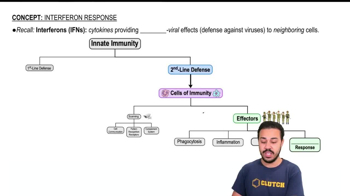
Step 1: Understand the role of interferons. Interferons are proteins produced by cells in response to viral infections or other stressors. They help inhibit viral replication within infected cells and activate immune responses, including enhancing the activity of natural killer cells and macrophages.
Step 2: Analyze option (a). Interferons are effective against infection of body cells by a virus because they prevent the virus from replicating within the cells and signal neighboring cells to heighten their antiviral defenses.
Step 3: Analyze option (b). Interferons are not directly effective against circulating free viruses because they primarily act on infected cells and the immune system rather than neutralizing viruses outside of cells.
Step 4: Analyze option (c). Interferons can be beneficial against some types of cancer because they enhance the immune system's ability to detect and destroy abnormal cells, including cancerous ones.
Step 5: Analyze option (d). Interferons are generally not effective against bacterial infections because their primary function is to combat viral infections and modulate immune responses rather than directly targeting bacteria.

Risposta video verificata per un problema simile:

Questa soluzione video è stata consigliata dai nostri tutor come utile per risolvere questo problema.
Durata del video:
2m

Concetti chiave

Ecco i concetti essenziali che devi comprendere per rispondere correttamente alla domanda.

Interferon

Interferon is a type of protein produced by the body in response to viral infections. It plays a crucial role in the immune response by signaling neighboring cells to enhance their antiviral defenses and by activating immune cells. Interferons are also used therapeutically to treat certain viral infections and cancers.
Video consigliato:

Viral Infections

Viral infections occur when viruses invade and replicate within host cells, leading to cell damage or death. The immune system responds to these infections through various mechanisms, including the production of interferons, which help to limit the spread of the virus and activate immune responses against infected cells.
Video consigliato:
Percorso guidato
2:38
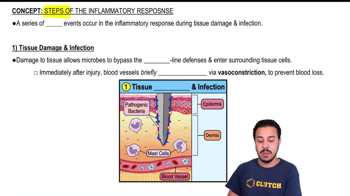
Step 1: Tissue Damage & Infection

Cancer and Interferon Therapy

Some types of cancer can be treated with interferon therapy, which harnesses the immune system to fight cancer cells. Interferons can inhibit tumor growth, enhance the immune response against cancer cells, and improve the effectiveness of other treatments. This approach is particularly relevant for certain hematological malignancies and solid tumors.
Video consigliato: