Ch. 14 The Digestive System and Body Metabolism
Marieb - Essentials of Human Anatomy & Physiology 13th Edition
Marieb13th EditionEssentials of Human Anatomy & PhysiologyISBN: 9780135624340Non è quello che usi tu?Cambia libro di testo
Capitolo 14, Problema 2

More than one choice may apply.
A digestive organ that is not part of the alimentary canal is the
a. Stomach
b. Liver
c. Small intestine
d. Large intestine
e. Pharynx

Guida verificata passo dopo passo
1
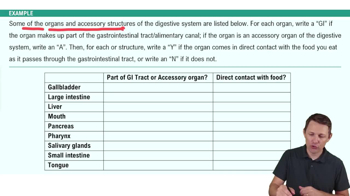
Understand the difference between the alimentary canal and accessory organs of the digestive system. The alimentary canal is the continuous tube through which food passes, while accessory organs assist in digestion but are not part of the tube itself.
Identify the organs listed in the question: stomach, liver, small intestine, large intestine, and pharynx. Determine which of these are part of the alimentary canal and which are accessory organs.
Recall that the alimentary canal includes organs directly involved in the passage and processing of food, such as the mouth, pharynx, esophagus, stomach, small intestine, and large intestine.
Recognize that the liver is an accessory organ because it produces bile to aid digestion but does not directly handle food. The other organs listed (stomach, small intestine, large intestine, and pharynx) are part of the alimentary canal.
Conclude that the liver is the digestive organ listed that is not part of the alimentary canal, while the other options are part of the alimentary canal.

Risposta video verificata per un problema simile:

Questa soluzione video è stata consigliata dai nostri tutor come utile per risolvere questo problema.
Durata del video:
1m

Concetti chiave

Ecco i concetti essenziali che devi comprendere per rispondere correttamente alla domanda.

Alimentary Canal

The alimentary canal, also known as the gastrointestinal tract, is a continuous tube that runs from the mouth to the anus. It includes organs such as the esophagus, stomach, small intestine, and large intestine, which are directly involved in the digestion and absorption of food. Understanding which organs are part of this canal is crucial for identifying those that are not.
Video consigliato:
3:34
Introduction to the Digestive System Example 1

Accessory Digestive Organs

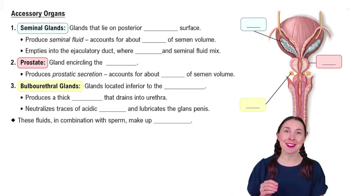
Accessory digestive organs are those that assist in the digestive process but are not part of the alimentary canal. These include the liver, pancreas, and gallbladder, which produce enzymes and bile necessary for digestion. Recognizing these organs helps differentiate them from those that are part of the main digestive pathway.
Video consigliato:
3:21
Accessory Organs

Function of the Liver

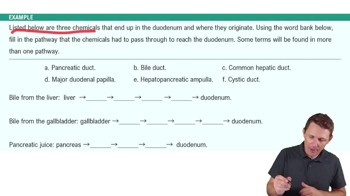
The liver is a vital organ that performs numerous functions, including the production of bile, metabolism of nutrients, and detoxification of harmful substances. It plays a crucial role in digestion by aiding in the emulsification of fats, but it is not part of the alimentary canal itself. Understanding the liver's role helps clarify its classification as an accessory organ.
Video consigliato:
2:59
Duct System of the Liver, Gallbladder, and Pancreas Example 1