Ch. 2 Basic Chemistry
Marieb - Essentials of Human Anatomy & Physiology 13th Edition
Marieb13th EditionEssentials of Human Anatomy & PhysiologyISBN: 9780135624340Non è quello che usi tu?Cambia libro di testo
Capitolo 2, Problema 26

Pediatricians become concerned about the potential for brain damage when an infant's temperature approaches 105°F. Which class of organic molecules is most likely to be damaged by high temperature? Explain why.

Guida verificata passo dopo passo
1
Step 1: Identify the class of organic molecules most likely to be affected by high temperatures. Proteins are the primary class of organic molecules that are sensitive to temperature changes because their structure is dependent on weak bonds such as hydrogen bonds and ionic interactions.
Step 2: Explain the structure of proteins. Proteins are composed of amino acids linked together by peptide bonds, and their function is determined by their three-dimensional shape, which is stabilized by various types of bonds and interactions.
Step 3: Discuss the impact of high temperatures on protein structure. Elevated temperatures can cause denaturation, a process where the protein's three-dimensional structure is disrupted, leading to loss of function. This occurs because the heat breaks the weak bonds stabilizing the protein's shape.
Step 4: Relate protein denaturation to brain damage. Enzymes, which are specialized proteins, play critical roles in biochemical processes in the brain. If enzymes are denatured due to high temperatures, essential metabolic processes may be disrupted, potentially leading to brain damage.
Step 5: Conclude by emphasizing the importance of maintaining normal body temperature in infants. Since proteins are vital for cellular function, extreme temperatures can compromise their activity, highlighting the need for medical intervention when an infant's temperature approaches 105°F.

Risposta video verificata per un problema simile:

Questa soluzione video è stata consigliata dai nostri tutor come utile per risolvere questo problema.
Durata del video:
6m

Concetti chiave

Ecco i concetti essenziali che devi comprendere per rispondere correttamente alla domanda.

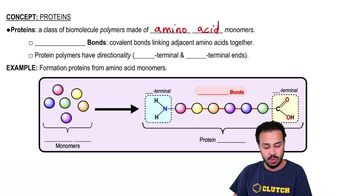
Proteins

Proteins are organic molecules made up of amino acids and play crucial roles in biological processes. High temperatures can denature proteins, altering their structure and function. This denaturation can lead to the loss of enzymatic activity and disrupt cellular processes, which is particularly concerning in the developing brains of infants.
Video consigliato:

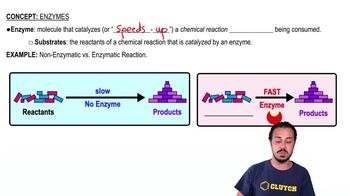
Enzymes

Enzymes are specialized proteins that catalyze biochemical reactions in the body. They are sensitive to temperature changes; excessive heat can lead to their denaturation, rendering them inactive. In infants, the proper functioning of enzymes is vital for metabolic processes, and their impairment due to high temperatures can have serious consequences.
Video consigliato:

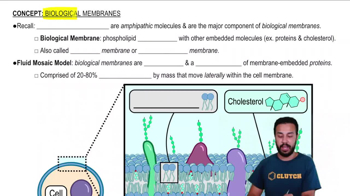
Cell Membranes

Cell membranes are composed of phospholipids and proteins, forming a barrier that regulates the movement of substances in and out of cells. High temperatures can disrupt the fluidity and integrity of these membranes, potentially leading to cell damage or death. This is particularly critical in the brain, where cell integrity is essential for proper function and development.
Video consigliato:
Percorso guidato
06:49
Biological Membranes